Relapse Risk and Mothers with a History of Substance Use

Featured Scientist: Lela Rankin, Ph.D., Arizona State University, School of Social Work

Dr. Lela Rankin is a white woman with red curly hair. She is smiling and wearing her three-and-a-half-year-old son on her front using a hand-woven wrap. Her son is smiling and sticking out his tongue. The background is a brick building with greenery and fencing. The wrap is gold, green, and purple.
Dr. Lela Rankin is babywearing her three-and-a-half-year-old son.

Birthplace: Currently living in Tucson, AZ but grew up in Nova Scotia, Canada

My Research: Dr. Rankin’s scholarship focuses on helping families using an attachment framework. The attachment framework is based on a psychological concept that describes how people develop strong emotional connections with their caregivers, especially when they’re very young. These connections can affect how we feel about ourselves and how we interact with others as we grow older. Dr. Rankin was one of the first people to research infant carrying (i.e., babywearing) and has found health and mental health benefits for mothers and infants.

Research Goals: I would like to understand the mechanisms around babywearing. Why (and how) is it helpful for parents and children?

Career Goals: I would like to travel and study parenting and babywearing customs across cultures.

Hobbies: I like to read, listen to music, hike, spend time with my family, and travel.

Favorite Thing About Science: The ability to learn something that hasn’t been discovered before.

Scientist Upbringing: At first, I thought I wanted to be a therapist when I started my undergraduate degree, but soon fell in love with research. It was exciting to look at the data and be able to understand how it related to my research question. All the steps in research are enjoyable for me like writing, finding previous research studies, creating a hypothesis, and interpreting the findings.

My Team: Working in teams makes research fun and more efficient. I am the lead investigator on this project and oversaw all aspects of the manuscript development.

Organism of Study: Understanding the benefits of babywearing, particularly for vulnerable parents such as mothers with substance use disorders.

Dr. Rankin and two babywearers from the community standing next to each other babywearing in front of a wall of green plants.

What is Social Work?: Social work is a social science that focuses on helping others work through and prevent problems in their daily lives.

Check Out My Original Paper: “Unpacking Perinatal Experiences with Opioid Use Disorder: Relapse Risk Implications”

Citation: Rankin, L., Mendoza, N. S., & Grisham, L. (2022). Unpacking Perinatal Experiences with Opioid Use Disorder: Relapse Risk Implications. Clinical Social Work Journal, 1-12.

Article Written by Emily Hanover(She/They), a Junior at Utah State University, Alexis Callor(She/Her), a Junior at Utah State University, Maya Harrell(She/Her), a Junior at Utah State University, Skye Jensen(She/Her), a Junior at Utah State University, and Kejah Bascon (She/Her) an M.S. student at Carleton University.

Research At A Glance: Postpartum, the period after having a baby, is a difficult time for many mothers, but mothers with a history of substance use often face a higher level of stress. The purpose of this research is to understand the factors that cause higher levels of stress. The postpartum phase is often forgotten about, especially in scientific research, yet it is a vital time in a new mother’s life. It is important to understand a mother’s experience in the months after birth to find ways to better support these new moms. For this study, a group of mothers with a history of substance use were interviewed three times after the birth of their child. These interviews gathered information about mental and physical health. The mothers were also asked if they had urges to use substances again. The authors found several themes that affected a mother’s desire to use substances. The data from this study could be used to help doctors, social workers, and other professionals working directly with postpartum mothers to better understand the experiences they are facing. This information is important so that professionals can provide helpful and stigma-free care.

Highlights: Forty-two biological mothers with a history of substance use were recruited as participants for this research. The participants were interviewed three times throughout the study: Once at the birth of their child; once at 3 months postpartum; and once again at 6 months postpartum. These interviews were aimed at understanding the mother’s experience with urges to use substances and factors that helped them not to act on those urges. The participants were also asked to fill out a survey that indicated how often they had urges to use specific substances. Figure 1 shows the types of substances the mothers reported using before the birth of their child.
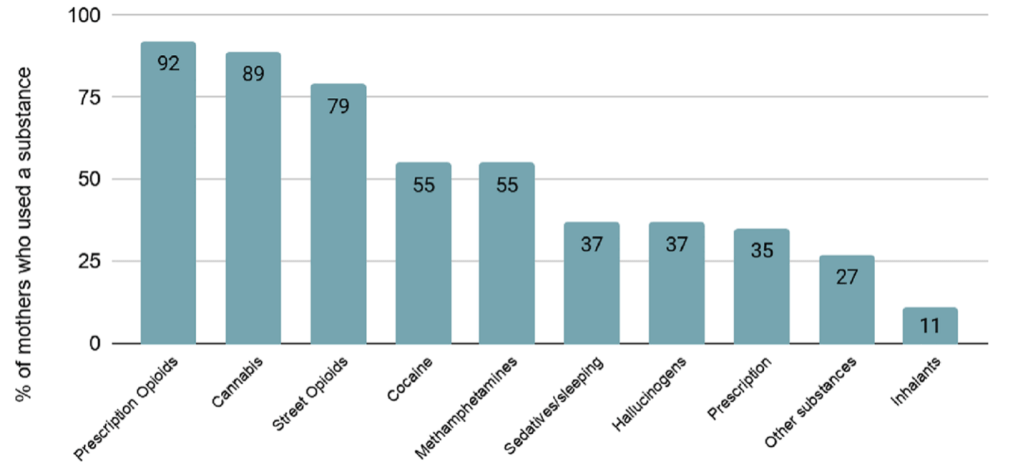
A bar chart that shows percent of mothers who used a substance on the y-axis and the types of substances on the x-axis. Prescription opioids were the highest (92%), followed by cannabis (89%). Inhalants were the lowest (11%).
Figure 1. Percentages of substances used by participants before birth.

To analyze the data, the mothers were assigned to one of three categories based on the urges they had throughout the study. Mothers who did not have any urges during the study were classified as mothers with no urges (MNU). The mothers who didn’t have any initial urges, but did have urges later in the study, were classified as mothers with no initial urges (MNIU). The mothers who had urges to use were classified as mothers with urges (MU). Out of the 42 participants, 24% were MNUs, 14% were MNIUs, and 62% were MUs. These categories helped during the data analysis process because they helped the authors find themes related to relapse. In this study, the authors found seven themes related to a mother’s potential to relapse (Figure 2).
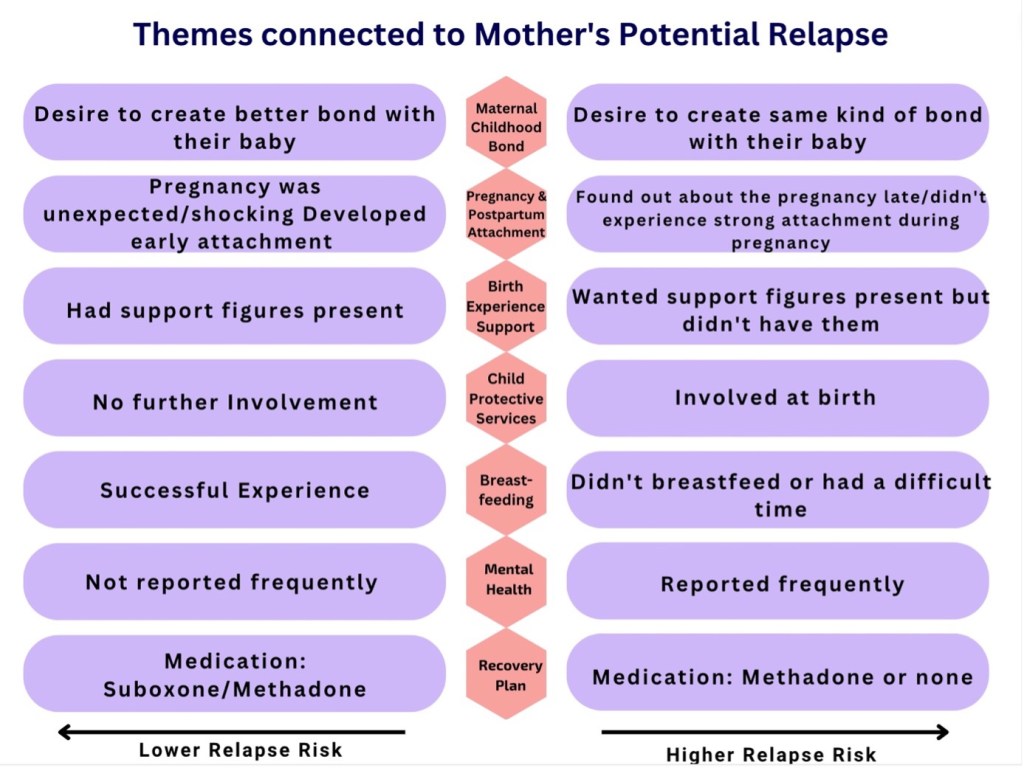
An image that shows the seven themes connected to risk of relapse:  1) maternal childhood bond, 2) pregnancy and postpartum attachment, 3) birth experience support, 4) child protective services, 5) breast feeding, 6) mental health, and 7) recovery plan.
Figure 2. The seven themes connected to the risk of relapse for mothers with substance use disorder.

What My Science Looks Like As mentioned before, the mothers were interviewed three times throughout the study. In these interviews, the mothers were asked a series of questions aimed at understanding their experiences before, during, and after the birth of their child. Figure 3 provides examples of questions that were asked.

An image that shows the questions that the authors asked to assess relapse: 1) What was your reaction when you found out you were pregnant?, 2) What has your bonding experience with your baby been like?, 3) What was your birth experience like?, and 4) Describe your relationship with your biological mother and you were a child.
Figure 3. Questions from the article were used during the interview process.

The Big Picture: After a mother gives birth, she may face many challenges like postpartum depression, postpartum psychosis, anxiety, and problems with physical health. Substance use disorder and relapse are also serious issues for postpartum parents. This research looks at mothers who have a history of substance use disorder and how it impacts their ability to create good attachments with their children, as well as other experiences after the birth of the child. The year after birth is the time that mothers are most likely to relapse. This study looks at the stigma surrounding relapse for mothers after the birth of the child. Because of the fear of judgment that these mothers may have, they may not know how to ask for help or know how to address their concerns. This information is crucial because it can help professionals approach situations without judgment. This research can help professionals understand why new mothers may relapse and how to address it. These findings can help social workers and other healthcare professionals treat mothers who are at risk for relapse during the postpartum period.

Decoding the Language:

Anxiety: Anxiety is a feeling of excessive worry, fear, or nervousness about something, often in the future, that can make a person feel uneasy or stressed. In new mothers, anxiety might mean constantly worrying about the baby’s safety, health, or whether they’re doing a good job as a parent. For example, a new mom might feel anxious when her baby has a fever, thinking about all the worst-case scenarios, even though the baby’s fever is likely due to a common illness that will pass.

Attachment framework: The attachment theory was developed by a British psychologist named John Bowlby. The theory describes three main attachment styles: secure attachment, anxious attachment, and avoidant attachment. People who form secure attachment feel comfortable getting close to others and trusting their relationships. People who form anxious attachment can worry a lot about their relationships and need frequent reassurance. People who form avoidant attachment may avoid getting too emotionally close to people and prefer to keep their distance.

Babywearing: Babywearing is a practice where parents or caregivers use special carriers or wraps to carry their babies close to their bodies. This allows for hands-free baby transport and promotes bonding between the caregiver and the baby. It can be convenient for both the adult and the baby, as it allows the baby to feel secure and comforted while the caregiver can go about daily activities.

Mothers with no initial urges (MNIU): Mothers in this study who initially did not have the urge to relapse and go back to using a substance, but then developed those urges later, were called MNIUs.

Mothers with no urges (MNU): When an individual stops using a substance, they may start to have withdrawals and they may have urges to start using the substance again. Mothers in this study who did not have the urge to use any substance were called MNUs. These mothers were at a lower risk of relapse.

Mothers with urges (MU): MUs were the mothers in this study who had the urge to relapse and go back to using a substance.

Postpartum: The period following the birth of a child. The postpartum stage is different for everyone, and mothers are at higher risk of experiencing mental health issues. 

Postpartum depression: A medical condition that many women get after having a baby. Symptoms consist of strong feelings of sadness, anxiety (worry) and tiredness that last for a long time after giving birth. These feelings can make it hard for you to take care of yourself and your baby.

Postpartum psychosis:  A condition where new mothers can experience extreme confusion, lose their connection with reality, become very paranoid, have strange beliefs, their thoughts become disorganized, and they might see or hear things that aren’t there.

Relapse: After an individual quits using a substance then returns to using the substance. Individuals often relapse when they are going through stressful periods.

Stigma: Common unfair or negative beliefs that some groups of people carry about certain ideas. 

Substance use:  Substance use means using things like alcohol, tobacco, drugs, or other stuff that you can eat, drink, smoke, or inject into your body. Sometimes, people use these things too much and can’t stop, which can cause a lot of problems for their health and life.

Substance Use Disorder (SUD): An SUD is a mental disorder that affects how an individual’s brain works which can lead to using substances. Substance use disorders include all types of substances that are being misused.

Learn More:

A YouTube video produced by Atmoi that describes the Attachment Framework.

A report from The White House discusses how many mothers who may be at risk for relapsing are having a hard time finding resources and help. Many of these women are having their children placed in foster care.

A research article that takes a look at how mental health and illness plays a part in Mother at risk for relapsing, and how that may look in the mother-infant bond:

Cataldo I, Azhari A, Coppola A, Bornstein MH and Esposito G (2019) The Influences of Drug Abuse on Mother-Infant Interaction Through the Lens of the Biopsychosocial Model of Health and Illness: A Review. Front. Public Health, 7, 45.

A research article that discusses many of the stress factors that can be contributors to mothers relapsing, and how that is affected by the bond with their newborn, as well as how it affects their bond:

Biaggi, A., Hazelgrove, K., Waites, F., Fuste, M., Conroy, S., Howard, L. M., Mehta, M. A., Miele, M., Seneviratne, G., Pawlby, S., Pariante, C. M., & Dazzan, P. (2021). Maternal perceived bonding towards the infant and parenting stress in women at risk of postpartum psychosis with and without a postpartum relapse. Journal of Affective Disorders, 294, 210–219.

Synopsis edited by Dr. Rosario Marroquín-Flores, Texas Tech University, Department Biological Sciences and Dr. Jayme Walters, Utah State University, Department of Social Work.

Download this article here

Please take a survey to share your thoughts about the article!

Unleashing the Power of Genetics: Selecting the Best Seeds for Restoring the Shortgrass Prairie

Featured Scientist: Yanni Chen (she/her),PhD candidate, Texas Tech University Department of Biological Science

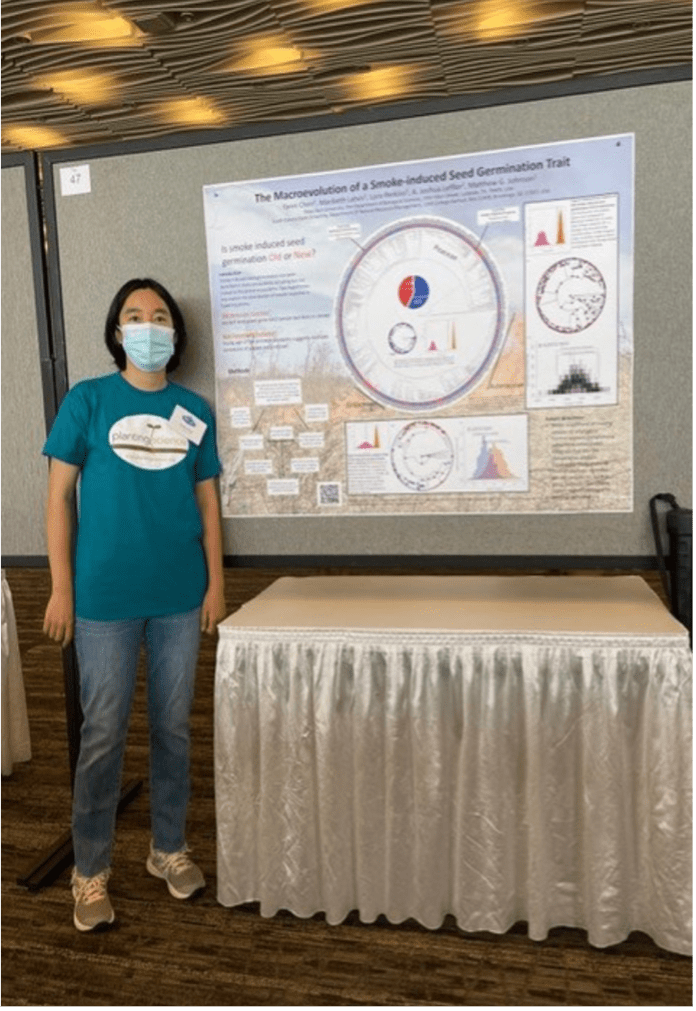
Yanni Chen presenting a poster of her macroevolutionary research on smoke-induced seed germination trait at the conference of Evolution 2022.
Yanni Chen presented a poster at the Evolution 2022 conference.

Hometown: Liuzhou, Guangxi, China

My Research: My PhD research focuses on using phylogenetic methods to understand evolution. I also research ways to apply these methods.

Research Goals: I want to better understand how plant traits help them adapt to changing environments.

Career Goals: I would like to start my own research program at a university. I would like to research the relationship between evolution and ecology in plants.

Hobbies: Swimming and hiking

Favorite Thing About Science: I enjoy the excitement and feeling of accomplishment that comes from working on scientific problems.

Scientist Upbringing: I didn’t have a very settled career goal until recent years. Most of the time, I just followed my curiosity and tried to explore more with excitement. After working in industry and academia, I discovered that I like the continuous challenges of working as a scientist. 

My Team: As a PhD candidate, I worked with other researchers. I work with ecologists and systematic biologists to do my research.

Field of Study: Evolutionary Ecology

What is Evolutionary Ecology? Evolutionary ecology is a branch of biology. People in this field look at how different organisms have evolved over time in response to the environment. In essence, evolutionary ecology helps us understand how living things have evolved and continue to evolve in response to the world around them.

A picture of an open field with different types of grasses.

Check Out My Original Paper: “Including Phylogenetic Conservatism of shortgrass prairie restoration species does not improve species germinability prediction”

A QR code that links to the original publication.
QR code to the original publication.

Citation: Chen, Y., Schwilk, D. W., Cox, R. D., & Johnson, M. G. (2022). Including Phylogenetic Conservatism of Shortgrass Prairie Restoration Species Does Not Improve Species Germinability Prediction. Frontiers in Ecology and Evolution, 10, 983192.

Article written by Kehinde Akinsuroju, (she/her), (BS in Biology, 2023), Mohammad AlSheikh (BS in Biology, 2023), Cassandra Camacho (she/her), (BS in General Studies 2023), Makayla Miksch (she/her), (BS in Biology, 2024) Savannah Zen (she/her), (BS in Biology, 2023). Student authors were enrolled in Topics in Biology: Bringing Science to the Community through Service-Learning at Texas Tech University during the spring 2023 semester. 

Research At A Glance: Shortgrass prairies are grassland ecosystems that can be found in central North America. They contain grasses that grow in warm places with very little rain or snow. Many shortgrass prairies have been destroyed or damaged because of human activities. These activities can include agriculture, the expansion of urban areas, and oil and gas production. To restore these ecosystems, researchers need to find strong seeds that are more likely develop successfully. The goal of this study was to see if the evolutionary relationship between plants could be used to predict which plant species would be most likely grow well in a shortgrass prairie. To address this question, the authors need to know more about the plant. First, they needed to know which plants had which traits. Next, they needed to know if they could predict these traits using the evolutionary relationship between plants. Finally, they needed to know if they could predict germination using the evolutionary relationship between plants. Germination is the process where a seed opens and starts to grow into a full plant.

To answer these questions, the authors collected seeds from 30 plant species often used in shortgrass prairie restoration. They measured the mass,  height, and surface area of each seed. The authors then collected genetic information about the plants. They used this information to create a phylogenetic tree. A phylogenetic tree is a visual representation of the evolutionary relationships between different species. In this case, it showed therelationshipsbetween plants. The authors used statistical tools to figure out if the evolutionary relationship between plants was related to seed traits and seed germination.The authors found that the evolutionary relationship between plants could be used to predict seed mass and seed height. However, it could not be used to predict germination. More research will be needed to find the best plants for shortgrass prairie restoration.

Highlights: In this study, the authors wanted to know if the evolutionary relationships between plants could help predict which plants would grow best in shortgrass prairies. To choose the best plants for restoration, scientists need to know which ones will grow well. An important part of the research was making the phylogenetic tree. To do this, the authors gathered genetic information for each species using GenBank. GenBank is a publicly accessible database of genetic information.The authors used the information to figure out which plants were most closely related.They found three groups of closely-related plants: Asteraceae, Monocot, and other Dicot (Figure 1).

Phylogenetic tree of species and their corresponding seed traits values distribution along the tree. They are in three groups: Asteraceae, Monocot, and other Dicot.
Figure 1. The evolutionary relationships between the 45 shortgrass prairie species tested. 

Once it was made, the authors could use the phylogenetic tree to see if the evolutionary relationship between the plants was related to seed traits and germination. To do this, the authors used a statistical test called the Pearson correlation coefficient analysis. The Pearson correlation coefficient analysis can be used to see if two variables are related to each other. In this case, it was used to see if closely-related plants had similar mass, height, and surface area. The same test was used to see if closely-related plants were equally likely to germinate. The authors found that the evolutionary relationship between plants could only be used to predict seed height and mass. The plants in each group had a range of different heights and masses (Figure 2-3). Even though the authors were not able to find any relationship to germination, they still learned a lot about common plants in short grass prairies.

Box plot comparing the height of each tree group, being monocot, other dicot, and asteraceae. The plot consists of a box with a line in the middle, dots above the box, and a line below the box. The dots and line above and below the box represent outliers. The average height of the trees is asteracae, 1.18 mm, monocot, 1.03mm, and other dicot, 1.19mm.
Figure 2. A box plot comparing the heights of the plants in each group. The y-axis shows the height of the plants in centimeters. The x-axis shows each group of plants identified in the phylogenetic tree.
Box plot comparing the mass of each tree group, being monocot, other dicot, and asteraceae. The plot consists of a box with a line in the middle, dots above the box, and a line below the box. The dots and line above and below the box represent outliers. The average mass of the trees is Asteracae, 3.93, Monocot, 2.64, and other dicot 3.23.
Figure 3. A boxplot comparing the mass of the plants in each group. The y-axis shows the mass of the plants in grams. The x-axis shows each group of plants identified in the phylogenetic tree.

What My Science Looks Like: Another important part of this research was germinating plants and measuring seed traits. The authors did germination trials in the lab for 35 species of plants (Figure 4). For each germination trial, 50 seeds of each species were grown in disposable petri dishes. The petri dishes were then placed into chambers that controlled the temperature and humidity that the seed was exposed to. Most of the seeds took about ten days to germinate. The authors recorded the percentage of seeds that germinated for each species.

This image shows the beginning of the germination process that allowed researchers to evaluate which seeds took the longest to finish germination. The process of seed germination included: using triple replicated germination trials.
Figure 4. The beginning of the germination process that took place within the lab.

The authors also had to complete several steps to measure seed traits. The authors measured the traits of 1,000 seeds for each species (Figure 5). However, sometimes the authors had a hard time getting all the seeds that they needed. When that happened, they would measure the traits of 300 seeds, rather than 1,000. The mass for each seed was gathered by weighing each individual seed on a digital scale. After weighing the seed, the authors took a picture of each seed under a microscope. They then used a software program to calculate the surface area and height of the seed.

This image shows the different types of seeds that were examined through during this experiment. After the seeds finished the germination process, the height and weight were able to be analyzed and later compared to distinguish the evolutionary relationship.
Figure 5. The seeds collected to measure the seed mass, height, and surface area.

The Big Picture: Shortgrass prairies are important areas filled with many plant and animal species. Sadly, human activities like farming and building have hurt these places. To help fix them, we need to choose the right plants that will grow well and help the prairie recover. The authors of this study wanted to see if knowing how plants are related to each other could help us pick the best ones for fixing shortgrass prairies. Unfortunately, the authors found that this information didn’t really help with picking the right plants. However, this research is still important because it teaches us more about restoring prairies. Knowing which plants will do well helps us use our resources better and make sure that these natural areas have a better chance of getting better. The study also helps us learn more about how plants are related, which can help us take care of other natural areas like forests and wetlands in the future. The information from this study can be used by scientists to choose the right seeds for future projects and help shortgrass prairies grow back strong and healthy.

Decoding the Language:

Asteraceae: Asteraceae is a family of plants that includes flowers like daisies, sunflowers, and asters.

Dicot: A dicot is a type of flowering plant that has a seed with two leaves when it starts to grow.

GenBank: Genbank is a public database that has a lot of information about DNA and genetic material.

Genetic: Genetic refers to the traits and characteristics that get passed down from one generation to the next in living things.

Germination: Germination is the process by which a seed starts to grow into a plant. Plants will use the energy stored in their seeds to grow until they have leaves. After that, the plant can use the leaves to create new energy.

Evolutionary: Evolutionary refers to the gradual process of change and development over time.

Monocot: A monocot is a type of flowering plant that has a grass-like appearance and only one leaf when it starts to grow from a seed.

Pearson correlation coefficient analysis: A Pearson correlation coefficient analysis is a type of statistical test that looks at the relationship between two variables. If two variables are positively related, then they both increase together. If they are negatively related, then then both decrease together.

PhD candidate: A PhD candidate is is a graduate student who is pursuing a PhD. A student reaches candidacy when they pass their qualifying exams, about 2 or 3 years into their graduate programs. Qualifying exams usually consist of a lengthy oral and written exam.

Phylogenetic tree: A phylogenetic tree is a diagram that shows how different species of living things are related to each other over time.

Systematic biologists: Systematic biologists study how living things are named and classified. People in this field will measure different traits to see how they change over time and if different living things have similar traits.

Variable: A variable is a number used in mathematics. In this study, seed height, mass, surface area, and germination were all variables under study.

Learn More:

A link to the Genbank database, which provides access to the most up-to-date and comprehensive DNA sequence information. 

A YouTube video produced by One Minute Economics describing the Pearson Correlation. 

A YouTube video that shows an overview of the germination process and how it works.

Synopsis edited by Rosario Marroquín-Flores, PhD 2022, Texas Tech University

Download this article here

Please take a survey to share your thoughts about the article!
Meet the Authors

Kehinde Akinsuroju is a current Senior at Texas Tech University majoring in Biology with a minor in chemistry. She is from a military background, she joined the army in 2017, she’s been on multiple deployments. Kehinde spent most of her life in Sachse, Texas, she grew up around so many wonderful people, she experienced different culture. Kehinde finished her first bachelors in 2022. Kehinde has gone on many humanitarian missions, she’s currently finishing her services with the United States Army. After her graduation in May, she will be finishing her master’s degree, then proceeding to dental school. She aspires to become a Dental Anesthesiologist in the long run.

Mohammad Alsheikh is a Senior at Texas Tech University majoring in Biology with a minor in chemistry graduating in August of 2023. He is a first-generation immigrant of Lebanese descent and on the pre-med track. Mohammad has been involved in several activities throughout his undergraduate career, such as bench research, volunteering, and several student organizations on campus. Some of his hobbies include reading, playing chess, and staying active through sports like martial arts and cycling. After graduating, he plans on attending medical school to pursue his aspirations of being a surgeon.

Cassandra Camacho is a senior at Texas Tech University majoring in General Studies with a concentration in Biology, Chemistry, and Health Professions. Cassandra will be graduating in the spring of May 2023. She is a first-generation college student and plans to further her education by applying to optometry school. Cassandra likes to volunteer for various causes but has a big heart in helping animals. She loves to watch sports and attend games for fun. When not doing school related things or work, you can find her hanging out with her friends, at the gym, or walking/playing with her dog.

Makayla Miksch is a current Junior at Texas Tech University majoring in Biology with a minor in Chemistry. She is a first-generation college student and on the pre-dental track with hopes of becoming a dentist in the future. She is involved in many different organizations around campus such as: Texas Tech Pre-dental Society, College of Arts and Sciences Ambassadors, Peer Mentor for First Generation students, a member of Kappa Alpha Theta, and a Learning Assistant for Biology 2. Makayla grew up in Thrall, TX which is a small town outside of Austin TX. After graduation in May 2024, she plans on attending dental school to become a general dentist.

Savannah Zen is a current Senior at Texas Tech University majoring in Biology with a minor in Health Professions. She is a transfer student from Lubbock Christian University on the pre-medical track with hopes of becoming an Emergency Medicine physician. Savannah has been involved in various groups throughout her college carrier, including: LCU’s Cheer team, she was a tutor for various classes, social clubs and organizations at LCU, and while at Texas Tech University she has been involved in a research lab under Dr. Robert Bradley and American Medical Women’s Association (AMWA). Savannah grew up in Lubbock, TX, a small college town where Texas Tech University is located. After graduation in December 2023, she plans on applying and attending medical school to become a medical doctor.

Sound “Waves”: How Acoustic Deterrent Devices Increase Sound in the Ocean

Featured Scientist: Charlotte Findlay (she/her/hers), PhD (2021). Currently a Postdoctoral Research Fellow in the Department of Biology at Aarhus University in Denmark.

Dr. Findlay is sitting on an island staring out to sea. She is looking for harbor porpoises as part of a scientific survey during a rainstorm. She is soaking wet from being rained on, but a rainbow has formed in the background as the sun has finally started to come out.
Dr. Findlay Watching for harbor porpoises as the rain finally stopped at our survey site on the Isle of Mull, Scotland.

Hometown: I have lived in a lot of different places, but I would say my hometown is Oban, Scotland (United Kingdom).

My Research: I study different types of human-made noises in the ocean. I study how these sounds affect the behavior and physiology of marine animals.

Research Goals: I hope to continue to understand and assess the impacts of human-made underwater noises on marine ecosystems. My goal is to help provide solutions that can reduce the impacts on marine wildlife.

Career Goals: I hope to continue to be able to do science which helps to protect the environment.

Hobbies: I enjoy wild swimming, surfing, sea kayaking, snowboarding, and spending time with my partner and two cats!

Favorite Thing About Science: I like that I am constantly learning and that every day brings a new challenge or activity so it’s never boring.

Scientist Upbringing: I’ve always been fascinated by the natural world. When I was younger, I would sit for hours watching Animal Planet or reading books about different animals to learn as much as I possibly could. I also loved swimming and being in the ocean, so when I realized I could combine my love of animals and the ocean I think marine biologist became an obvious choice! I decided to go to the University in Glasgow in Scotland to study Marine and Freshwater Biology and I never looked back.

My Team: I am the joint first author on this publication along with Hayden Ripple. This paper is formed in part from my master’s degree thesis at the University of St Andrews and Scottish Association for Marine Science. My advisors Dr. Denise Risch, Dr. Steven Benjamins and Professor Ben Wilson helped me come up with the project, Hayden Ripple assisted with data analysis and mapping, other co-authors were involved in collecting the line-transect data as part of surveys conducted by the Hebridean Whale and Dolphin Trust (HWDT), and everyone helped in writing and editing the publication.

Field of Study: Aquatic Ecology

What is Aquatic Ecology? Ecology is the study of how organisms interact with their environment. Aquatic ecology focuses on aquatic species.

Organism of Study: I study marine mammals and have so far focused on harbour porpoises (Phocoena phocoena) and harbor seals (Phoca vitulina).

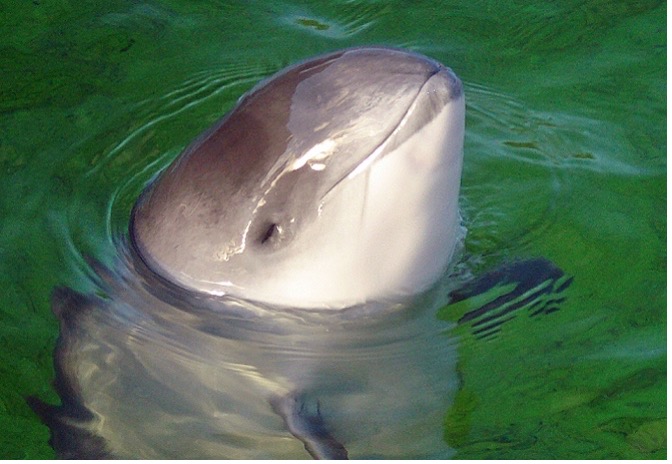
A picture of a harbour porpoise with its face sticking out of the water.
Harbour porpoise
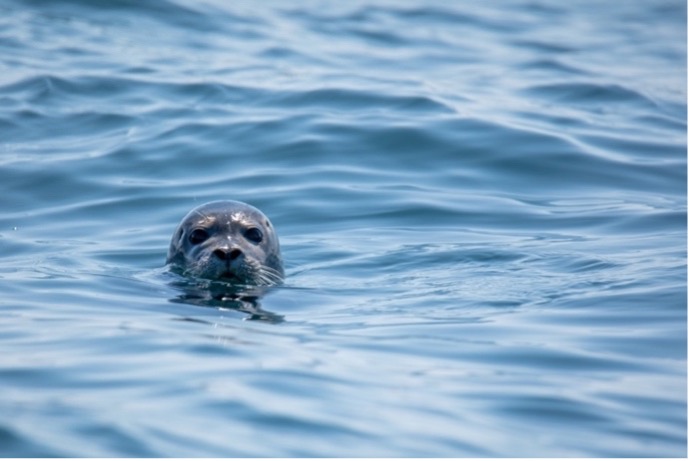
A picture of a harbor seal with only its face above the water.
Harbor seal

Check Out My Original Paper: “Mapping widespread and increasing underwater noise pollution from acoustic deterrent devices”

A QR code that links to the original publication.
QR code to the original publication

Citation: Findlay, C.R., Ripple, H., Coomber, F., Froud, K., Harries, O., Van Geel, N., . . . Wilson, B. (2018). Mapping widespread and increasing underwater noise pollution from acoustic deterrent devices. Marine Pollution Bulletin, 135, 1042-1050.

Article written by Milan (He/Him, Sophomore, Pre-Medicine), Luis Martinez (Senior, Biology Major), Jesly (She/Her, Junior, Biology major), Adriana Botero (She/Her, Senior, Biology Major), and Audrey (She/Her, Senior, Biology major), undergraduate students at Texas Tech University during the Spring 2023 semester.

Research At A Glance: An Acoustic Deterrent Device (ADD) is a loud underwater device that can be heard by aquatic animals and that is used to deter them from approaching an area. ADDs are used by aquaculture farmers to prevent carnivorous animals, like seals, from damaging fish farming sites. Fish farming has become popular in recent years in Scotland and has led to an increase in the use of ADDs. Despite the wide use of ADDs, there has not been a lot of research about how ADDs contribute to noise pollution in marine ecosystems. In this study, the authors investigated the presence and distribution of ADDs across the Scotland coast over a 10-year period. The goal of the study was to determine how ADDs were distributed and how often ADDs were added or removed from the west coast of Scotland over time. The authors worked with the Hebridean Whale and Dolphin Trust (HWDT), an organization that seeks to protect whales, dolphins, and porpoises, to sail along the west coast of Scotland. The authors collected data for 10 years between the months of March and October on a boat named the RV Silurian.

During the sampling period, trained volunteers would perform a ‘listening event’ every 15 minutes where they would listen to the sound of the ocean for 1 minute through a hydrophone. A hydrophone is a device that is placed underwater to detect and record sounds from all directions. The volunteers would rate the intensity of the sound from 0 (quiet) to 5 (loud) and determine the source of the sound. For example, the sound might come from an animal, a ship, or an ADD. To determine if ADDs were the cause of noise pollution, the researchers used spectrograms. Spectrograms are used to measure the strength of a sound, or how loud it is. The authors found that the presence and distribution of ADDs across Scotland had increased over the 10 year period: 1,371 of the 19,601 listening events detected ADDs. The authors detected three types of ADDs and all of them contributed to noise pollution. This research is important as it helps describe ADDs and their influence on noise pollution in aquatic environments. With the increase of fish farming in Scotland, the dependence on ADDs has increased as a non-lethal way to deter animals. This could negatively impact aquatic species around the coastal areas because it forces them to move into unfavorable habitats, creates barriers for migration or movement, and damages their hearing. The scientists argue that there should be more specific ADD reporting by fish farms, such as the type of ADD, how many are present, and their locations.

Highlights: One of the most important parts of this paper was the listening events with trained volunteers. To listen to the ocean, a hydrophone was placed 20 meters underwater. ADDs can be heard by humans because they transmit sound frequency ranges of 2 to 40 kHz, and humans can hear from 20 Hz to 20 kHz. The volunteers were able to listen to the hydrophone and score the sound intensity from 0 (not heard or quiet) to 5 (very loud). The location of these sounds were measured using Logger software. Logger software is a program that automatically collects GPS data and stores it in a database. The Logger software allowed the researchers to pinpoint the location of the ADDs in relation to the fish farms.

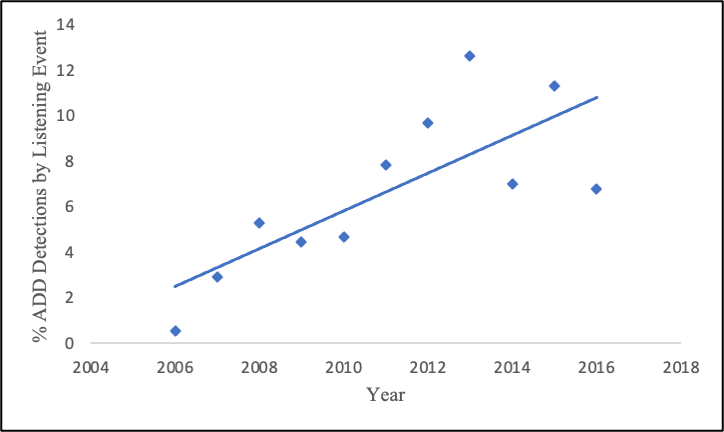
After finding where the ADDs were located, the authors wanted to determine if they were detecting more ADDs over time. To answer this question, they used a beta regression model. A beta regression model is a statistical technique that can be used to analyze the relationship between one dependent variable and one independent variable. In this case, the dependent variable was the amount of ADDs that were detected and the independent variable was time in years. The authors found that the presence of ADDs increased over time (Figure 1).

A data figure that shows the percentage of ADDs detected by listening event over time. In 2006, it started nears zero, but by 2016 it's closer to ten.
Figure 1. The relationship between the amount of ADDs detected over time. The data on the y-axis shows the percentage of ADDs that were detected relative to the total number of listening events. The x-axis shows the year that the data were collected. Figure adapted from Findlay et al. 2015.

What The Science Looks Like: Volunteers were a very important part of this research. During a trip on the coast of Scotland, these trained volunteers were on board the vessel RV Silurian. They had the hydrophone attached to the boat, dangling 20m below the water level. Every 15 minutes of sailing, the boat would slow to a stop. During the 1 minute listening event, the sound waves from an ADD, ambient underwater noise, or animals, are picked up by the hydrophone. The volunteers would listen to the sounds, rate the noise level, determine what was making the sound, then continue to sail for another 15 minutes. This was the cycle used to gather data on underwater noise.

A graphic that shows the listening events. On the left, there is a boat with a hydrophone in the water detecting an ADD. There is arrow that points to another boat on the right labeled "15 Minutes of Sailing". On the right, there is a boat with a hydrophone in the water detecting a seal.
In this diagram, the first listening event shows the hydrophone detecting ADD sound waves. At the second stop, the hydrophone detects the sounds of a seal. At each stop, different sounds can be picked up by the hydrophone and rated by the volunteers. Icons from the Noun Project.

The Big Picture: There are many sources of noise pollution in the ocean, such as commercial shipping, military sonar, and oil and gas exploration. Noise pollution can be beneficial to science discovery. For example, different sound waves can be used to determine how deep the water is and get information about the structure of the ocean floor. Aquaculture is a part of the fishing industry and is expanding across the world. Fishermen and ocean predators both rely on fish and this can lead to conflict. One way to deter the marine mammals from approaching fish farming areas is through devices, like ADDs. However, the method of using loud and unpleasant sounds to scare away animals disrupts the balance of marine ecosystems. Whales, seals, and many other sea organisms experience hearing loss due to the high intensity noise that ADDs produce. In addition, animals close to ADDs are forced to migrate to other areas that may not be as suitable, which can lead to reduced survival and reproduction. Aquaculture plays a large role in how we gather food. It is important to find ways to protect our fish farms from marine predators, while also protecting ocean life. This study locates ADDs, measures the intensity of the sound waves that they produce, and records how frequently they can be found on the Coast of Scotland. Research like this can help us understand how noise pollution might affect marine animals and help us find ways to reduce harm in marine environments.

Decoding the Language:

Acoustic Deterrent Device (ADD): An ADD is an underwater device that can make sounds that deter certain species.

Aquaculture: Aquaculture refers to the breeding of aquatic organisms, like fish, in a stable environment so that people can eat them in the future.

Beta regression model: A beta regression model is a statistical test that looks at the relationship between one dependent variable and one independent variable. People usually choose to use the this model when their data is in the form of a fraction or a percentage. In this study the authors used this approach to determine if there were more ADDs over time.

Hebridean Whale and Dolphin Trust (HWDT): The HWDT is a charity that believes in conserving whales, dolphins, and porpoises in western Scotland. Their research has helped people understand more about the species that visit seasonally or are residents in the islands off the northwest coast of Scotland. The HWDT is using their research to protect marine life. HWDT does education programs highlight the importance of marine environments. These programs reach over 20,000 people each year.

Hydrophone: A hydrophone is a device that is used underwater to detect and record ocean sounds from all directions.

Logger software: Logger software records and tracks information over time. The software automatically collects GPA data and stores it in a database. For this specific study, the authors used a type of logger software developed by the International Fund for Animals.

Noise pollution: Noise pollution refers to sounds that affect the health and well-being of humans and other organisms. Sound is measured in decibels.

Spectrogram: A spectrogram is a visual representation of sound. It shows the strength of a signal, or how “loud” it is, at different time points.

Learn More:

A report from the University of Saint Andrews Mammal Research Unit on the negative effects of seals on fish farms.

An article from The Consortium for Wildlife Bycatch Reduction that describes ADDs and how they function. The article also provides real-life examples about ADD use across the world and how they affect marine organisms.

A YouTube video produced by The University of Maine that describes aquaculture and why it is important.

A YouTube video produced by the Sustainable Aquaculture Innovation Centre that describes aquaculture in Scotland. It details the marine organisms that are most farmed as well as the methods of farming/aquaculture that are primarily used in Scotland. It also explains the importance of aquaculture in providing jobs and helping with the economy in Scotland.

An article produced by a scuba diving company that shares fun facts about seals.

Synopsis edited by Rosario Marroquín-Flores, PhD 2022, Texas Tech University

Download this article here

Please take a survey to share your thoughts about the article!

Meet The Authors

Luis Martinez is a current Senior at Texas Tech University majoring in Biology with a minor in Psychology. Coming from a military-oriented family, Luis lived much of his life in Yokosuka, Japan, where he got to experience and travel much of the Far East. Upon entering Freshman year, Luis moved back to the U.S. and resided in Virginia Beach, VA, until graduation in 2019. Luis enjoys his time doing strength training and swimming as he hopes to aspire to commission as an Officer in the United States Navy after graduation in August 2023.

Adriana Botero is a current undergraduate Senior at Texas Tech University (TTU) majoring in Biology with a minor in Chemistry. She was born and raised in the Austin, Texas area. In her free time, she likes to draw and volunteer. Her artwork has been on display in the TTU Office of International Affairs for the “Structures of the World Exhibit” and other museums. Adriana hopes to work in a field where she can combine creativity, science, and communication. She is set to graduate in August, 2023.

Jesly Quintero is currently a junior at Texas Tech University majoring in Biology with a double minor in Health Professions and Chemistry. She was born and raised in Dallas Texas. She is actively involved in leadership with the American Chemical Society organization at Texas Tech University and aspires to become a travel nurse.

Audrey Batista is currently a Senior at Texas Tech University majoring in Biology with a minor in Chemistry. She is a female Latina that was born and raised in El Paso, TX. In her free time, she is shadowing and interning at Covenant Hospital with Interventional Radiologists. She also enjoys getting involved with fitness platforms influencing others to better their lifestyles in health.

Milan Maheshwari is currently a sophomore at Texas Tech University on the pre-medicine track. In his free time, he enjoys making music using the software program known as FL studio. He also enjoys practicing mindfulness and loves being outdoors.

 E-cigarettes, are they really better for us?

Featured Scientist: Melissa Blythe Harrell (she/hers), PhD MPH, UTHealth Houston, School of Public Health, Department of Epidemiology, Human Genetics, and Environmental Health

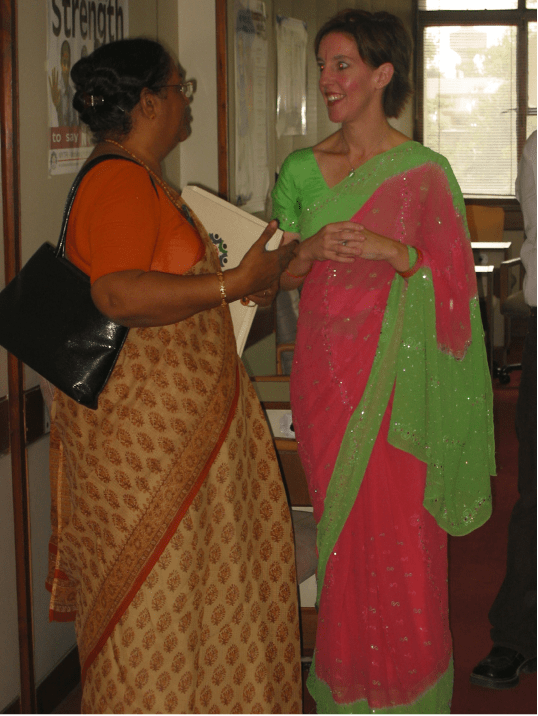
Original author of the paper, Melissa Blythe Harrell, in conversation with another person.

Hometown: Austin, TX

My Research: I am a tobacco scientist, with a focus on youth and young adult tobacco use.

Research Goals: I love doing research with the wonderful team of investigators that have gathered around me over the last two decades. I am hoping to make a return to India in the next five years, where my tobacco research originally began.

Career Goals: See Research Goals. I love simply doing good work with good people.

Hobbies: Yoga, reading, cooking, spending time with my dog Bugsy.

Favorite Thing About Science: “Creating” new avenues in the field of public health.

Scientist upbringing: I always thought I would be a physician but ended up in epidemiology instead. It’s been a fun ride, with a lot of work to keep me busy!

 My Team: I typically serve as the “Principal Investigator” on my research projects, meaning that I lead the team to develop and implement the study. The colleagues on my team come from all over the globe, with lots of varied training and experience!

Field of Study: Behavioral Epidemiology 

What is behavioral epidemiology? Behavioral epidemiology is the study of the behaviors of people and how this affects their health. It is related to the fields psychology and epidemiology.

Organism of Study:

The picture shows high school students talking and walking down the street.
A group of high school students. Photo by Eliott Reyna on Unsplash

Check Out My Original Paper: “E-cigarette-specific symptoms of nicotine dependence among Texas Adolescents” 

QR code to the original publication

Citation: Case, K. R., Mantey, D. S., Creamer, M. R., Harrell, M. B., Kelder, S. H., & Perry, C. L. (2018). E-cigarette-specific symptoms of nicotine dependence among Texas adolescents. Addictive behaviors84, 57-61.

Article Written by Sydney Chowdhury (she/her) Junior Biology Major, Elizabeth Heselton (she/her) Senior Biology Major, Genesis Alarcon (she/her) Senior Biology Major, Derrick Andreasen (he/him) Junior Biology Major, Erika Camarillo (she/her) Junior Biology Major, Texas Tech University. Student authors were enrolled in the Topics in Biology: Bringing Science to the Community through Service-Learning course. 

Research At a Glance: Electronic cigarettes are the most-used tobacco product among teenagers. There is still little research about e-cigarette use in this group. In this study, the authors looked at e-cigarette use and symptoms of dependence in teenagers living in Texas. Dependence refers to being reliant on something. In the context of this research, it refers to someone who needs cigarettes and e-cigarettes and can’t stop using them. To conduct this study, the authors surveyed teenagers in 7th, 9th, and 11th, grade using the Texas Adolescent Tobacco and Marketing Surveillance System (TATAMS). TATAMS is a survey that measures tobacco use, factors associated with tobacco use, and exposure to tobacco marketing products. The authors used the survey responses to find teenagers who use e-cigarettes and to measure dependence. The authors found that teenagers who use more than one tobacco product were more likely to show symptoms of dependence. They also found that more exclusive e-cigarette users reported wanting to quit, compared to those who used more than one tobacco product. This research shows that teenage who use e-cigarettes can develop dependence. It is important to understand tobacco use among teenagers because it has negative impacts on the body and can worsen quality of life.

Highlights: An important part of this study was understanding tobacco use among teenagers. The authors used data from the TATAMS survey to identify two groups: teenagers, those who only used e-cigarettes and those who used more than one tobacco product. Teenagers who only used e-cigarettes were called “exclusive e-cigarette users”. Teenagers that used more than one tobacco product were called “dual users”. The authors used survey questions from the Hooked-on Nicotine Checklist to measure dependence on e-cigarettes. For example, one question included in this survey was, “Do you ever have a strong urge to use an e-cigarette, e-cigarette pen, or e-hookah?” A Chi-squared test can be used to compare the results of a study to those expected by chance. In this study, the authors used a Chi-squared test to see if there was a difference in symptoms of dependence between exclusive e-cigarette users and dual users. They also used this test to see if the desire to quit was different between the two groups.

The authors found differences between exclusive users and dual users. The authors found that all users had symptoms of irritability, anxiousness, and difficulty concentrating. Many teenagers also chose “strong urge to use” and “really need to use” when describing symptoms of dependance on the survey. These symptoms were found in all users. However, dual users were more likely to show symptoms of dependence on e-cigarettes (Figure 1).

This bar graph shows a comparison in dependence symptoms between both dual users (blue bar) and exclusive e-cigarette users (red bar). In the first category exclusive e-cigarette users showed that 5% need to use while dual users showed 33% need to use. In the second category, exclusive users show a 7% strong urge to use, while for dual users show a 35% strong urge to use. For the third category, 4% of exclusive users showed difficulty concentrating, compared to the 20% of dual users for the same category. In the fourth category, 5% of exclusive users showed a feeling of irritability, and 30% of dual users showed a feeling of irritability. For the final category, 4% of exclusive users experience feelings of anxiety, while 18% of dual users experienced anxiety.
Figure 1. Responses to the survey questions measuring dependence on e-cigarettes among exclusive users and dual users. The y-axis shows the percent of students who reported using e-cigarettes. The x-axis shows questions that were designed to measure dependence.

The authors also compared dual users and exclusive users based on their attempts to quit and what percent of them that wanted to quit. It was found that exclusive users were more likely to want to quit and to attempt to quit when compared to dual users (Figure 2).

Alt Text: The bar graph shows percentage comparison between exclusive users and dual users. In the first category they compare the feeling of wanting to quit between these two groups. About 50% of exclusive users have the urge to quit while only 23% of dual users have the urge to quit. In the second category, they are comparing actual attempts to quit between the two groups. 45% of exclusive users have reported an attempt to quit while only 20% of dual users reported an attempt to quit.
Figure 2. Responses to the survey questions that measure quitting e-cigarettes among exclusive users and dual users. The y-axis shows the percent of students who reported using e-cigarettes. The x-axis shows student responses to two questions designed to measure the desire to quit.

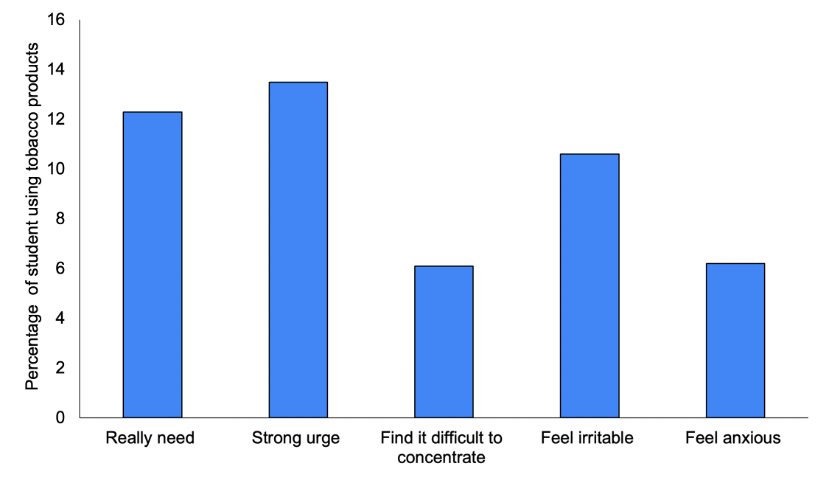
What My Science Looks Like: In this study, the authors used the TATAMS survey to measure tobacco use among teenagers. One hundred and thirty-two students described using e-cigarettes within 30 days of the survey. These students reported many symptoms of dependence (Figure 3). The authors found that 45% percent of the students wanted to quit and 38.7% had already attempted to quit. These results show that teenagers are experiencing the negative effects of e-cigarette use. Unfortunately, symptoms of dependence may stop students from quitting, even when it’s something that they want.

The bar graph shows the total number of kids who use tobacco products (132) and the number of students that experienced these 5 symptoms. For symptom one, really need to use, 12 students feel the need to use. For symptom two, 14 students feel a strong urge to use. Symptom three, find it difficult to concentrate, 6 students are affected. Symptom 4, feelings of irritableness, affects 11 students. For the last symptom, feeling of anxiety, 2 students are affected.
Figure 3. The percentage of teenagers who use e-cigarettes also report symptoms of dependence. The y-axis shows the number of students using tobacco products. The x-axis shows questions that were designed to measure dependence.

The Big Picture: Many teenagers view e-cigarettes as safer than other tobacco products. However, this study found evidence that teenagers who use e-cigarettes experience symptoms of dependence. Teenagers using e-cigarettes feel irritable, have less focus, and have appetite problems. They also experience more anxiety and depression. The findings of this research show how important it is to help teenagers quit smoking. The research also shows that teenagers who are experiencing symptoms of dependence are also less likely to quit. The findings suggest that it may be an important to intervene at high schools. Teenagers of this age may already be struggling with dependence. Finding ways to help high school students now may contribute to their health the future.

Decoding the Language:

Chi-Squared Test: The chi-squared test is a statistical test that can be used to test a hypothesis. This test is used to compare observed outcomes to expected outcomes of an experiment. The main purpose of this test is to ensure that the differences of these outcomes are not due to chance, but rather due to the variables that are being tested. In the context of this research, the chi-squared test was used to see if dual user and exclusive users had difference symptoms of dependence.

Dependence: Dependence refers to a reliance on a substance for help or to provide what one needs. This might be an addiction or reliance on something such as nicotine.

Electronic cigarette (E-cigarette): An e-cigarette is an electronic device that simulates tobacco smoking. It consists of a rechargeable battery and a cartridge or tank. Instead of smoke, the user inhales vapor. As such, using an e-cigarette is often called “vaping”.

Epidemiology: Epidemiology refers to the study of diseases and how they occur.

Hooked-on Nicotine Checklist: The Hooked-on Nicotine Checklist is a 10-question survey used to determine the onset and strength of tobacco dependence. The target population for this are adolescents between the ages of 12-15. Scoring is based on the number of positive responses. The number of positive responses reflects the degree of dependence. Questions that may be asked include: Have you ever tried to stop vaping, but couldn’t? Do you ever have strong cravings to vape? When you tried to stop vaping… (or, when you haven’t vaped for a while…) did you find it difficult to concentrate? These questions are used to place the participant on a scale of dependence for further evaluation.

Nicotine: Nicotine is an addictive chemical found in e-cigarette products. It is a drug that speeds up the messages from the brain to the body. It is in all tobacco products.

Texas Adolescent Tobacco and Marketing Surveillance System (TATAMS): TATAMS is a population-based study of adolescents in major metropolitan areas of Texas. It assesses tobacco product use, and exposure to marketing of tobacco products in adolescents every six months over a period of three years. It was designed to understand the diversity of tobacco products used by youth and the impact of tobacco product marketing on use.

Learn More:

A YouTube video produced by Crash Course Statistics about chi-square tests, how to do them, and why they are important

The website for Truth, a nonprofit organization that works to end nicotine use in adolescents. The website provides articles on tobacco products, helpful links to resources for information, quitting programs that include motivational texts and counseling, and general information about adolescent nicotine use.

An article from the Centers for Disease Control and Preventions (CDC) that provides facts and basic information of e-cigarette use among adolescents. 

A YouTube video produced by the David Geffen School of Medicine at University of California – Los Angeles with a short overview of e-cigarette use. It discusses the creation and distribution of e-cigarettes and how they are harmful. 

Synopsis edited by Rosario Marroquín-Flores, PhD 2022, Texas Tech University

Download this article here

Please take a survey to share your thoughts about the article!

Meet the Authors

Elizabeth Heselton (she/her), Senior at Texas Tech University 
Elizabeth smiles at the camera. She has long brown hair and a red dress.

Elizabeth was born and raised in Dallas, TX, and is pursuing a bachelor’s degree in Biology with minors in Chemistry and Forensic Science at Texas Tech University. After graduation, she will be attending the Texas Tech University Health Sciences Center to obtain her Masters in Molecular Pathology. Following her masters, she hopes to apply to PA school. In her free time, she enjoys watching movies, playing with her corgi, traveling, and spending time with friends.

Genesis Alarcon (she/her), Senior at Texas Tech University
Genesis smiles at the camera. She has long black hair that is curled at the ends. She wear a blue dress.

Genesis was raised in Texas, and is currently pursuing a bachelors in Biology with a minor in Chemistry at Texas Tech University. After graduation she hopes to either get a master’s degree or continue researching to ultimately go to medical school. In her free time, she likes to crochet, play basketball, and spend time with friends. 

Erika Camarillo (she/her), Junior at Texas Tech University
Erika smiles at the camera. She has straight brown hair and is wearing a red t-shirt.

Erika Camarillo was born in Queens, New York and currently resides in Houston, Texas. She is a biology major with minors in health professions and chemistry at Texas Tech University. After graduation, she plans to pursue a master’s degree in Molecular Pathology. Erika wishes to attend PA school specializing in obstetrics and gynecology. In her free time, she likes to spend time with family and friends, go to the gym, and cook.

Derrick Andreasen (he/him), Junior at Texas Tech University
Derrick smiles at the camera. He has brown hair and a thin beard. He is holding up a donut.

Derrick Andreasen was born and raised in the San Francisco, CA area. He now lives in Lubbock Texas and attends Texas Tech University where he is pursuing a bachelor’s degree in biology and a minor in environmental toxicology. After graduation he will pursue a master’s degree in environmental toxicology. When not studying, he enjoys taking care of his five pets, playing Dungeons and Dragons, and spending time in his garden.

Sydney Chowdhury (she/her), Junior at Texas Tech University
Sydney smiles at the camera. She has black hair and is wearing a black dress with yellow cross-crosses patterned on the front..

Sydney Chowdhury was born and raised in Kilgore, Texas. She is currently pursuing a bachelor’s in biology with minors in Chemistry and Health Professions at Texas Tech University. After graduation, she is intending to pursue a master’s degree and ultimately attend medical school. In her free time, she enjoys reading, knitting, and spending time with her friends and family. 

It’s getting hot in here! Turning up the heat and the hormones makes a female turtle

Featured Scientist: Rosario Marroquin-Flores (she/her/hers), PhD, 2022, Illinois State University. Currently a Postdoctoral Research Associate in the Department of Biological Sciences at Texas Tech University.

A headshot of Rosario. She has long dark curly hair and a big smile.

Birthplace: Albuquerque, New Mexico

My Research: I study temperature-dependent sex determination (TSD) in turtles. Turtles that have TSD will become male, or female, based on the temperature they experience as an egg. 

Research Goals: I have recently transitioned into a new field of research, Biology Education Research (BER). People who work in BER study how students learn biology in the classroom. I would like to explore new ways of teaching that help students connect their biology content knowledge to real-world problems.

Career Goals: I am interested in teaching and doing research at the university level.  

Hobbies: I enjoy camping, backpacking, and spending time with my partner and my pets. 

Favorite Thing About Science: I enjoy the autonomy of science. I like that I get to decide what I want to study. I get to ask my own questions and find my own answers. I also like how dynamic it is. Every day I get to do something different. I’m very busy, but I’m never bored! 

Scientist Upbringing: I have always had a passion for living things. I used to sit in the grass in my front yard and try to be as still as possible, and just wait for everything around me to come alive. When I was a little girl, those interests manifested in the desire to be a veterinarian. However, when I got into my undergraduate program, I started to do research. My research experiences ignited a deep curiosity that encouraged me to explore living things more deeply.

My Team: I am the first author on this publication, but this has been a collaborative project. My advisors, Dr. Rachel Bowden and Dr. Ryan Paitz, helped me come up with the project, assisted with data analysis, and helped in writing the publication. My wonderful lab mate, Anthony Breitenbach, helped me organize my eggs into treatments, complete dissections, and provided lots of emotional support and very loud jokes.

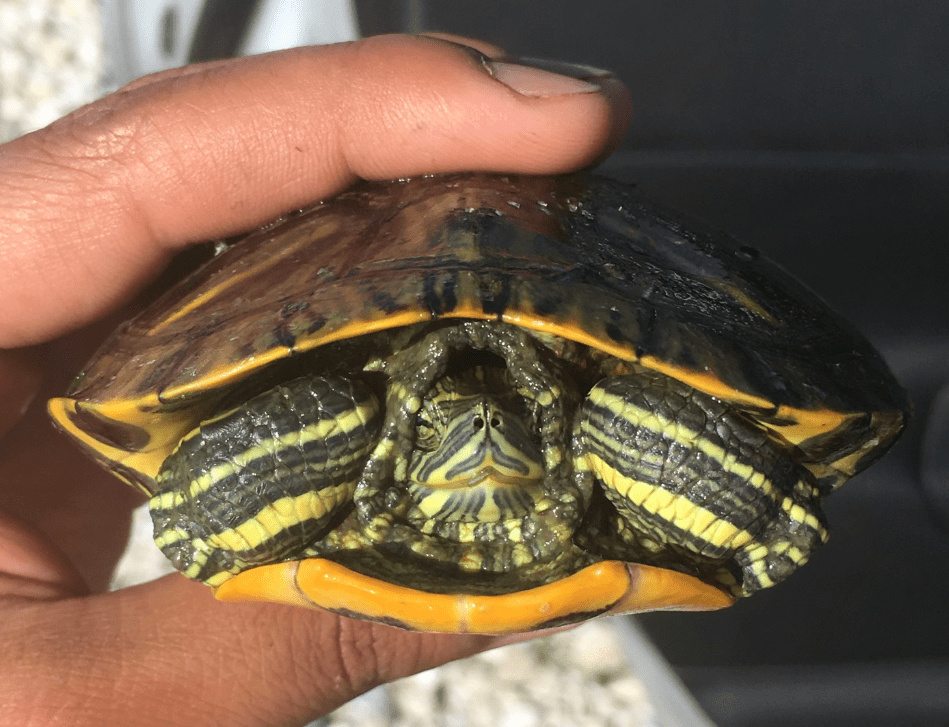
Organism of Study: I study the red-eared slider turtle (Trachemys scripta)

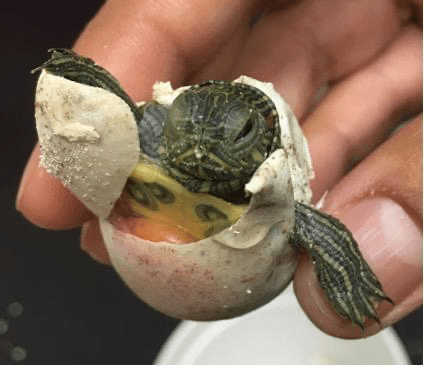
A recently hatched turtle. The turtle is still half inside the egg and is roughly the size of a golf ball.
A hatchling red-eared slider turtle emerging from its shell

Field of Study: Eco-physiology

What is Eco-Physiology? Eco-physiology is the study of the relationship between the body and the environment. In my research, I study how temperature affects the way turtles develop in the egg.

QR code to the original publication

Citation: Marroquín-Flores, R.A., Paitz, R.T and Bowden, R.M., 2022. Temperature fluctuations and estrone sulfate affect gene expression via different mechanisms in a species with temperature-dependent sex determination. Journal of Experimental Biology, 225(16), p. jeb244211.

Research At A Glance: Living things are closely connected to the world around them. External conditions like the environment, light, or water availability can affect how animals develop. At the same time, internal conditions like hormones or metabolism, can also affect how animals develop. In my research, we focused on how temperature influences development in a species of turtle. Animals that have temperature-dependent sex determination (TSD) will develop as male or female based on temperature. For our research, we studied the red-eared slider turtle, a species of reptile with TSD. In the red eared slider turtle, warm temperatures of about 31°C will result in females and cool temperatures of about 26°C will result in males. Temperature can lead to male or female development when some genes are turned on and off. In previous studies, researchers have found two genes that are important for regulating male development, Kdm6b and Dmrt1. Kdm6b is a gene that is sensitive to temperature and is responsible for turning on the Dmrt1 gene. Dmrt1 is responsible for activating the male pathway by turning on other genes that help the turtle to develop as male. When turtle eggs are exposed to cool temperatures, Kdm6b and Dmrt1 are turned on, but when eggs are exposed to warm temperatures, they are turned off. While temperature is important, hormones also play an important role in development for the red-eared slider turtle. Mother turtles will leave female hormones, like estrogens, in the eggs when they are laid. Eggs that are laid later in the nesting season have more estrogens and are more likely to develop as female. Previous studies show that estrogen can affect which genes are turned on or off. In this study, we explore how temperature and a specialized form of estrogen, called estrone sulfate, effect genes and development in the red-eared slider turtle.

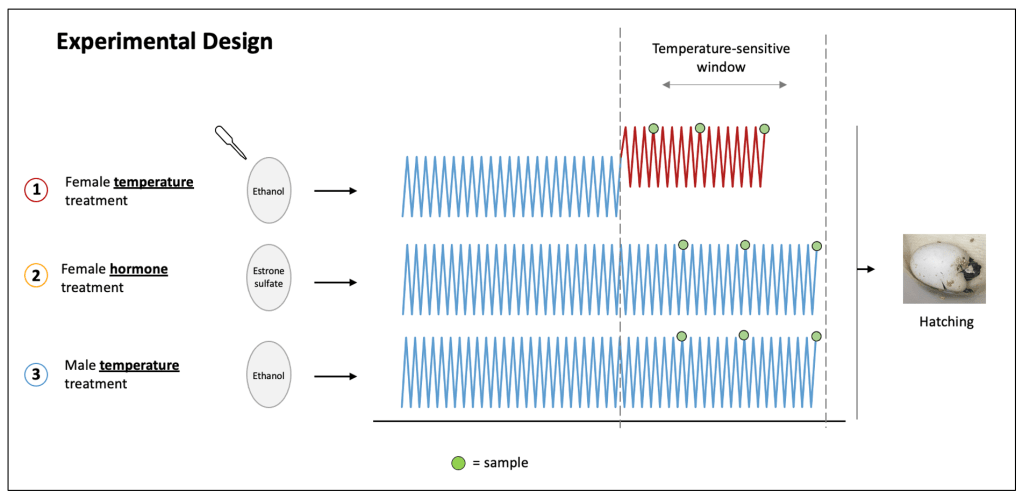
Highlights: For this research, we placed turtle eggs in a temperature-programmed incubator to mimic the temperature that turtle eggs experience in nature. In the wild, temperatures go up during the day and down at night, so we programmed our incubator to do the same. Our goal was to understand how genes respond to these temperature changes. We started with three experimental treatments. In the first treatment, we initially incubated eggs using cool temperatures, then shifted the eggs to warm temperatures during the window of development that turtles are most sensitive to temperature. This treatment was designed to create females. In the second treatment, we incubated the eggs using cool temperatures and added our hormone, estrone sulfate, to the eggs to create females. In the third treatment, we incubated eggs using only cool temperatures to create males. The full experimental design is pictured below in Figure 1.

Figure 1. The experimental design for the study. The eggs were randomly placed into three experimental treatments as show above. The grey ovals represent eggs. The dropper shows that we added either estrone sulfate or ethanol to the top of each egg. Ethanol was used as an experimental control. The blue lines represent a cool, male temperature. The red lines represent a warm, female temperature. The small green circles show when we sampled the eggs. Adapted from Marroquín-Flores et al. 2022.

We sampled eggs at several points. We sampled during the window of development that turtles are most sensitive to temperature. The time that we sampled was critical because this is when we expected to see a change in which genes were turned on. We also let some of the eggs hatch to make sure that our experimental treatments worked. We wanted to make sure that our warm temperature treatment led to females, that our estrone sulfate treatment led to females, and that our cool temperature treatment led to males.

At the end of the experiment, we found that our treatments were effective. Eggs that were incubated under warm temperatures or treated with estrone sulfate hatched as female and eggs that were incubated under cool temperatures hatched as male. The results for the Kdm6b gene are outlined in Figure 2. Kdm6b responded to temperatures in the way that we expected. As you can see in Figure 2, there was more Kdm6b in the eggs when they were incubated under cool temperatures and less when they were under warm temperatures. However, Kdm6b did not respond to estrone sulfate as we expected. The Kdm6b gene was still turned on in the estrone sulfate treatment. Figure 2 shows Kdm6b expression looked the same between eggs incubated under cool temperatures and those that had estrone sulfate added to the eggs. This was an interesting result because Kdm6b is a male gene, but it was turned on even though the turtles were hatching as female. These findings suggest that Kdm6b responds specifically to cool temperatures.

A data figure that shows the results of the Kdm6b gene. The lines for the male temperature treatment and treatment with estrone sulfate are close to each other at each of the three sampling points. The line for the female temperature treatment is much lower than the other two, very close to zero.
Figure 2. The results for the Kdm6b gene. The blue line with the squares show the treatment where eggs were incubated under cool, male temperatures only. The orange line with the circles shows the treatment where eggs were incubated under cool male temperatures but also had estrone sulfate added to the eggs. The red line at the bottom with the triangles shows the treatment where eggs were shifted to a warm, female temperatures during window of development that turtles are most sensitive to temperature. The y-axis shows how much Kdm6b was present in the sample and the x-axis shows when the eggs were sampled, where 1 is early in the window of development that turtles are most sensitive to temperature and 3 is later. Adapted from Marroquín-Flores et al. 2022.

The results for the Dmrt1 gene are outlined in Figure 3. Dmrt1 responded to temperature the way that we expected. Dmrt1 tends to turn on later during the window of development that turtles are most sensitive to temperature.  In Figure 3, there is more Dmrt1 in eggs that are incubated under cool, male temperatures and this increase happens later in development, near our last sampling point. There is also less Dmrt1 in eggs incubated under warm, female temperatures. However, Dmrt1 did not respond to estrone sulfate the way we expected. Interestingly, the amount of Dmrt1 was low in eggs that had estrone sulfate added to them, and even lower than eggs that were incubated under warm temperatures. These results suggest that Dmrt1 responded more strongly to our female hormone than our female temperature. Recall that Kdm6b is responsible for turning on Dmrt1. Our results suggest that estrogens can override the effect of Kdm6b on Dmrt1 and lead to female development.

A data figure that shows the results for Dmrt1. The lines for the female temperature treatment and the male temperature treatment are equal at the first two sample points, but the line for the male temperature treatment increases dramatically at the third sampling point. The line for the estrone sulfate treatment is lower than the other two treatments at each sampling point.
Figure 3. The results for the Dmrt1 gene. The blue (square), orange (circle), red (triangle) lines correspond to the male temperature treatment, estrone sulfate treatment, and female temperature treatment, respectively. The y-axis shows how much Dmrt1 was present in the samples and the x-axis shows when the eggs were sampled, where 1 is early in the window of development that turtles are most sensitive to temperature and 3 is later. Adapted from Marroquín-Flores et al. 2022.

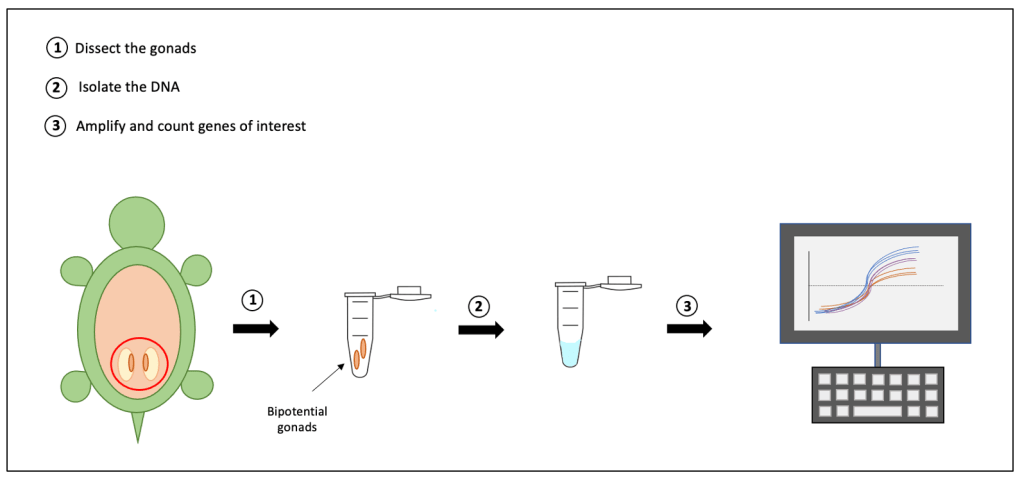
What My Science Looks Like: ­­­The steps involved in our research are pictured in the image below. To sample the eggs, we dissected bipotential gonads from undeveloped turtles. Bipotential gonads are tissues that will later develop into either ovaries or testes. They are located on top of another tissue that will later become the kidney. Even though they have not yet become ovaries or testes, the bipotential gonads will still turn on genes that show if the turtle is on the path towards male or female development. After dissection, we isolate the DNA from the tissue. We can then target our genes of interest using small pieces of DNA, called primers. Primers will only bind to strands of DNA that match the gene of interest. Once this step is done, we use a lab technique called Quantitative polymerase chain reaction (qPCR) which makes many copies of the gene of interest and counts how much of the gene is in a sample. qPCR is accomplished with the help of computers. The samples are prepared using a solution that contains an ingredient that will glow each time a new copy of the gene is made. A computer then will count the number of times the light is emitted to count how many copies of the gene exist in the sample. The computer continues to make copies of the gene until it reaches a certain threshold. If it takes a long time to reach the threshold, that means that there is a smaller amount of the gene in the sample. If it takes a short amount of time to reach the threshold, that means that there is a larger amount of the gene found in the sample. This method is what allowed us to figure out how much of the Kdm6b and Dmrt1 gene was present in the bipotential gonads of turtles in each treatment.

A graphic that shows the steps to results from qCPR. The first image is a cartoon turtle with a red circle around the lower abdomen, where the gonads are. The bipotential gonads are placed in test tube and the DNA is isolated. The final step is to run the DNA on a qPCR machine. When the DNA amplifies, is looks several curves on a computer screen.
The steps that were taken in the research presented in the published paper.

The Big Picture: As a result of climate change, the environment is becoming unpredictable, and the earth is becoming warmer. We are expected to experience heat waves that are longer lasting and of a higher intensity. For many animals, development and survival are closely tied to the environment. That is why it’s crucial to understand how external conditions, like temperature, and internal conditions, like hormone signaling, can affect development. I used the red-eared slider turtle because it has a common form of sex determination. While our research focused on the red eared slider turtle, our findings can be also applied to other reptiles, including sea turtles, which are critically endangered. Our research is also important because of the type of hormone that we used in our research. Estrogen comes in many forms. One of these forms, estrone sulfate, is often considered an inactive form of estrogen. Our findings counter this theory. Our findings suggest that estrone sulfate was able to affect Dmrt1, an important gene in the male pathway. Estrone sulfate was also able to override the effect of male temperatures to induce female development in turtles. Our research opens the door for many exciting opportunities and work to be done with the hormone, estrone sulfate.

Decoding the Language:

Autonomy: Autonomy is the ability to act on your own values and interests. It is having the power to make your own decisions independently and do the things that are important to you.

Bipotential gonads: Bipotential gonads are tissues that can be found inside an embryo, or an undeveloped animal. The bipotential gonads are still early in development and will go on to become either the ovaries or the testes when the animal finishes developing. In red eared turtles, the bipotential gonads are located on top of a tissue that will later become the kidney. Adult ovaries will produce female hormones, like estrogen, and adult testes will produce male hormones, like testosterone.

Climate change: Climate change are shifts and changes in global weather patterns that happen over a long period of time. It refers to the different increasing global temperatures like drought and rising temperatures that cause heat waves. Humans use of fossil fuels that release greenhouse gasses into the atmosphere, which contributes to climate change.

Data analysis: Data analysis involves examining and comparing data (in this case, the amount of the Kdm6b in turtles) across groups (known as “treatments”) in an experiment. Data analysis is important to draw accurate and meaningful conclusions after an experiment.

Deoxyribonucleic acid (DNA): DNA is a molecule that’s like a blueprint of the body. It contains all the instructions that the body needs to grow, develop, and function.

Doublesex and mab-3 related transcription factor 1 (Dmrt1): Dmrt1 is a gene that is important for male development in many species. It helps male reproductive organs grow. In turtles, Dmrt1 is turned on by Kdm6b. If Dmrt1 is intentionally turned off by researchers, then the turtle will develop as female.

Estrogen: Estrogen is a female hormone that is produced by the ovaries. It can exist in three forms: estradiol, estrone, and estriol. In this study, we looked at the effects of one type of estrogen, estrone-sulfate.

Estrone sulfate: Estrone sulfate is the combination of estrone, a form of estrogen, and a sulfate group. The conjugated form of this estrogen (estrone + a sulfate group) is often considered to be inactive. However, our findings show that estrone sulfate can make changes in the body.

Experimental control: An experimental control is a technique used to minimize, or “control”, unintended effects of a particular treatment. In this research, estrone sulfate was dissolved in ethanol and applied to eggs in the hormone treatment. This means that eggs in the hormone treatment were exposed to both estrone sulfate and ethanol. To ensure that the only differences between eggs in the hormone treatment and those in the other treatments was due to hormones, we applied ethanol to eggs in the other treatment groups as a control.

Gene: A gene contains the Information that will determine your traits and characteristics and it also contains the instructions that your body needs to make proteins. 

Hatchling: A hatchling is any animal that was recently born from an egg.

Hormone: A hormone is a chemical messenger that travels through the blood to induce changes in the body. There are many types of hormones. For example, testosterone is a male hormone that is produced by the testes and leads to the development of masculine features, like a beard. Estrogen is a female hormone produced by the ovaries and leads to feminine features. Cortisol is a stress hormone that is released during our fight or flight response.

Histone H3 lysine 27 (H3K27) demethylase (Kdm6b): Kdm6b is a gene that is important for male development in TSD species. When turtles are incubated under cool, male temperatures, the amount of Kdm6b increases. If turtles are incubated under male temperatures, but Kdm6b is intentionally turned off by researchers, then the turtle will develop as female. Kdm6b is important because it responds directly to temperature, and it turns on another gene that is critical for male development.

Primers: Primers are short pieces of DNA that can be specifically designed in the lab to match a small section of a gene. This allows researchers to target the specific gene of interest from a large pool of DNA that contains many genes.

Quantitative polymerase chain reaction (qPCR): qPCR is a laboratory technique that is similar to Polymerase chain reaction (PCR) in that it involves making many copies of DNA. The only difference is that qPCR takes this one step further by counting how much of a specific gene is in a sample. It involves making several copies of a gene until it can be detected by a computer, then counting how much is there.

Temperature-dependent sex determination (TSD): TSD is a special form of sex determination where temperature will determine whether an animal will develop either as a male or female. For some animals, like the red-eared slider turtle, warm temperatures create females and cool temperatures create males. For other animals, it’s the exact opposite. Animals, like the American alligator, have males that are produced at high and low temperatures, but females are produced at intermediate temperatures.

Learn More:

A YouTube video that describes how climate change can affect animal species

A brief article and YouTube video from the University of Wisconsin – Eau Clair on estrogen pollution in water systems

A YouTube video that describes how Kdm6b and Dmrt1 regulate sex determination

A YouTube Video that explains how PCR and qPCR work.

Synopsis edited by Maisam Yousef, B.S. 2019, Illinois State University, Rebekah Jackson, B.S. 2022, Indiana University-Purdue University-Indianapolis.

Download this article here

Please take a survey to share your thoughts about the article!

Tackling Tennessee Tornadoes

Featured Scientist: Jayme Walters, she/her/hers, PhD, Utah State University (Graduated from University of Tennessee with my PhD in 2020)

Dr. Jayme Walters stands in a field with a mountain in the backdrop. She has her hands on her hips.
Dr. Jayme Walters, Assistant Professor of Social Work at Utah State University

Birthplace: Southern Illinois

My Research: The focus of my research is to understand and improve the well-being of disadvantaged and oppressed individuals and families in Rural America. I study rural nonprofits and other organizations in persistently poor counties, their ability to accomplish their missions, and how being in impoverished, rural communities impacts their work. My work contributes to rural-focused literature in social work and nonprofit management. Using research to identify potential connections between place-based issues and organizational capacity is important to ensure that rural nonprofits can accomplish their goals and serve their communities. 

Research Goals: Moving forward, I will continue to develop research and interventions to improve the capacity and effectiveness of nonprofits so that they may successfully serve rural communities. I hope to serve as an advocate for organizations in rural communities to share their incredible impact and help to communicate their needs to funders.

Career Goals: I love being a professor! I hope to continue to be a researcher, teacher, and serve our communities in an effort to make positive changes.

Hobbies: Going to concerts, shopping, listening to music and audiobooks, hiking, and being with my family.

Favorite Thing About Science: There is some comfort in the predictability of the research. But often, what comes out of the process is unexpected, and that’s exciting. Being able to contribute to the generation of knowledge is a privilege.

Field of Study: Social Work

What is Social Work? Social work is a practice-based profession that promotes healthy well-being of people and their communities. We engage, in a collaborative way, with communities to provide assessment, intervention, and evaluation to ensure social change and improvement, particularly for individuals and families who are most vulnerable and oppressed.

Scientist Upbringing: I hated science when I was a kid. My brain just struggled with “hard sciences” – and some of that was lack of confidence and believing that I was not smart enough. Also, I was told regularly that science was a “boy” subject; as a girl, my place was to appreciate English and literature. I didn’t realize until I was in college that social sciences were a “thing.” Actually, it wasn’t until I was in undergraduate social work research class that I realized I liked the research process, and I could make a career of it. I appreciate the mentoring of my first research professor, Dr. Wayne Paris, who not only started my interest in research but also provided much-needed encouragement. 

My Team: The work related to social response to tornadoes was part of my PhD studies. I worked alongside my mentor, Dr. Lisa Reyes Mason, and her research collaborator, Dr. Kelsey Ellis. These projects with Dr. Reyes Mason and Dr. Ellis helped me to understand the research process from start to finish. This work also provided insight to place-based issues and research, which is a major component in my main line research. They are excellent mentors and allowed me to lead a few studies which gave me confidence and skill to lead my own work now.

Supporting Scientist: Dr. Kelsey Ellis, PhD, University of Tennessee.

Dr. Kelsey Ellis storm chasing in 2006. Dr. Ellis smiles at the camera, wind blowing in her hair. There is an active tornado in the background.
Dr. Kelsey Ellis, Associate Professor of Geography at University of Tennessee Knoxville

Birthplace: Baltimore, Maryland

My Research: I study the climatology of atmospheric hazards, including tornadoes, hurricanes, heat, and others.

Research Goals: I want to continue to study hazards in an interdisciplinary nature so as to make the biggest difference for public safety.

Career Goals: I am very happy in my current department and hope to help lead it to a successful future.

Hobbies: Baking, exercising, playing with my dogs and kiddos.

Favorite Thing About Science: Discovering new things that no one has ever known before.

Scientist Upbringing: I always had an interest in the weather and thought I would be a television meteorologist, but once I started doing research I loved it!

My Team: This is one paper out of many that came from funding we had from the National Oceanic and Atmospheric Administration (NOAA) from a project called VORTEX-Southeast, which aims to study tornadoes in the Southeast through an interdisciplinary nature. I was the climatologist in the group, and this specific paper was led by the Social Workers.

Field of Study: Geography

What is Geography? Geography is the study of the physical features of the earth and its atmosphere, and of human activity as it affects and is affected by these, including the distribution of populations and resources, land use, and industries.

Check Out My Original Paper: “Examining patterns of intended response to tornado warnings among residents of Tennessee, United States through a latent class analysis approach”

A QR code that links to the article in the International Journal of Disaster Risk Reduction.
QR code to original publication

Citation: Walters, JE, Mason, LR, Ellis, KN. (2018). Examining patterns of intended response to tornado warnings among residents of Tennessee, United States through a latent class analysis approach. International Journal of Disaster Risk Reduction. 34: 375-386.

Article written by Lesley Knox (she/her), sophomore, Rachel McCarthy (she/her) sophomore, Driana James (she/her) sophomore, and Jacob Hollenhead (he/him) freshman, Pellissippi State Community College. Student authors were enrolled in the Fundamentals of Communication (COMM 2025) at Pellissippi State Community college during the Spring 2022 term.

Research At A Glance: With respect to tornados, the United States is the most active place in the world. The southern portion of the U.S. has seen a high number of fatalities. Research suggests that this can be attributed to residents not seeking appropriate shelter. This study examines how likely residents are to respond to tornado warnings, with the goal of implementing early warnings that will reach those most at risk. The goal is to help the National Weather Service (NWS) identify those who are most at risk, in what ways they are most likely to be targeted in an emergency, and if further public education would be helpful.

In this study, the authors asked participants questions about how they respond to tornado warnings when and if they receive weather notifications. They learned about interesting factors that influence how people respond. People ignore tornado warnings for several reasons: they don’t have the financial ability to leave, they don’t have proper transportation, or they don’t have a safe place to go. But some people don’t have faith that the weather has been predicted correctly or how seriously to take it, because of false alarms in the past. People often wait too long to act or take shelter, and these actions can result in death. The findings identify a group of people who are at risk of not seeking safety after a tornado warning. There is a correlation between the number of warning notifications and a positive safety action for various reasons, including being elderly, not possessing smartphones, or being harder to reach in an emergency. Misinformation also plays a role. Some people have been through a tornado before and were unharmed. Others were unharmed after a tornado and thought that bodies of water or large buildings protected and would continue to protect them. These experiences influence what they believe will happen in future tornados. The NWS can use this information to target the people most at risk to try more ways of notifying them and to educate them about seeking safety in a tornado.

Highlights: In this study, the authors randomly surveyed 1126 people in Memphis, Nashville, and Knoxville, Tennessee. The survey included people who had cell phones and those that had landlines. To survey participants, the researchers used a computerized technology that interviews people over the telephone. Participants were randomly assigned a daytime or nighttime scenario, then asked what they would do if they received a tornado warning. The purpose of the survey was to understand how people respond to a tornado warning, regardless of when it might be received. The authors divided the participants into 3 groups based on their answers to the survey: tech users, typical actors, and passive or non-reactors (Figure 1). Typical actors were the largest group in the study. Typical actors were people who reacted to a tornado warning by looking for more information on the television, through the radio, or sometimes on the internet. Typical actors tended to be middle-aged people who were married or living with a long-term partner. They had access to a basement or storm shelter and had a higher income than other groups. Typical actors made up 54% of the daytime survey participants and 68% of the nighttime survey participants. Tech users were people who would respond to tornado warnings by looking for more information on the internet or through an app and were likely to seek shelter. Tech users were usually people who owned a smartphone and had young children living in the home. They made up 29% of daytime survey participants and 26% of the nighttime survey participants. Passive reactors were people who were given the daytime scenario and would not take any safety measures after receiving the warning. However, passive reactors tended to speak to friends, family, or others about the warning. Seventeen percent of the daytime survey participants were passive reactors. Non-reactors were people given the nighttime scenario who would do nothing after receiving a tornado warning. Only 4% of the nighttime survey participants were non-reactors.The smaller group of passive reactors and non-reactors were mostly made up of senior citizens, females, and long-term residents of Tennessee. These findings are important because they identify people who do and do not react to the tornado warnings. These findings can help the NWS determine future safety measures.

Pie charts that show the percentage of participants identified as typical actors, tech users, and passive and non-reactors.
Figure 1. The percentage of participants placed in each group in the daytime (above) and nighttime (below) scenarios.

What My Science Looks Like: Figures 2 and 3 show how people stated that they would respond if they received a tornado warning. During the daytime scenario, all participants would look outside at their surroundings or contact friends and family. Even so, there was a big difference between how tech users and how typical actors sought out additional information. There was a 100% probability that tech users would seek more information from the internet, and they were also more likely to contact friends and family. Typical actors were more likely to turn on the tv or radio for more information but had only a 50% probability of using an app on their phones to get more information. Conversely, passive reactors had a high probability of doing nothing after a tornado warning.

A bar graph that shows how tech users, typical actors, and passive reactors would respond to a tornado warning during the daytime
Figure 2. Actions or inactions that participants chose in the study, given the daytime scenario.

During the nighttime scenario, typical actors and tech users responded similarly. Typical actors and tech users were equally likely to get more information from the tv or the radio and were almost equally likely to look outside. However, there was a higher chance that typical actors and tech users would do nothing during the night, likely because people are sleeping or tired. It should also be noted that the non-reactors were less likely to turn on the TV or radio, seek additional information, or contact friends or family, than their daytime passive reactor counterparts. These results are consistent with the information suggesting that tornadoes that occur during the night are more deadly than those that happen during the day. The findings indicate that the group most at risk of harm are the passive reactors or non-reactors. The NWS can take steps to reach this group in the future.

A bar graph that shows how tech users, typical actors, and passive reactors would respond to a tornado warning during the nighttime.
Figure 3. Actions or inactions that participants chose in the study, given the nighttime scenario.

The Big Picture: On average, the United States has more annual tornadoes than any other country. U.S. tornadoes produce property damage, billions of dollars in reconstruction and relief aid, and significant numbers of fatalities each year. The southern region of the U.S. (Alabama, Arkansas, Florida, Georgia, Louisiana, Mississippi, New Mexico, Oklahoma, Tennessee, and Texas) has experienced 11 of the 25 deadliest tornadoes ever recorded. This experiment examines behavioral patterns in response to tornado warnings among residents in Memphis, Nashville, and Knoxville, Tennessee. The authors found that people who received a warning during the day were more likely to act. They also found that the more notifications someone gets about a tornado, the more likely they are to take safety actions. Participants that were passive or non-reactive were found most at risk. The NWS is now considering adding or increasing warning messages to encourage others to reach out to passive or non-reactors. The information from this study can be used better target at-risk individuals in the future.

Decoding The Language:

Behavioral patterns: Behavioral patterns refers to how an individual or group responds to an object or a situation. It is repeated behavior. In the context of this article, a behavioral pattern would be how a person regularly responds when they receive a tornado warning.

Climatologist: A climatologist is a scientist who studies weather patterns over long periods of time.

Climatology: Climatology is the study of the atmosphere and weather patterns over long periods of time.

National Weather Service (NWS): The National Weather service is a federal agency that provides all climate forecasts and warnings in the United States.

Non-reactor: A non-reactor was a study participant interviewed during the nighttime. These were people who would not move to safety or seek out further information from any sources in the event of a tornado warning.

Organizational capacity: Organizational capacity refers to an organization’s ability to perform its designated duties. For example, the NWS has to be able to coordinate across its regional offices to make sure that people receive information about tornados in their local areas and to receive those warnings in a timely fashion, with the goal of saving lives. The organizational capacity would be the ability to the NWS to take each of the necessary steps to achieve this goal.

Passive reactor: In the context of this study, passive reactors were people given the daytime survey and who unlikely to act in the event of a tornado warning. The had a “passive” response when they receive a tornado warning.

Place-based issues: Place-based issues are problems specific to certain places or regions that can be addressed by improving the conditions of the entire community associated with the area. For example, improving the health outcomes of a region may involve bringing in community stakeholders to improve hospitals, recreational facilities, and housing, with the goal of holistically creating a healthier community.

Probability: Probability is a mathematical term that describes how likely it is that an event will occur and is represented by a number that falls between 0 and 1. If the probability is high, or closer to 1, then it is more likely to occur. If the probability is low, or close to 0, then it is less likely to occur.

Social work: Social work is a profession that strives to support the basic needs of people, families, and communities. Social workers might work as therapists, counselors, researchers, case workers, care takers, administrators, community organizers, and more.

Tech user: A tech user was a study participant who was likely to respond to a tornado warning by actively using technology. These participants would use the Internet or smartphone app to gather more information.

Typical actor: A typical actor was a study participant ho was likely to respond to a tornado warning by seeking out further information by turning on the TV or listening to the radio.

Learn More:

The Fujita Scale of tornado damage intensity from the National Weather Service.

Information on tornado alerts from the National Weather Service.

A research article on messaging strategies used by weather forecasters:

Liu, B., Atwell Seate, A., Iles, I., & Herovic, E. (2020). Tornado Warning: Understanding the National Weather Service’s Communication Strategies. Public Relations Review, 46(2), 101879.

Synopsis edited by Rosario Marroquin-Flores (she/her), PhD 2022, Illinois State University and Katy Ross (they/she), PhD 2019, Ohio University.

Download this article here

Please take a survey to share your thoughts about the article!
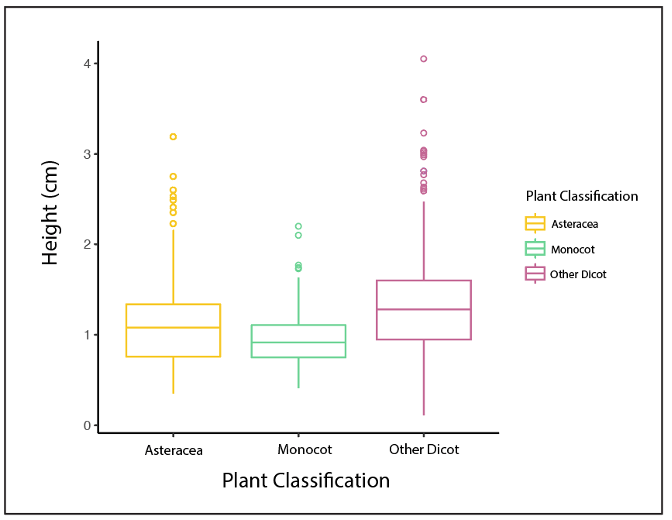
Synopsis Authors:

Lesley Knox (she/her) sophomore at Pellissippi State Community College.

Lesley with her wife sit on a bench. Their and daughter sits between them.

Lesley has always lived in Tennessee, but resides in Knoxville, TN with her wife, Daisy, and daughter, Lainey. She enjoys spending time with her family, cooking, and reading. Lesley is studying Imaging Sciences with the hopes of becoming a doctor in radiology.

Rachel McCarthy (she/her), sophomore at Pellissippi State Community College.

Rachel holds her daughter. There is a lake and mountains in the background.

Rachel has traveled and lived all over the world, but now has settled in Oak Ridge, TN, close to her parents, siblings, and extended family. She is a mother to her daughter, Aria, and they enjoy baking, kayaking, playing with their 2 dogs, and playing piano together. Rachel is studying Business Management, teaches music to school-aged children, and volunteers in her community and church.

Driana James (she/her), sophomore at Pellissippi State Community College.

Driana holds her daughter, while her daughter kisses her cheek. There is a prairie in the background.

Driana plans to have an A.A.S. in Business Management come May! Driana has had a license through Tennessee as an Aesthetician since 2017. She hopes to take her career into marketing or data analytics.  She was blessed with a best friend, and a daughter in January 2019. She spends her days being a mom and student as of right now. Driana longs for the days we can have barbecues, spend all day at the parks, and have 9:00 p.m. sunsets since summer is her favorite season.

Jacob Hollenhead (he/him), freshman at Pellissippi State Community College.

Jacob and his girlfriend smile at the camera. There is an ocean with a setting sun in the background.

He was born and raised in Knoxville, Tennessee where he still resides. He is going to school for Architectural Design Technologies, with hopes of designing houses in the future. Jacob enjoys playing his guitar, spending time with his niece and nephew, and fishing with his dad when the weather permits it.

Sustainable Use of Recycled Glass in Pavement Systems

Featured Scientist: Saurabh (Mobi) Singh (he/him/his), Master of Business Administration 2017, Inactive M.S. student, Department of Technology, Illinois State University.

A picture of Saurabh standing in front of a construction site.
Mobi Singh at a construction site in Bloomington, IL

Birthplace: Jhajjar, Haryana, India

My Research: The research, led by Dr. Pranshoo Solanki, involved creating unique types of construction materials out of waste products like glass and rubber. The goal of the project was to support sustainability and help reduce pollution. The cement industry is one of the leading producers of greenhouse gases and our research can help the industry make sustainable and environment-friendly decisions.

Research Goals: Short term, I want to engage in research that challenges the status quo to help industries make choices that will make the world a cleaner and better place. Long term, I want to engage in research that will use innovative technologies to address child hunger. I am also interested in researching the role of privacy concerns and emotions in social media advertising at Kent State University in Ohio. 

Career Goals: I like to dream and try new things. There is no specific career path that fits all my skill sets but I wish to be a full-time scholar for the rest of my life. Being a university professor and helping other students grow intellectually is one of my long-term career goals. As I grow older, I would like to spend more time giving back to my community. In later years, I wish to support the costs of higher education for those who are not able to cover the costs themselves.

Hobbies: I enjoy travelling to other countries, cooking, meeting new people, and community service.

Favorite Thing About Science: Science is exciting because it shifts paradigms towards better methods and applications of knowledge.

Field of Study: Material Science

What is Material Science? Material science is the study of human-made materials. We study the chemical and physical properties of these materials and figure out how they can be used. For example, one practice could be to take recycled materials and see how they might be used in common household items.

My Team: The research was conducted in Turner Hall at Illinois State University. The research team was led by Dr. Pranshoo Solanki. The team had an external co-investigator named Dr. Gaurav Sancheti from Manipal University in India. I actively worked with Dr. Pranshoo Solanki in the construction management laboratory to test samples of concrete.

Check Out My Original Paper: “Sustainable Use of Waste Glass in Pavement Systems–Review, Limitations and Potential Application”

QR code that links to the original publication.
QR code to the original publication

Citation: Solanki, Pranshoo, Gaurav Sancheti, and Saurabh Singh. “Sustainable Use of Waste Glass in Pavement Systems–Review, Limitations and Potential Application.” The Journal of Solid Waste Technology and Management 47.2 (2021): 235-251.

Research At A Glance: The United States (U.S.) transportation sector is one of the main sources of greenhouse gas emissions and energy consumption in the U.S. According to the Environmental Protection Agency (EPA), the U.S. is the third largest producer of cement, and cement is the second most consumed substance in the world (after water). The cement industry is the third largest source of industrial pollution in the U.S. and is responsible for emitting more than 500,000 tons of greenhouse gases per year. Cement is one of the raw materials used to make pavement. As cement is a leading contributor of industrial pollution, it has become increasingly clear that our use of pavement has had a negative impact on the environment. As a result, many researchers have started to explore how recycled materials might be used in pavement. For example, usage of recycled glass in pavement has attracted a lot of interest as an alternative to current methods. According to the EPA, 11.5 million tons of glass is produced in the U.S. every year, but 60% of it ends up in landfills. However, when glass is finely ground, it can be used as a substitute for certain components of cement. In our paper, we reviewed potential uses of recycled glass as a pavement material and how the glass might affect the performance of the pavement. Overall, our study found that recycled glass could be used as a pavement material. This means that we could divert large amounts of glass headed to landfills to use as a construction materials.

Highlights: Fly ash has traditionally been used as a partial replacement for cement in many construction materials, like concrete and other controlled low strength pavement materials. Fly ash is a fine powder that is created as a by-product of coal power plants. There have been numerous closures of coal power plants in the past few decades, and this has disrupted the supply of fly ash to the construction industry. Recycled glass powder can be used in place of fly ash in pavement construction and can help to reduce the industry’s reliance on cement. Our study tested the feasibility of using recycled glass powder in lieu of fly ash

To test this, we substituted the fly ash in the cement with a specific type of recycled glass, called ACAS.  We then tested the material for its compressive strength. Compressive strength refers to the amount of pressure that a solid material can handle before it cracks. We also used glass of varying thickness to see if more finely ground or more coarsely ground glass would be best to improve the compressive strength of the pavement. The results in Figure 1 show that when 100% of the fly ash inside of the cement was replaced with finely ground glass, the compressive strength of the pavement improved the most.

Figure 1. This graph displays the results of experiments that tested the compressive strength of the samples. ACAS is a type of fine recycled glass and the three lines depict how the compressive strength varied with different blends of fine and coarse glass. The y-axis shows the compressive strength and the x-axis shows the percent of cement that was replaced with ACAS glass. Figure adapted from Solanki et al. 2021.

Next, we tested the material for its flow consistency. Flow consistency refers to the ability of freshly mixed concrete to flow into empty spaces before it sets. It is used to measure how much the low strength pavement materials flow naturally when they are used to fill trenches and pavements. Similar to the previous experiment, we replaced the fly ash inside of the cement with different amounts of finely or coarsely ground glass. The results in Figure 2 show that the flow consistency was highest when 50% of the fly ash was substituted with finely ground glass.

Figure 2. This graph displays the results of experiments that tested the flow consistency of the samples. The y-axis shows the flow consistency and the x-axis shows the percent of cement that was replaced with ACAS recycled glass. Figure adapted from Solanki et al. 2021.

What My Science Looks Like: In this paper, we suggest that recycled glass can be used as a replacement for fly ash in cement and we test the quality of the new material. In the image below, a sample of controlled low strength pavement material is being tested for its compressive strength.

An image of a cylinder piece of cement. The cement is between two metal pieces attached to an electrical source. The top of the machine pushed down to create force, which is measured to determine the compressive strength.
In this image, we test the cement for its compressive strength at the construction management lab at Illinois State University. The sample contains recycled glass powder in place of fly ash.

The Big Picture: Our research can help reduce pollution in many ways. We suggest alternatives to concrete and provide proof that these alternate materials are effective. We show that recycled glass can improve the properties of concrete. Glass can be a cost effective alternative for the transportation industry and we hope that the industry will adopt these new materials. We offer a green and cost effective alternatives to certain parts of cement and our goal is to reduce current levels of pollution.

Decoding the Language:

Compressive strength: Compressive strength can be defined as maximum compressive stress that a solid material can sustain before fracture.

Environmental Protection Agency (EPA): The EPA is a United States federal government agency whose mission is to protect human and environmental health.

Flow consistency: The flow consistency is a measure of the ability of freshly mixed concrete to flow into empty spaces before it sets.

Fly ash: Fly ash is a fine powder that is made from burning pulverized coal. It is used in concrete to improve workability, strength, and durability.

Greenhouse gas: Greenhouse gases, such as carbon dioxide and methane, trap heat inside the Earth’s atmosphere and can destabilize global weather patterns.

Low strength pavement materials: Low strength pavement materials have a lower concentration of cement as compared to regular pavement material.

United States (US) transportation sector: The US transportation sector is a subsector of the government that deals with all types of transportation, including roads, railways, air travel, and waterways.

Learn More:

United States EPA information on the health and environmental effects of cement

United States EPA information on coal ash

Synopsis edited by Ian Rines, BS 2018, Wofford College, Elyse McCormick, MS (Anticipated 2022), Illinois State University, and Rosario Marroquin-Flores, PhD (Anticipated 2022), Illinois State University.

Download this article here

Please take a survey to share your thoughts about the article!

Going off the rails: Soras increase alarm calling when they hear owls, but not ducks

Featured Scientist: Daniel Lorenz Goldberg (he/him/his), PhD (Anticipated December 2021), Illinois State University, Biological Sciences.

Daniel looking at the camera and pointing to a sign that reads “Illinois State University RAIL COUNT”
Daniel in his office in Illinois State University Science Laboratory Building with his official research vehicle plaque.

Birthplace: Riverside, California

My Research: I study vocal behavior and how it evolved in a group of birds called rails. Rails vocalize frequently at night and in dense vegetation to communicate with each other.

Research Goals: I am interested in pursuing research in bird conservation after I graduate. I hope to learn more about birds to protect them and their habitats. My dream is to increase public understanding about birds by sparking interest through birdwatching.

Career Goals: I aim to do a combination of research and teaching as a university professor.

Hobbies: I enjoy birdwatching, hiking, swing dancing, and tabletop games with my friends.

Favorite Thing About Science: I love the vast amount of primary literature that we have at our fingertips as scientists. There have been so many discoveries that have been documented, and we can  access it by reading about it in books or online. If you have an interesting research question, chances are good that there is some background information out there to get you started!

My Team: This project was a group effort, though I am the first author on the published article. My advisor Dr. Angelo Capparella helped me develop the project, while Dr. Mike Ward provided field equipment. Both professors provided advice on writing the article. My hardworking undergraduate, Toby Bassingthwaite, assisted with fieldwork and transporting our equipment, and she also knew where to hunt down some delicious food in the Chicagoland area!

Organism of Study: I study the Sora (Porzana carolina), a common rail in Illinois.

A photo of a Sora (Porzana carolina). It is a brown bird with a bright yellow beak, and it is standing with its feet in the water.
A photo of a Sora (Porzana carolina). Photo credit: Tim Lindenbaum, The Nature Conservancy

Field of Study: Behavioral Ecology

What is Behavioral Ecology? Animal behavior is shaped by an animal’s habitat and its interactions with other organisms. Behavioral ecology is the study of how an animal’s behavior affects its life and survival. Behaviors that help animals to survive become more common. Behaviors that do not help animals survive become less common.

Check Out My Original Paper: “Calling owl: Rails adjust vocal activity rates in response to changes in predation risk”

A QR code that links to the original publication.
QR code to the original publication

Citation: Goldberg, D.L., Bassingthwaite, T.A., Ward, M.P. and Capparella, A.P., 2020. Calling owl: Rails adjust vocal activity rates in response to changes in predation risk. The Wilson Journal of Ornithology. 132(4):1038–1043.

Research At A Glance: Animals use sound-based communication to signal to each other to defend territories, attract mates, or maintain group contact. However, this communication can be risky because predators can eavesdrop on these sounds. Predators can then home in on the calling animal, and more easily capture and eat it than if the animal had remained silent. Animals can recognize the calls of their predators and often react by reducing the number and rate of their own sounds. For example, birds that are preyed on by raptors fall silent upon hearing raptor calls. One group of birds that has shown little evidence of varying their calling behavior in response to predator sounds are rails. In previous studies, rails have been found to flick their white tails as a visual signal to predators, indicating that the rail is aware that it is being watched. We tested the hypothesis that rails will recognize raptor calls as a predator threat. We predicted that rails would reduce their calling rates when they hear the calls of a raptor, but not when they hear the calls of a different and harmless bird.

The Lake Calumet wetlands near Chicago are a restored habitat that is home to large numbers of rails, including the Sora. We used Autonomous Recording Units (ARUs) to record the calls of rails in 10 locations at the water’s edge of three marshes in the region during the spring breeding season of rails in April 2019. At half of these recording locations, we broadcast the hoots of a raptor, the Great Horned Owl. At the other half of these recording locations, we broadcast quacks of a harmless bird, the Blue-winged Teal duck. We made these broadcasts in the evening, night, and early morning, when rails tend to call the most. At the end of the month, we retrieved the ARUs and counted the number of Sora calls recorded at each of the 10 locations. We then compared the number of calls the rails made per hour at each location. We found that Soras increased their calling rates after broadcasts of the Great Horned Owls but decreased their calling rates after broadcasts of the Blue-winged Teals. This result is the opposite of our hypothesis because birds usually decrease their calling rates when they hear predator calls.

Highlights: Our results indicate that Soras do not recognize Great Horned Owls as a major threat, as the rails were not threatened into silence after the owl broadcasts. This finding made sense because Soras are not the primary prey of this raptor, even though the owl does eat Soras on rare occasions. We found that Soras called at higher levels after the owl broadcast than beforehand. They also maintained high levels of alarm calling for an entire week after the owl broadcast (Figure 1). Other research has found that Soras tend to stay hidden in thick emergent vegetation in their wetland habitats. The plants in this habitat should give rails cover from Great Horned Owls, which use their superb vision to hunt down their prey. If the owls cannot see the Soras, then they are more safely able to make an alarm call because they are not revealing their location.

A line graph shows the frequency of Soras calls per hour from April 13th – 29th. The owl and teal broadcast were done on April 21. The graph depicts an increase in the rate of Soras calls after the owl broadcast.
Figure 1. During the study period of April 13th – 29th, 2019, we recorded Sora calling rate as the number of calls made per hour (y-axis) for several days (x-axis) after owl broadcasts. The dashed line shows the broadcast date when we played either an owl call or a teal call to the soras. The black line shows calling rates of soras that were exposed to owl calls, the grey line shows the calling rate of soras exposed to teal calls.  Figure adapted from Goldberg et al. 2020.

What My Science Looks Like: Rails are shy birds that tend to live in dense emergent vegetation in wetlands, grasslands, or forests. They are difficult to see but are quite loud and produce a variety of sounds that can be heard easily. This allows us to study them using ARUs. ARUs allow us to listen to all the sounds in an area and make recordings when the birds are calling. We can then identify rail calls by their appearance in spectrograms using a computer in the laboratory. This approach cuts down on the amount of time that we need to spend on fieldwork, because instead of going out at dawn, dusk, and night to listen for rail calls, we can simply place an ARU out in the rail habitat to detect calls.

An image of a marsh. There are plants growing in the water, with taller vegetation lining the sides of the marsh.
The view from the north side of Big Marsh Park, looking south past the deployment spot of an ARU, during the spring of 2019. Image adapted from Goldberg and Bassingthwaite 2020.
An image of an ARU. It is a green box mounted on a green pole, with a microphone sticking out the side.
A close-up view of an ARU placed in the field to detect rail calls throughout the day. Image adapted from Goldberg and Bassingthwaite 2019.

The Big Picture: Many rails are endangered, as they have lost habitat due to humans converting wetlands, grasslands, and forests to farm fields and cities. Some rails, like the Sora, are also hunted by humans for food and sport. Because rails produce many calls that are easily recognized, predators can use their calling behavior to identify rail species in the wild. We can use their calls to learn more about how they respond to predators and how they may return to habitats that have been restored. This research is important because it may be used to help rails to increase in number. Conservation of wetland species will benefit other birds and animals that live in those habitats. Wetlands provide many benefits, such as reducing the impact of flooding, improving water quality, and maintaining water levels during droughts. These habitats cannot persist without the presence of a variety of organisms, including rails.

Decoding the Language:

Autonomous Recording Unit (ARU): Autonomous Recording Units (ARU) are battery-powered recording devices. They can be left outside because they have protective covers that shield them from the weather. When they are turned on, they will record all sounds made around them until they are turned off or the batteries run out of power.

Emergent vegetation: Plants that grow in wetlands and stick up partially out of the water. They provide an ideal habitat for rails, which can hide among the plants to avoid detection by predators.

Endangered: Animal species that is at risk of extinction.

Fieldwork: Fieldwork is a type of scientific research that takes place outside of the lab. For my research, fieldwork includes deploying and analyzing sound recordings to listen for rails at the Lake Calumet wetlands near Chicago.

Primary literature: Primary literature is a collection of historical and scientific documents such as books, recordings, or journal articles. Essentially, it is the write-up of information that was collected in a study.    

Rail: Diverse group of birds which includes about 127 different species, including Soras. Most rails are small to medium, and while typically found near marshes they can be found throughout the world.

Raptor: Raptors are meat-eating birds such as hawks, eagles, vultures, falcon, and owls.      

Signal: A signal is a type of communication, such as a sound produced by an animal.    

Sora: Small waterbirds found throughout North America typically in marshes. Usually 19-30 cm in length, they have a grey face and belly while the rest of the body is brown with black & white patches.

Spectrogram: A spectrogram is a type of graph that shows a visual representation of sound, with the frequency of the sound on the y-axis, and the timing of the sound on the x-axis.

Learn More:

For more information on bird call research using ARUs, check out Dr. Mike Ward’s laboratory webpage.

The Macaulay Library of the Cornell Lab of Ornithology, a website devoted to collecting recorded calls of birds and other animals in a database for scientific and general use, was the source of the Great Horned Owl and Blue-winged Teal calls that I broadcast in my study.

There are many articles written about prey animals’ responses to predator sounds. These papers summarize what is known about changes in calling behavior:

Hettena AM, Munoz N, Blumstein DT. 2014. Prey responses to predator’s sounds: a review and empirical study. Ethology. 120:427–452.

Hughes NK, Kelley JL, Banks PB. 2012. Dangerous liaisons: the predation risks of receiving social signals. Ecology Letters. 15:1326–1339.

Zuk M, Kolluru GR. 1998. Exploitation of sexual signals by predators and parasitoids. Quarterly Review of Biology. 73:415–438.

The papers that initially piqued my curiosity about this avenue of rail research:

Randler C. 2006. Disturbances by dog barking increase vigilance in Coots Fulica atra. European Journal of Wildlife Research. 52:265–270.

Randler C. 2007. Observational and experimental evidence for the function of tail flicking in Eurasian Moorhen Gallinula chloropus. Ethology. 113:629–639.

Synopsis edited by Ian Rines, BS 2018, Wofford College, and Emily Kerns, PhD student, University of Wisconsin-Madison, Integrative Biology.

Download this article here    

Please take a survey to share your thoughts about the article!

How do molecules outside the cell affect the nervous system?

Featured Scientist: Jennifer Patritti-Cram (she/hers), PhD candidate (Anticipated: Fall 2021), University of Cincinnati & Cincinnati Children’s Hospital

A selfie of Jennifer in the lab. She has dark hair and brown eyes. There is a microscope in the background.
Jennifer in the laboratory preparing to cut tissue sections of mouse spinal cords and tumors.

Birthplace: Valencia, Venezuela

My Research: I’m interested in understanding how a type of tumor called neurofibromas form in the nervous system. We use mice to study the neurofibroma disease and see how these tumors form. Our goal is to identify genes important to the formation of neurofibromas. We want to provide therapies to patients that suffer from a specific version of this disease: neurofibromatosis type 1.

Research Goals: After obtaining my doctoral degree, I will pursue a career in Intellectual Property Law and Policy.  This means I will not be doing research. Instead, I will use my scientific knowledge to advise scientists on how to protect their scientific inventions.  

Career Goals: I plan to use my knowledge in neuroscience and cancer biology to help scientists protect their inventions. I am also interested in science policy. I plan to use my training to advocate for  policies that increase funds for important research and help to increase Latino representation in science fields.

Hobbies: I like to take hikes with my dogs and watch Netflix.

Favorite Thing About Science: My favorite thing about science is how we are creating new knowledge through research. My most fulfilling time as a scientist is when I discover something new that only I know. Then, as part of my job as a scientist, I get to share that knowledge with other scientists and people around the world.

My Team: My lab is very cooperative. We all help each other with experimental design and with performing experiments. We also have several collaborations with other labs in the United States.

Organism of Study: The house mouse (Mus musculus)

Photo by George Shuklin from Wikimedia Commons

Field of Study: Neurobiology & Cancer Biology.

What is Neurobiology & Cancer Biology? Neurobiology is a type of biology that focuses on the nervous system. Cancer biology focuses on the mechanisms that regulate the spread of cancer. This can include the study of cell growth, the transformation of normal cells into cancer cells, and the spread, or metastasis, of cancer cells.

Check Out My Original Paper: “Purinergic Signaling in Peripheral Nervous System Glial Cells”

QR code that links to the original publication

Citation: Patritti-Cram J, Coover RA, Jankowski MP, Ratner N. Purinergic signaling in peripheral nervous system glial cells. Glia. 2021 Aug;69(8):1837-1851. (PMCID: PMC8192487).

Research At A Glance: This article is a review, it summarizes our knowledge of a particular topic. In this review, we address specific ways that cells communicate with each other and how that can control cell function. We focus on a type of molecule called purines, which are located outside of the cell. When purines bind to the cell, they can cause changes in how the cell functions and how it communicates with other cells. To make this change happen, the purine must bind to a specific type of chemical structure called a receptor, which is located on the outside surface of a cell. When the purine binds to a receptor, it can trigger a change in how that cell communicates with other cells. When this happens, it is called purinergic signaling. Our review focuses on purinergic signaling and how it affects a specific cell type in the body called glial cells. Glial cells surround our nerve cells to provide the support and protection that they need to work properly. Our nerve cells transmit information across the body. They help us to interpret tactile information, like touching a door knob, help us to control muscle contractions, and play a role in how we experience pain. In our review, we focus on a particular type of glial cell called Schwann cells.

In this review, we provide a summary of all the known receptors that purines can bind to. We refer to these receptors as purinergic receptors. We also provide a summary of the molecules that turn on to block those receptors, a summary of  all the receptors that purines can bind to in mouse Schwann cells, and explain how they work. The nervous system is made up of two parts, the central nervous system (CNS), which includes the brain and the spinal cord, and the peripheral nervous system (PNS), which connects the rest of the body to the CNS. In our review, we discuss which purines might be found in the PNS. We review the role of purinergic signaling in several diseases and how it may impact how we experience pain. We conclude the review by arguing that scientists should focus on purinergic receptors when we develop drugs to treat diseases that impact the PNS.

Highlights: In this article, we provided a summary about how purinergic signaling happens in normal nerve cells (Figure 1), how purine molecules can impact tumors (Figure 2), and how purinergic receptors can regulate pain (Figure 3). Each figure below gives a summary of the main points made in our article. Figure 1 shows what happens in a normal nerve cell. When nerve cells receive an electrical signal, the axon of the nerve cell will receive and send the signal to other nerve cells, muscles, and glands. The electrical signal triggers the release of different types of purine molecules. These purines bind to purinergic receptors on the surface of Schwann cells to trigger cell responses. Schwann cells will perform different functions based on which type of purinergic receptor becomes bound by the purine molecule.

An image that summarizes what happens in a normal nerve cell. Step 1 shows a cartoon image of a lightning bolt. Step 2 shows the cell body which receives the electrical signal and the axon which passes the signal, with arrows to show that purine molecules are released. Step 3 shows purine molecules hovering around a Schwann cell. The Schwann cell has three different types of purinergic receptors: P1, P2X, and P2Y, all of which lead to slightly different Schwann cell functions.
Figure 1. Purinergic signaling in a normal nerve cell in the peripheral nervous system (PNS) in three steps: 1) the nerve cell is stimulated by an electrical signal, 2) purine molecules are released, and 3) purine molecules bind to purinergic receptors to control how Schwann cells function, grow, and multiply. Figure adapted from Patritti-Cram et al. 2021

Figure 2 shows the roles of purine molecules in tumor cells when they are located in the PNS. Tumors have many purine molecules. These purine molecules activate purinergic receptors in the immune cells inside the tumor. The immune cells will then respond and contribute to fight tumor growth.

An image that summarizes the role of purine molecules in peripheral nerve tumors. The image shows purine molecules, Schwann cells, and immunce cells clustered around a tumor cell. It has an arrow with a list of the effects of purine molecules, including supporting cell growth, regulating blood oxygen levels, stimulating blood vessel growth, and reducing the spread and size of tumor cells.
Figure 2. The role of purine molecules in peripheral nerve tumors. Figure adapted from Patritti-Cram et al. 2021.

Figure 3 shows the roles of purine molecules in regulating our pain response. Purinergic receptors have different roles in pain. Some help alleviate pain and inflammation, while others produce the pain sensation itself. We still need more research to clarify the role of purinergic receptors in pain.

An image that summarizes the role of purine molecules in the regulation of pain, including blocking painful stimuli (toxins, chemicals, adverse temperature), alleviating pain, reducing pain from synthetic opioids, reducing chronic inflammatory pain, reducing skin sensitivity, and regulating thermal sensitivity.
Figure 3. The role of purinergic receptors in the regulation of pain. Figure adapted from Patritti-Cram et al. 2021.

What My Science Looks Like: As part of this paper, we did an experiment to identify the purinergic receptors found in mouse Schwann cells. We isolated the Schwann cells from mice and performed a laboratory technique called reverse transcription polymerase chain reaction (RT-PCR). RT-PCR allows us to count how much DNA is in a sample. In this case, we wanted to know which purinergic receptors were in mouse Schwann cells and how abundant they were.

Figure 4 shows the results of this test when we were looking for one type of purinergic receptor, P2X. Recall that P2X receptors help Schwann cells to communicate with other cells, migrate, and protect the axon of the nerve cell (Figure 1). The x-axis in Figure 4 shows each P2X receptor we found and the y-axis shows the cycle threshold (CT) value. The CT is the number of cycles required for the DNA to be detected in our sample. If a CT value is low, this means that there was more DNA in our sample because it took fewer cycles to be detected. So, in this case, a low CT means that the purinergic receptor was more abundant in our sample. As you can see, the P2X receptor “P2RX4” was the most abundant in mouse Schwann cells, while “P2RX1” was the least abundant. Our results are interesting because we can now give scientists a specific list of purinergic receptors that are present in mouse Schwann cells. This list can provide scientists with insight on how these receptors might impact how Schwann cells function in diseases that affect the peripheral nervous system.

A data figure that shows six P2X receptors found in mouse Schwann cells. The most abundant purinergic receptor is P2RX4, with a CT equal to approximately 5. The least abundant purinergic receptor is P2RX1, with a CT equal to approximately 23.
Figure 4. P2X purinergic receptors in mouse Schwann cells. We found that the following P2X receptors are expressed in mouse Schwann cells:P2RX2, P2RX3, P2RX4, P2RX5, P2RX6, P2RX7. Any receptor below the white dotted line was considered to be of high abundance in our sample. Figure adapted from Patritti-Cram et al. 2021.

The Big Picture: My research is important because it can help scientists develop therapies for patients that suffer from diseases that impact the nervous system. Currently, over 100,000 Americans suffer from neurofibromatosis type 1 (NF1). Patients with NF1 have an increased risk of developing tumors (neurofibromas) in the peripheral nervous system. Neurofibromas can cause nerve damage and can compress vital organs. They are tumors composed of many types of cells that are not working properly. One type of the cell that plays a very important role in neurofibroma development are Schwann cells. Schwann cells are specialized cells that surround all the nerves in our body. In healthy humans, Schwann cells help to support nerve function. In neurofibroma patients, Schwann cells do not function properly and will multiply uncontrollably. This leads to the development of neurofibroma tumors. To date, there is no cure for this disease. Therefore, the main goal of my research is to understand how these neurofibroma tumors form and develop therapies for patients that suffer from this disease.

In our lab, we use mice to study NF1. We use mice because the genetics of mice closely resemble that of humans. Mice develop neurofibroma tumors in similar places in the body and at a similar rate. In both humans and mice, Schwann cells are at the center of neurofibroma formation. They express many different purinergic receptors and it’s important for scientists to understand the role of these receptors so that we can learn about how Schwann cells function in the body. In our review, we clarify and organize the body of research on this topic. Our research can help scientists understand how purines impact diseases of the nervous system.

Decoding the Language:

Central nervous system (CNS): The CNS consists of two parts, the brain and the spinal cord.

Cycle threshold (CT): The CT is a way to express the abundance of DNA in a sample during an RT-PCR reaction. Each time the DNA is amplified, this can be considered one cycle. If many cycles are required to detect the DNA, then there is a small amount of DNA in the sample. If very few cycles are required to detect the DNA, then there is a large amount of DNA in the sample.

Glial cells: Glial cells are cells in the nervous system that do not produce electrical impulses. They make a fatty substance called the myelin sheath, which wraps around nerve fibers to insulate them and increase the speed at which electrical impulses are conducted. They also provide support and protection for neurons.

Metastasis: Metastasis is the spread of cancer cells from the place where they first formed to another part of the body.

Neurofibroma: A neurofibroma is a type of nerve tumor that forms soft bumps on or under the skin.

Neurofibromatosis type 1 (NF1): Neurofibromatosis type 1 is agenetic disorder that causes tumors, called neurofibromas, to grow in peripheral nerves.

P2X: P2X is a type of purinergic receptor located at the cell membrane that gets activated when a molecule called adenosine 5’-triphosphate (ATP) binds to the receptor. When ATP binds to P2X receptors, molecules that were outside the cell can then move inside the cell. These molecules are sodium, potassium, and calcium and are essential for any cell to function properly.

Peripheral nervous system: The peripheral nervous system is the nerves outside of the brain and the spinal cord.

Purine molecules: Purine molecules are made up of carbon and nitrogen atoms. When the human body produces them, they are called endogenous purines.

Purinergic receptors: Purinergic receptors are a family of molecules or receptors that are found in the cellular membranes of almost all mammalian tissues.

Purinergic signaling: Purinergic signaling is a type of cell signaling that takes place when a purine molecule binds to a receptor embedded in the membrane of a cell. The bound receptor allows other molecules like sodium, potassium, and calcium to enter the cell, triggering a response that allows the cell to communicate with other cells.

Reverse transcription polymerase chain reaction (RT-PCR): RT-PCR is a laboratory technique used to amplify specific DNA targets. To do so, researchers will add a fluorescent tag to DNA and amplify the DNA in a machine. Each time the DNA is amplified, the fluorescent tag glows and the machine records how often the DNA fluoresces. This technique allows scientists to determine how much DNA is in a sample.

Schwann cell: A Schwann cell is a type of glial cell in the peripheral nervous system that helps to form the myelin sheath around nerve fibers. 

Learn More:

Children’s Tumor Foundation article about Neurofibromatosis type 1

New Medical LifeSciences article about Schwann cells

Other research papers from the scientific literature:

Abbracchio, Maria P., et al. “Purinergic signalling in the nervous system: an overview.” Trends in neurosciences 32.1 (2009): 19-29.

Burnstock, Geoffrey. “Purinergic signalling and disorders of the central nervous system.” Nature reviews Drug discovery 7.7 (2008): 575-590.

Burnstock, Geoffrey. “Purinergic signalling: therapeutic developments.” Frontiers in pharmacology 8 (2017): 661.

Synopsis edited by Titilayo Omotade, PhD, Yale University; Yale School of Medicine Office of Diversity, Equity, and Inclusion and Elaine Crutchley, MS, University of Tennessee, Business Analytics and Statistics.

Download this article here

Please take a survey to share your thoughts about the article!

How obesity changes feeding circuits in the brain

Featured Scientist: Mark A. Rossi, Ph.D., Psychiatry Department, Rutgers Robert Wood Johnson Medical School, Child Health Institute of New Jersey.

Mark, a man with a beard, stands on a hill. He is wearing a backpack and there are mountains in the background.
Markhiking in Grand Teton National Park!

Birthplace: Detroit, Michigan.

My Research: I attempt to understand what motivates our behavior and the way that we eat. I focus on how the brain is wired and I am particularly interested in how our diet can rewire our brain circuits.

Research Goals : My goal is to help develop therapies that can treat eating disorders, like diabetes.

Career Goals: I want to push the technological boundaries of how we study the brain.

Hobbies: Soccer! I’ve played all my life.

Favorite Thing About Science: The freedom and flexibility to go where the data takes me.

My Team: I recently opened my own lab, so I am temporarily a team of 1. The lab will soon be populated with research technicians, graduate students, postdoctoral researchers, and undergraduates.

Organism of Study: Mice

An image of a brown mouse on a white background.
Photo by George Shuklin from Wikimedia Commons

Field of Study: Neuroscience

What is Neuroscience: Neuroscience is the study of the nervous system. The goal of this field is to understand how the central nervous system works. The central nervous system includes the brain and the spinal cord. My area of expertise is in how the brain contributes to motivated behavior. Motivated behavior includes any type of behavior that is important for our survival.

Check Out My Original Paper: “Obesity remodels activity and transcriptional state of a lateral hypothalamic brake on feeding”

QR code that links to the original publication
QR code to the original publication

Citation: Rossi MA, Basiri ML, McHenry JA, Kosyk O, Otis JM, van den Munkhof H, Bryois J, Hubel C, Breen G, Guo W, Bulik CM, Sullivan PF & Stuber GD. (2019) Obesity remodels activity and transcriptional state of a lateral hypothalamic brake on feeding. Science. 364(6447):1271-1274.

Research At A Glance: Obesity is an inflammatory condition where our bodies store extra fat. Obesity can increase our chances of developing health issues, such as heart disease. I am mainly interested in understanding the role that our brain plays in obesity. A region of the brain called the hypothalamus is responsible for coordinating many day-to-day actions such as, reproduction, aggression, and feeding. The lateral hypothalamic area (LHA) is an area within the hypothalamus that has neurons that are known to control feeding behavior. A neuron is a brain cell that can communicate with other cells using electrical signals. We don’t know very much about the neurons in the LHA, and it is not clear if they are affected by obesity. In our paper, we characterize the excitatory neurons in the LHA and try to understand how they may be affected by obesity. We used a technique called single-cell sequencing to look at the messenger RNA (mRNA) in a single cell and compare it to other individual cells. This allows us to build a profile of the cells in LHA. In our experiments, we looked at the brain to find differences between lean and obese mice. We found that the pattern of gene expression was different between the mice, particularly within the excitatory neurons. Excitatory neurons are a type of neuron that increase the likelihood that a neuron will create and fire an action potential. In normal conditions, the excitatory neurons will send signals to activate other neurons that function as a ‘brake’ to suppress food intake. We found that a high fat diet can change the activity of excitatory neurons, so they no longer send the signal to suppress food intake. Next, we wanted to see if the cells change in function in response to obesity. We used a technique called longitudinal calcium imaging to magnify and take pictures of the cells under a microscope over the course of 12 weeks. We found that the normal functions of excitatory neurons in the LHA were greatly decreased in obese mice. Our research gives us one mechanism for how the brain may be altered by diet. As we become obese, the excitatory neurons in our brains have reduced activity, which may contribute to the behavior of overeating.

Highlights: One of the goals of our study was to see how the activity of the LHA excitatory neurons change in mice with a high fat diet and how this may contribute to obesity. What we found is that a chronic high fat diet affects how excitatory neurons function,and this can increase overeating. The most important part of this project was our ability to track the activity of individual neurons in the hypothalamus over time (Figure 1). We monitored the mice as they started the high fat diet and as they became obese. This helped us show that while the structure of the individual neurons looked similar in the brain, they did change in function in response to diet over time. That is, single neurons will respond to food rewards but lose that responsiveness as obesity progresses.

A two panel image of neurons inside a mouse brain. They look like bright yellow orbs on a dark blue background. The left panel shows neurons during week 1 and the right panel shows neurons during week 12. The neurons have similar brightness and placement in week 1 and week 12.
Figure 1. An example of the images that we took as we tracked activity of excitatory neurons throughout the course of obesity. The left side shows the neuron cells in the hypothalamus of mice at the beginning of the study. The right side shows the same cells 12 weeks after the same mice were fed with a high fat diet. This technique helps us to look at how the activity of these individual neurons change in response to chronic manipulations such as a high fat diet. So, while the activity of the neurons changed, the cool thing is that the neurons still looked nearly identical to each other! The cells in the picture are labeled with the genetically encoded fluorescent calcium indicator (GECI), GCaMP6. GECI will fluoresce in the presence of calcium, and this allows us to read changes in the activity of a neuron based on how bright it is.

What My Science Looks Like: For this experiment, we fed six mice (n=6) a control diet and seven mice (n=7) a high fat diet for 12 weeks (Figure 2). The high fat diet had higher levels of fat content because it had high levels of sucrose (sugar). Like humans, a diet with a high fat content leads to an increase in body weight for mice. After 12 weeks, mice fed with the high fat diet gain significantly more weight than mice fed on the control diet (Figure 2).

A data figure that shows changes in weight over time. At time zero, mice in both groups were around 25 grams. By week two, mice in the control diet were less than 30 grams and mice on the high fat diet were starting to pass 30 grams. By week 12, mice in the control diet were starting to pass 30 grams, while mice on the high fat diet were nearing 50 grams. The groups were not significantly different until week 12.
Figure 2. The weight of mice on a high fat diet changes over time. The y-axis shows the weight of the mice, and the x-axis shows the time it took for the mice to become obese. The star (*) denotes the results of our statistical test. It shows that the mice on a high fat diet had a body weight that was significantly different than the body weight of the mice on the control diet in week 12. Figure adapted by Rossi.et al.2019

The Big Picture: Obesity is a serious medical problem that is widespread in the United States. It is associated with increased risk of death from heart disease, stroke, and diabetes. While it affects many people, there are few viable treatment options. It is important to understand how the brain controls normal eating and overeating. This knowledge is critical to help us develop new treatments for eating disorders and obesity. Our research tries to understand how the brain contributes to normal feeding. It also looks at how those same brain circuits are affected by an unhealthy diet. Measuring the activity of neurons in the hypothalamus using multiple methods can help us get a more complete picture of the ways that the brain controls feeding behavior. Our research provides us with important insights and a deeper understanding of how the brain can be changed by obesity.

Decoding the language:

Action potential: Action potentials are electrical signals that allow information to be transferred to the nervous system. The nervous system will then transmit information to its target cells.

Brain circuits: Brain circuits consist of a web of neurons that are connected to each other. Information will flow from one neuron to another to send information to other parts of the brain. This is similar to the electrical circuits in our homes. When you walk into a room and flip a light switch, the electrical current will be carried across the room to turn on a light bulb.

Neuron: A neuron is a cell that acts as messenger. It sends and receives information to and from the brain and spinal cord. This information then goes to different areas of the body. For example, when you are hungry your stomach will send a signal to a region in your brain called the hypothalamus to let you know that you need food!   

Excitatory neurons: Excitatory neurons are cells in the brain that increase the likelihood that a neuron will create and fire an action potential. When neurons fire an action potential, they are using electrical signals to communicate to other cells. The excitatory neurons are distinct from other types of neurons, like inhibitory neurons, because they increase the signal, rather than silencing it.

Gene expression: Gene expression allows us to measure gene activity. At any given time, our bodies will turn on genes to perform important bodily functions. For example, if you are eating a sandwich, your body may turn on a gene that codes for an enzyme to help break down the food in your mouth. Before a gene can perform a function, it must be converted into messenger RNA (mRNA). Therefore, we can measure the expression of a specific gene by quantifying how much mRNA for that gene is in a sample. We say that a gene has high expression when the mRNA for that gene is very abundant in our sample. In our study, we changed the diets of our mice and measured which genes had high expression after the change in diet. This helps us to understand the role of certain genes in conditions like obesity.

Genetically encoded fluorescent calcium indicator (GECI): GECI is a tool that marks a set of neuron cells by binding to calcium ions. This allows us to track the calcium activity which is associated with the firing of action potentials. Higher calcium activity will manifest as a brighter signal, with the help of a fluorescent dye. It allows us to read the activity of the neurons to better understand how neuronal activity relates to behavior.

Hypothalamus: The hypothalamusis an area in the brain that plays an essential role in regulating motivated behaviors. This can include hunger, reward responses, and homeostasis. The hypothalamushelps to keep the body stable and plays a role in heart rate and blood pressure.

Lateral Hypothalamus area (LHA): The LHA is a small region in the hypothalamus that regulates feeding behavior. In this research, we looked at cells in the LHA to see how these cells were affected by obesity.

Messenger RNA (mRNA): mRNA are intermediate molecules between DNA and proteins. In our research, we used mRNA to look at patterns of gene expression. This allowed us to identify which genes were being activated in the LHA neurons in response to our control and high fat diet.

Single-cell sequencing: Single cell sequencingis a specific form of gene sequencing. Gene sequencing allows us to read the genetic code in DNA and quantify how much of each gene is present in a sample. Most gene sequencing techniques read the genetic code of several cells at one time. The single cell sequencing method is unique because it allows us to measure gene expression in individual cells. This method allowed us to target excitatory neurons and see how diet impacts gene expression in these specific cells.

Learn More:

Video on how neurons communicate

More research papers about how the circuits in the brain contribute to feeding behavior:

Rossi MA & Stuber GD (2018) Overlapping brain circuits for homeostatic and hedonic feeding. Cell Metabolism, 27(1): 42-56.

Rossi MA, Marcus L. Basiri, Yuejia Liu, …, Charu Ramakrishnan, Karl Deisseroth, and Garret D. Stuber (2021). Transcriptional and functional divergence in lateral hypothalamic glutamate neurons projecting to the lateral habenula and ventral tegmental area. Neuron, 109, 1-15.

Synopsis edited by Maisam Yousef, B.S. 2019, Illinois State University, and Naiomy Rios Arce, PhD.

Download this article here

Please take a survey to share your thoughts about the article!