Finding Ways to Manage Blood Sugar More Effectively

Featured Scientist: Irl B. Hirsch, MD, University of Washington School of Medicine, Seattle, WA
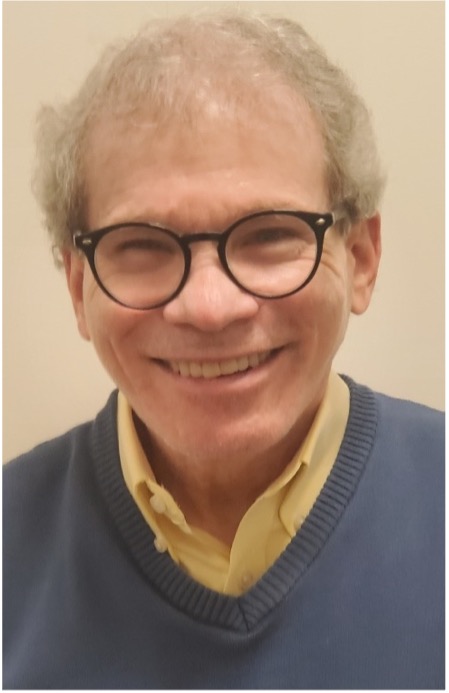
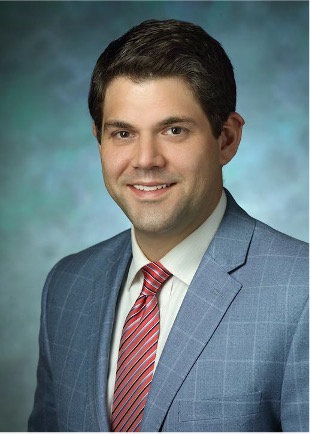
A picture of Dr. Hirsch, smiling at the camera. He wear black-rimmed glasses.

My Research:  I have spent my career looking at many aspects of diabetes, especially with type 1 diabetes. This includes looking at medication, technology, and prevention. I have studied the skin pathology related to the use of an insulin pump and the impact of changes in glucose level. I have also studied some of the limitations to the way we currently measure blood sugar, especially Haemoglobin A1c (HbA1c).

Research Goals: I am looking at many aspects of diabetes now and in the immediate future. I am interested in the impact of using multiple medications for type 1 diabetes and new types of glucose sensors. I am interested in the cause of different types of diabetes and how they manifest. I am interested in how the differences between HbA1c and how HbA1c is estimated might impact diabetes complications. I am also interested in the impact of the brain in glucose control of type 1 diabetes and am particularly interested in the hormone, leptin.

Career Goals: Improve diabetes care in the U.S. and around the world.

Hobbies: Sports fanatic, especially baseball. Former racquetball player.

Favourite Thing About Science: Showing that ideas that were thought to be valid actually are not, and proving our thinking is wrong and we always need to keep an open mind.

Scientist Upbringing:  I am a physician and clinician first. I didn’t get interested in research until my fellowship at Washington University in St. Louis in the late 1980s. I was fascinated with pushing our knowledge forward, and that resulted in my becoming a physician scientist. 

My Team: I lead a team with 3 other physicians, a research program director, 3 research coordinators, 3 research assistants, a research administrator, and many volunteers. At any time, we are doing between 6-12 research studies funded by the National Institutes of Health, the Helmsley Charitable Trust, Breakthrough T1D (formally the Juvenile Diabetes Foundation), the American Diabetes Association, and industry (both pharmaceutical and devices).

Field of Study: Human Clinical Diabetes Research

An infographic showing blood vessels. Blood is shown with red disks, and glucose is shown with small yellow dots. The blood vessel on the left depicts "normal blood glucose" and the vessel on the right shows "high blood glucose", where the image on the right has approximately 5x the number of yellow "glucose" dots.

A picture comparison of normal and high blood glucose from the National Institute of Diabetes and Digestive and Kidney Diseases.

Check Out My Original Article: “A Randomized Comparison of Postprandial Glucose Excursion Using Inhaled Insulin Versus Rapid-Acting Analog Insulin in Adults With Type 1 Diabetes Using Multiple Daily Injections of Insulin or Automated Insulin Delivery”

A QR code that links to the original publication.

Citation: Hirsch, I.B., Beck, R.W., Marak, M.C., Calhoun, P., Mottalib, A., Salhin, A., Manessis, A., Coviello, A.D., Bhargava, A., Thorsell, A. and Atakov Castillo, A. (2024). A randomized comparison of postprandial glucose excursion using inhaled insulin versus rapid-acting analog insulin in adults with type 1 diabetes using multiple daily injections of insulin or automated insulin delivery. Diabetes care47(9), 1682-1687.

Research At a Glance: Diabetes is a common medical condition that affects 38.4 million people in the United States, about 11.6% of the population. People with diabetes have difficulty regulating their blood sugar levels because their bodies cannot make a hormone called insulin. Insulin helps to move sugars from the bloodstream into cells so that the cells can produce energy. People with diabetes often manage their blood sugar levels using insulin provided by a doctor. The authors of this study compared the effects of two different forms of insulin on people with Type 1 diabetes. Type 1 diabetes, often referred to as “juvenile diabetes”, is a form of diabetes that often affects children, teens and young adults, but it can occur at any age. One form of insulin that the authors used in this study was a dry powder called technosphere insulin (TI). People take TI by inhaling the powder immediately before eating a meal. The other form of insulin that the authors used in this study was called rapid-acting analog (RAA) insulin. RAA insulin is a type of very fast-acting insulin that is injected 5-15 minutes before eating a meal. The authors wanted to know how each type of insulin would influence the amount of glucose that people had in their blood after eating a meal. Glucose is the main type of sugar found in the bloodstream. The authors gave the participants insulin and monitored the amount of glucose that was present in their blood after they drank a BOOST nutritional shake. The authors checked the blood glucose levels for each participant every 15 minutes for 2 hours. The authors found that people who took TI had a lower blood glucose level than the people that took RAA insulin. This research will aid people with diabetes as TI can be used to improve glucose levels after a meal.

Highlights: In this study, the authors separated patients into two groups to figure out which form of insulin was better for people with Type 1 diabetes. One hundred and twenty-two participants took part in the study. Half of the people took TI and half took RAA insulin, then drank a BOOST nutritional shake. For each person, the authors took measurements to understand how blood glucose levels changed after the patients drank the BOOST nutritional shake. The authors measured the average AUC180 over two hours, which is a measure of how long blood glucose levels are higher than 180 mg/dL, and the total amount of glucose in the bloodstream during that time. A blood glucose level of 180 mg/dL and above is generally considered high. The authors also measured how high blood glucose levels got (“peak” glucose levels) and measured the difference between the highest and lowest blood glucose levels (the “change” in glucose levels). The authors found that patients who took TI had better management of glucose for all these measures when compared to patients who took RAA (Figure 1).

A bar chart that shows the glucose levels (Peak Glucose, Change in Glucose Level, and AUC180) for patients taking Technosphere Insulin and Rapid-Acting Analog Insulin. The bar chart shows that patients taking Technosphere Insulin had lower glucose levels for each measure.
Figure 1. The bar chart shows the patient’s blood glucose levels two hours after they drank the BOOST nutritional shake. The x-axis shows the way that the researchers measured blood sugar levels. The y-axis shows the amount of glucose that the researchers found in the patient’s blood. The color of the bars shows which type of insulin the patients took.

What My Science Looks Like: The authors of this study wanted to test whether TI or RAA insulin was a better method to manage blood glucose levels in patients with Type 1 diabetes. They carefully designed the study to reduce the possibility of bias. This included making sure that the research participants were of a similar age, had similar symptoms, and were randomly placed into groups (Figure 2).  Their approach was beneficial because it allowed them to focus on the effects of the two types of insulin used in the study.

An infographic that outlines the key steps in the research design: 1) screening participants, 2) randomization, 3) meal challenge, and 4) glucose assessment.
Figure 2. An infographic on describing the research design for the study. The infographic highlights the four main steps, which include screening participants, randomizing the type of insulin patients received, the meal challenge, and measuring blood glucose levels.

The Big Picture: Diabetes affects nearly 40 million people in the United States and finding ways to manage the symptoms of Type 1 Diabetes is a priority. Those with Type 1 Diabetes are at risk of hyperglycemia anytime they have a meal. Hyperglycemia is a condition where there is too much glucose in the blood. It can be very serious if left untreated. Symptoms of hyperglycemia can include feeling very thirsty, tiredness, blurred vision, and weight loss. It can become life threatening if left untreated. The authors of this study were testing the efficacy of two different types of insulin for people with Type 1 Diabetes. They found that people who took TI had a lower peak glucose level, had a smaller change in glucose level, and had a lower AUC180 when compared to people who took RAA insulin. The authors also described some general benefits of TI. TI can be administered easily and leaves the body quickly. It can be taken right at the start of the meal, unlike RAA insulin, which needs to be administered 15 minutes before a meal. There is also little risk of taking too much insulin if TI needs to be administered again, but there is more of a risk with RAA insulin. This is important because sometimes blood sugar levels can still be high one hours after a meal, and people might want to take another dose of insulin. The findings of this research can help people with Type 1 Diabetes to decide on which form of insulin may be best to manage their blood sugar levels. 

Decoding the Language:  

Clinician: Clinicians are health professionals who work with patients to examine and treat them.

Diabetes: Diabetes is a chronic disease that causes high blood sugar levels and affects a person’s kidneys, eyes, heart and nerves. There are predominantly two types: Type 1 and Type 2.

Glucose: Glucose isthe main type of sugar found in the bloodstream.

Haemoglobin A1c (HbA1c): Haemoglobin A1c (HbA1c) is a type of protein in red blood cells that carry oxygen and have glucose molecules attached to the protein.

Hormone: Hormones are chemical messengers that are carried to organs through the bloodstream to initiate processes.

Hyperglycemia: Hyperglycemia ishigh sugar levels in the blood.

Insulin: Insulin isa hormone which moves glucose into the cells.

Insulin pump: An insulin pump is a device which is programmed to release insulin into the body at regular doses.

Leptin: Leptin is a hormone that is made by fat cells. It can tell the brain when to stop eating and when it needs to release energy. Overall, it helps regulate body weight.

Pathology: Pathology is the study of disease.

Physician: A physician isa Doctor of Medicine who works with patients to examine and treat their conditions.

Rapid-acting analog (RAA) Insulin:  RAA insulin isa type of insulin that is injected before meals to control blood sugar.

Technosphere Insulin (TI): TI is a type of insulin that is inhaled just before a meal to control blood sugar.

Type 1 Diabetes: Type 1 Diabetes is a form of diabetes that causes the body to not be able to produce insulin.

Learn More:

An article by the NHS on Type 1 Diabetes.

An article by the NHS on Hyperglycemia.

An article by National Institute of Health and Care Excellence on Insulin therapy.

Synopsis edited by Dr. Rosario Marroquin-Flores (she/her), Assistant Professor, James Madison University.

Download this article here
When Your Brain Rings the Dinner Bell: how active brain cells tell the body to send more nutrients!

Featured Scientist: Dr. Thomas Longden (he/him/his), Assistant Professor, University of Maryland School of Medicine, Department of Pharmacology, Physiology and Drug Development

A selfie of Thomas wearing sunglasses and a windbreaker, standing on a windy, grassy, rolling mountain side, punctuated by deciduous trees, with fluffy gray clouds blanketing the sky.
In one of my favorite places in the world – the Peak District, close to where I grew up in Yorkshire.

My Research: My work focuses on developing our understanding of how blood flow is controlled in the brain. My work also focuses on how blood flow supports the constantly changing energy needs of our brain cells.

Research Goals: My future research goals include building a complete picture of how brain cell activity controls blood flow. I would also like to determine whether protecting or rescuing blood flow in the brain halts dementia and other diseases of the aging brain.

Career Goals: What I am doing now! My goal has always been to run my own research group and work on problems I find interesting and that I think might benefit others. I hope to be able to continue to do this and expand my research group so we can do more and more impactful science.

Hobbies: Rock climbing and bird watching.

Favorite Thing About Science: My favorite thing about science is the feeling of being the first and only person in history to know a particular something about the universe. The feeling after a successful new experiment is particularly special. I don’t think you get this in other domains, and I have been chasing this feeling since my first experiment!

Scientist Upbringing: My parents were both teachers, and my dad taught chemistry and physics, so my act of rebellion was to study biology. I first wanted to become a scientist when I started learning about evolution, which was a big ‘aha’ moment for me and answered a lot of questions I had about the world at that time. From there I became more and more interested in biological systems – how they work and how they came to be. That interest took me to the University of Manchester for my undergraduate degree in Pharmacology, and there I also completed a PhD under Gill Edwards and Arthur Weston. During my PhD work, I spent time in Germany and in the U.S. in the lab of Mark Nelson, who then became my postdoctoral mentor.

My Team: I work with an amazing group of scientists! Our team currently numbers four graduate students and two postdoctoral researchers. Each person is working on distinct exciting projects, but we ensure there is a good amount of overlap of skills and interests which helps us to make use of a wide range of techniques to address our work.

This project was the last work I did with Dr. Mark Nelson before starting my own lab, so I made most of the recordings and did a lot of the analysis and writing. I was also accompanied by Dr. Grant Hennig, who wrote thousands of lines of code to enable the data analysis, and Dr. Amreen Mughal, who also played a key role in acquiring data. I remember this project very fondly – lots of days sitting at the microscope watching cells light up and chatter among themselves in mysterious patterns!

Organism of Study: Mouse, primarily. Because the biology of mice is very similar to that of humans, they are often bred specifically for research, and then used to better understand how we may improve human health.Mice allow us to explore biological systems in ways that wouldn’t be feasible in humans. Recently, we’ve been moving towards working with human cells.

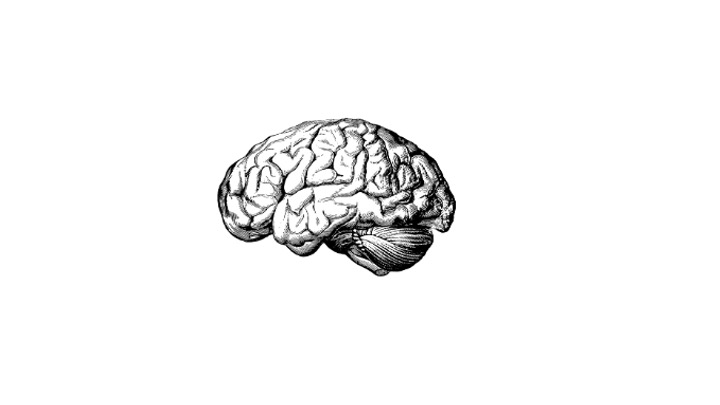
An image that shows a drawing of a brain and neuron.
A sketch of the outside of the human brain (left) and an oversized brain cell (right). Photo from Canva.com.

Field of Study: Physiology

What is Physiology? Physiology is the study of how systems and processes work within a living organism. These might occur within the cell, between cells, within an organ, or between organs. For example, researchers might do physiology studies to understand how the heartworks with the blood vessels to deliver nutrients to all the cells and organs in the body so that they can carry out the processes which keep you alive.

Check Out My Original Article: “Local IP3 receptor–mediated Ca2+ signals compound to direct blood flow in brain capillaries”

A QR code that links to the original publication

Citation: Longden TA, Mughal A, Hennig GW, Harraz OF, Shui B, Lee FK, Lee JC, Reining S, Kotlikoff MI, König GM, Kostenis E, Hill-Eubanks D, Nelson MT. (2021). Local IP3 receptor-mediated Ca2+ signals compound to direct blood flow in brain capillaries. Science Advances, 7(30). https://doi.org/10.1126%2Fsciadv.abh0101.

Research At A Glance: When we think, understand, sense things, and move, our brain cells become more active. Our brain cells also regulate processes that we don’t think about, like controlling our heartbeat. Highly active brain cells need extra energy. Blood cells carry nutrients to the cells in our bodies. Our blood cells cantransport and provide energy to active brain cells in the form of oxygen, and travel along with the sugar our brains need through a network of tubes called blood vessels. The walls of our blood vessels are made up of two types of cells. Endothelial cells form the barrier between the blood and the rest of the body, allowing the blood to be contained. These cells are surrounded by another type of cell called pericytes. Some pericytes constrict and relax, and this allows the walls of the blood vessels to narrow or widen. Blood vessels allow the blood to deliver nutrients to all the cells of our body, including cells in the brain. When brain cells become active, the amount of blood that flows to that area of the brain increases, so that extra sugar and oxygen can be delivered to the brain cells. Therefore, we need increased blood flow to our brain cells to think, take action, and perceive the things around us. In this study, researchers sought to understand how the body regulates the movement of blood toward active brain cells. The authors found that blood flow to the brain cells is coordinated through communication between several cells. Active brain cells, the endothelial cells that form the walls of nearby blood vessels, and the pericytes that surround the blood vessels must all communicate to coordinate blood flow.

Highlights: In this study, the researchers wanted to understand what causes the movement of blood towards active brain cells. Fortunately, the researchers already had some information based on previous research. They knew that communication between the two types of cells that make up the blood vessels was important. For active brain cells to change blood flow, they would need to communicate with nearby endothelial cells, which form the walls of the blood vessels, and the pericytes that can constrict and relax around them. Cells can communicate when naturally occurring chemicals move between the cells. Nitric oxide is one of the chemicals that cells can use to communicate. The researchers also knew that calcium within cells influences blood flow in other parts of the body. Based on this information, they predicted that calcium changes in the endothelial cells may also be involved in changing blood flow in the brain.

To answer their question, the researchers ran a series of experiments. They measured blood flow, and the calcium in the blood vessels,near active and inactive brain cells. All of the experiments were done in the brains of living, awake mice. Mice are considered “model” organisms. They are useful in research because their bodies function in a very similar way as the human body. For these studies, the researchers used mice that had been genetically altered, called transgenic mice. The mice had been altered so that the endothelial cells in their brains would “light up” in green when calcium was present. The researchers also applied a dye to the blood of the mice so that their blood vessels would “light up” in pink. These methods were used so that the researchers could see both where the blood vessels were (because they would appear pink) and when calcium was released in the endothelial cells of the blood vessel (because it would appear green).

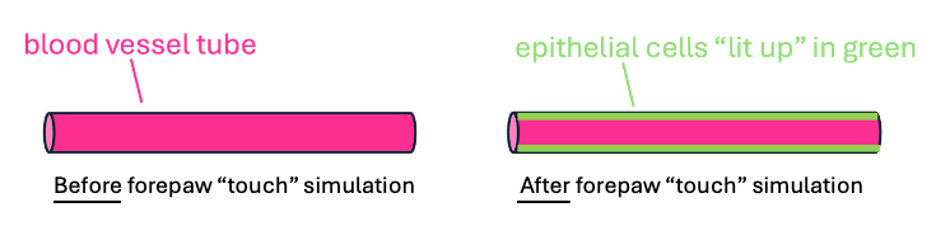
In the first experiment, the researchers wanted to understand how endothelial cells responded when brain cells were active. To activate the brain cells, they simulated touch in the mouse’s paw. When researchers “touched” the paw, they saw that the endothelial cells, which form the walls of the blood vessels, light up in green (Figure 1). This meant that activating brain cells causes nearby endothelial cells to release calcium.

Left-hand image shows solid pink blood vessel tube before forepaw touch stimulation. Right-hand image shows a pink blood vessel tube lined with two horizontal stripes of green at the top and bottom edge of the tube after forepaw touch stimulation.
Figure 1. Model of what researchers saw in the brain of mice before (left) and after (right) forepaw stimulation. The activation of nearby brain cells caused epithelial cells lining the blood vessels to light up as green. This information suggests that calcium was being released as the brain cells activated.

Next, the researchers explored the role of calcium. To do this, they looked at how wide the blood vessel was and counted how many blood cells passed through it before and after calcium was released in the epithelial cells. The researchers found that the blood vessel was relatively narrow before the calcium was released (Figure 2). However, immediately following calcium release, they found that the blood vessel was wider. The researchers also found that the wider blood vessel allowed more blood cells to pass through it, which would allow more nutrients to reach the active brain cells. Based on these results, the scientists concluded that when calcium is released by the endothelial cells, the blood vessels widen to increase blood flow.

A bar graph is shown. The left-hand bar is labeled “before calcium” and rises to just under 5 micrometers on the vertical axis, indicating width. The right-hand bar is labeled “after calcium” and rises to 7 micrometers on the vertical axis.
Figure 2. The width of the blood vessel before and after the release of calcium by the epithelial cells. The y-axis shows the width of the blood vessel measured in micrometers.

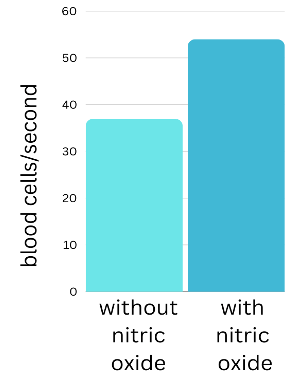
Finally, the researchers wanted to understand why calcium release was leading to wider blood vessels and more blood flow. From previous studies, the researchers already knew two things: (1) that calcium can cause the cell to make a chemical called nitric oxide, and (2) that in other places of the body, nitric oxide causes pericytes to relax, and blood vessels to widen. Based on this knowledge, the researchers predicted that calcium release causes the endothelial cells to make nitric oxide, which then causes the blood vessels to widen. To test this, the researchers added nitric oxide to the brain to see if it caused the blood vessels to widen. The researchers found that more blood cells passed through the blood vessels when nitric oxide was added to the brain (Figure 3). They found that nitric oxide increased blood flow in the brain just like calcium, suggesting that calcium widens blood vessels by causing the body to make nitric oxide.

A bar graph is shown. The left-hand bar is labeled “without nitric oxide” and rises to 37 blood cells per second on the vertical axis. The right-hand bar is labeled “after calcium” and rises to 54 blood cells per second on the vertical axis.
Figure 3. The number of blood cells that pass through the blood vessel before and after nitric oxide was added to the brain. The y-axis shows the number of blood cells that pass through the blood vessel each second.

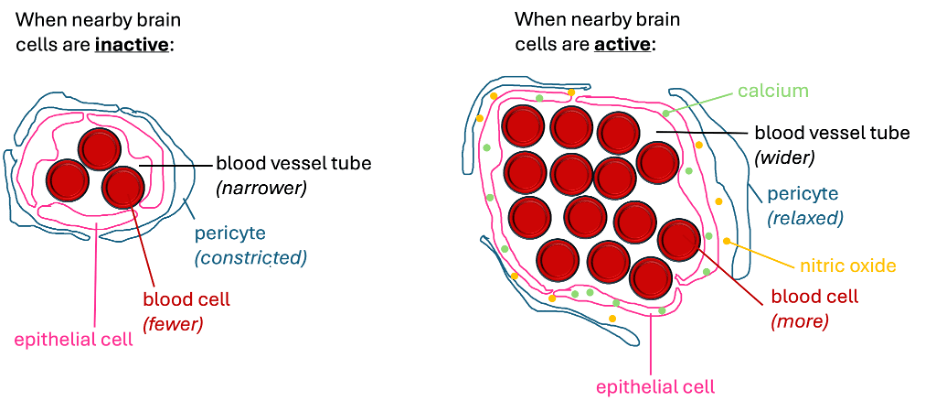
The results of these three experiments allowed the researchers to describe how blood flow is regulated in the brain. They concluded that when the brain cells are active, endothelial cells release calcium. The release of calcium causes the body to make nitric oxide. The nitric oxide then causes the blood vessels to widen, likely by allowing the pericytes to relax. Finally, the widened blood vessels allow more blood cells and nutrients to pass through the tube and reach the active brain cells (Figure 4).

Two side-by-side images that depict blood cells floating in the blood vessel tube, concentrically surrounded by epithelial cells and pericytes. The right-hand image shows the vessel when nearby brain cells are active. The vessel tube is much larger and contains more blood cells when compared to the left-hand image, which shows the vessel when nearby brain cells are inactive. The right-hand image includes small green circles to denote the presence of calcium within the epithelial cells. The right-hand image also includes small yellow circles to denote the presence of nitric oxide being released between the epithelial cell and the pericyte. The pericyte is depicted as more relaxed (less tightly clamped around the epithelial cells) in the right-hand image, relative to the left image.
Figure 4. Two depictions of brain cells and nearby blood vessels. The illustrations show the inside, or cross-section, of the blood vessel. The left-hand image shows inactive brain cells at rest, which do not require extra blood. The right-hand image shows what happens to the blood vessels when nearby brain cells are active.

What My Science Looks Like: In these studies, the researchers were able to see real blood vessels, blood flow and calcium release in the brains of living, awake mice. To do this, the researchers had to take several steps. First, because blood vessels and calcium are very small, the researchers had to use a special process called microscopy. Microscopy involves visualizing something very small with a magnification device. Secondly, they needed to be able to tell the difference between calcium and all of the other things inside the brain. Thus, the mice that were used in this study were different from other mice. They had an altered genetic code that allowed their bodies to produce a green fluorescent protein to detect when calcium was higher in their blood vessels. Researchers could shine a light within a particular wavelength on the brain and the protein would fluoresce green, or “light up”, when calcium was elevated. More green light suggests that more calcium is present. When researchers shine a laser at a fluorescent protein, causing it to give off light, and visualize it using a microscope, this process is called fluorescent microscopy.

The research team also used fluorescent microscopy to visualize blood cells and blood vessels. They added a fluorescent dye that sticks to blood cells and blood vessels in the brain. The dye that they used for the blood cells and blood vessels responded to a different wavelength of light than the fluorescent protein used to see calcium. Calcium would fluoresce green, but the blood cells and blood vessels would fluoresce pink. These steps allowed the scientists to see changes in calcium, blood vessel size, and blood flow all at the same time, allowing them to understand how they might influence one another (Figure 5).

A mouse sitting on stage of a microscope. Two lasers shine onto its brain. What is seen through the lens of the microscope is “blown up.” In this “blown up” image we see a pink fluorescing blood vessel tube, filled with pink fluorescing blood cells, and lined with two horizontal stripes of fluorescent green at the top and bottom edge of the tube. The green bands indicate the calcium released by the epithelial cells.
Figure 5. Imagine illustrating how scientists saw calcium and blood flow in the brain of an awake mouse. 1) Scientists shine a light on the brain of a modified, live mouse using two different wavelengths. 2) Scientists used a microscope to magnify the brain so that they could see the blood vessels, blood cells, and calcium. Calcium “lit up” green, and blood vessels and blood cells “lit up” pink. Modified image of mouse and microscope from Canva.com.

The Big Picture: Blood flow is important because our brain cells need energy to function properly. We need to be able to think, act, and experience sensation. When brain cells don’t receive the energy they need, they can become unhealthy. This is something that can happen to humans as we age. As we age, our brains are not as effective at regulating blood flow. Eventually this can lead to dementia. Dementia affects millions of Americans ages 65 and older. Affected individuals begin to forget memories, both from the distant and recent past, and can also develop a change in their personality. It can be very devastating for both the affected individual and their loved ones. If scientists can understand how activity-dependent blood flow in the brain works, they can try to develop treatments, which would improve the quality of life for many aging adults and their families.

Decoding the Language:

Blood cells: Blood cells are the cells in the bloodstream that are responsible for transporting oxygen and nutrients, like vitamins, minerals, sugars, fats, and proteins around the body.

Blood flow: Blood flow refers to the passage of blood cells, and other components of the blood, through the blood vessels.

Blood vessels: Blood vessels area network of tubules through which the bloodstream travels from place to place in the body.

Brain cells: Brain cells are cells within the brain that communicate with one another through both electrical and chemical signaling. Brain cells produce thought, action, and/or sensation (smell, touch, hearing, taste, and sight). The brain contains billions of cells, so at any given moment, some are actively signaling, and some are not, depending on what you are thinking, doing, or sensing.

Calcium: Calcium is a mineralfound mainly in dairy products and is needed for healthy teeth, bones, and other issues. It plays many roles in making sure our bodies function properly; not just keeping your bones strong!

Cross-section: A cross-section isthe view that emerges if you were to cut straight through something to expose the inside.

Dementia: Dementia is a condition characterized by the loss of memory and thinking skills, such as problem-solving and making judgements, and often leads to personality changes.

Endothelial cells: Endothelial cells that form the “walls” of the blood vessels.

Fluorescent microscopy: Fluorescent microscopy is a technique that uses a microscope that can shine various wavelengths of light onto a  fluorescent sample to view it. Researchers will shine a light on a protein or molecule with the fluorescent properties, and the sample will emit the fluorescent light. The light will then be filtered through the microscope to create an enlarged image that shows the sample. This technique is used to view really small samples that normally cannot be seen by the human eye.

Fluorescent protein: A fluorescent protein is often designed by people to have a special property that allows it to give off light when exposed to a specific wavelength of light.

Genetic code: DNA contains a pattern of instructions, through genes, that essentially tell the body how to build itself. Just like a construction worker needs to know how to arrange the boards, your body needs to know how to organize all of its building blocks. The genetic code is (metaphorically) comparable to a construction worker’s blueprint.

Microscopy: Microscopy is a scientific techniqueused to magnify things that normally cannot be seen by the human eye unaided.

Nitric oxide: Nitric oxide is a chemical compound made up of two chemical elements, nitrogen and oxygen, that are bound together. It plays many important roles inside of the body and takes the form of a gas (rather than a liquid or solid), which allows it to spread quickly and easily.

Nutrients: Nutrients are derived from a nutritious diet, and include vitamins, minerals, fats, sugars, and proteins. They travel through the bloodstream, on blood cells, to reach all cells of the body and to keep them, and therefore you, healthy and functioning properly.

Pericytes: Pericytes arecells that wrap around blood vessels, to “squeeze” or “relax”, causing the blood vessel to shrink/constrict or widen, respectively.

Postdoctoral: The stage of scientific training that many researchers take after earning a doctoral degree (PhD). Many researchers work as a postdoctoral researcher for several years before running their own research laboratory.

Predict: The term “prediction” is often used in science to refer to what the researchers expect the data to look like, based on prior knowledge.

Transgenic mice: Transgenic mice are mice with altered genetic codes. Researchers will alter the genetic codes of mice to help them better understand how biological systems work.

Wavelength: A wavelength is a property of light that, when varied, makes it appear different colors.

Learn More:

An article from GiveBlood about the role of blood flow in the body.

An article from the University of London on how the brain uses energy.

An article from the Scientific American about why the brain needs energy.

An article from Columbia University Irving Medical Center about the prevalence of dementia.

An article from the National Institute on Aging about how Alzheimer’s disease affects the brain.

Synopsis edited by Dr. Rosario Marroquin-Flores (she/her), Assistant Professor, James Madison University.

Download this article here

How identity can influence mental health in LGBTQ+ college students

Featured Scientist: Nicholas C. Borgogna (he/him), Ph.D., University of Alabama at Birmingham, Department of Psychology

A picture of Nicholas C. Borgogna. He has hard hair and is wearing a purple plaid shirt.

Birthplace: Logan, Utah

My Research: I research ways to improve the interventions that we use in a clinical setting to help people struggling with mental health.

Research Goals: I pretty much want to do the same type of research moving into the future. However, I am beginning to use meta-analysis for general research aims. I am also starting to incorporate longitudinal designs into specific research projects.

Career Goals: My goals are to move the field of psychology more towards humanistic models of mental illness.

Hobbies: Playing Poker and playing guitar (if Whysound is still a venue in Logan, I was in a band that was one of the first acts to ever play at Whysound in the summer of 2008).

Favorite Thing About Science: That there’s always more to the story.

Scientist Upbringing: The scientist part of my identity chose me rather than me choosing it. I had always anticipated being a clinician, but I ended up having a knack for writing and statistics that led to many opportunities in graduate school. I’ve since become very much a scientist and am clawing my way back to being a clinician.

My Team: I was the director of the project in question, but it was very much aided by the input from the co-authors. Everyone helped to write and revise parts of the paper. I sort of divided out little parts for specific folks to help with. For instance, Matt Kridel wrote the clinical implications section and Stephen Aita wrote the limitations section, in addition to helping with other parts of the manuscript.

Field of Study: Psychology

What is Psychology? Psychology is the study of mind and how it functions. People in the field of psychology are particularly interested in understanding human behavior.

Check Out My Original Article: “Anxiety and depression across gender and sexual minorities: Implications for transgender, gender nonconforming, pansexual, demisexual, asexual, queer, and questioning individuals.”

A QR code that links to the original publication.

Citation: Borgogna, N. C., McDermott, R. C., Aita, S. L., & Kridel, M. M. (2019). Anxiety and depression across gender and sexual minorities: Implications for transgender, gender nonconforming, pansexual, demisexual, asexual, queer, and questioning individuals. Psychology of Sexual Orientation and Gender Diversity, 6(1), 54–63. https://doi.org/10.1037/sgd0000306.

Research At A Glance: Many people who identify as LGBTQ+ struggle with mental health. These experiences could be because LGBTQ+ persons are minorities in their communities. The minority stress model suggests that people who are oppressed in society experience more stress. The higher stress can lead to poor mental health. While these trends have been studied for a long time, there is less information about people with emerging identities and their experiences with mental health.  Emerging identities are newer gender and sexual identities. These identities differ from some of the more recognized identities that have been used for longer, such as heterosexual or homosexual. This study looks at anxiety and depression among college students who identify as LGBTQ+. The authors compare the experiences of LGBTQ+ students with emerging identities to those with older identities (i.e., gay and lesbian), as well as to those outside of the LGBTQ+ community. To do this research, the authors used an online survey. They asked students questions about mental health and how they use mental health services. They found that students with emerging identities had more depression and anxiety than students outside of the LGBTQ+ community. They also had more anxiety and depression than students who identified as gay or lesbian. The authors also found that students who identified as both a gender minority (someone who has a gender identity that does not align with traditional male or female gender roles) and a sexual minority had poorer mental health than students who did not. The findings show that mental health professionals should be mindful of the influence of gender and sexuality on mental health.

Highlights: The Healthy Minds Study is a survey for college students that asks questions about mental health and how students use services to help manage their mental health. This study included data from the Healthy Minds Study on over 40,000 students. While there are many variables related to mental health included in the survey, this study focused on anxiety and depression. The authors used the responses from the survey to place students into two groups. The first group included students who identified as transgender and gender nonconforming (TGNC). A transgender person is someone who identifies with a gender that does not match their biological sex. Someone who is gender nonconforming is someone who does not conform to cultural expectations about how men and women are supposed to behave or dress. The second group included students who identified as lesbian/gay, bisexual, pansexual, demisexual, asexual, and queer. The second group was referred to as “sexual minorities”. Bisexual refers to someone who can experience romantic or sexual attraction to people from more than one gender. Pansexual refers to someone who can experience attraction to people of any gender. Demisexual refers to someone that needs an emotional connection with someone before they can feel attracted to them. People who identify as asexual experience little to no sexual attraction. Queer is a broad term that can refer to any identity that is not heterosexual or that conforms to traditional male or female gender roles.

The authors in this study wanted to understand the relationship between student identities and mental health. To do this, the authors used a statistical test called Multivariate Analysis of Variance (MANOVA). A MANOVA is used to look at the differences between groups on more than one variable. In this research, the authors used MANOVA to look at the differences in anxiety and depression between students who identified TGNC, as sexual minorities, and those who did not identify as LGBTQ+. The authors found that TGNC students had lower mental health than students who were not transgender or gender nonconforming (Figure 1). Specifically, TGNC students had higher depression and anxiety than non-TGNC students. They also found that sexual minorities had higher anxiety and depression than heterosexual students (Figure 2). This was particularly true for demisexual students. The results show that some sexual minorities struggle more with mental health than others. Lastly, the authors found that students who identified as both TGNC and as a sexual minority had lower mental health than those who did not (Figure 3).

A bar chart depicting the average score for depression and anxiety for transgender and gender nonconforming students compared to non-trasngender and gender conforming students. Transgender men had the highest score for depression (average of 13) and anxiety (average of 11). Non-transgender and non-gender conforming men had the lowest score for depression (average of 7) and anxiety (average of 5).
Figure 1. The results of the analysis examining mental health between TGNC students and students who did not identify as transgender or gender nonconforming (i.e., non-TGNC). The x-axis shows the gender that the students identified with, and the y-axis shows the average scores for anxiety and depression that each group reported on the Healthy Minds Study survey.
A bar chart depicting the average score for depression and anxiety for students with different sexual orientations. Demisexual students had the highest score for depression (average of 13) and anxiety (average of 12). Heterosexual students had the lowest score for depression (average of 7) and anxiety (average of 6).
Figure 2. The results of the analysis examining mental health between students with different sexual orientations. The x-axis shows the sexual orientations that students described, and the y-axis shows the average scores for anxiety and depression that each group reported on the Healthy Minds Study survey.
A bar chart depicting the average score for depression and anxiety for students who identify as transgender and gender nonconforming and also as sexual minorities. Students with both identities had the highest score for depression (average of 11) and anxiety (average of 10).
Figure 3. The results of the analysis examining mental health between students based on both their gender and sexual identities. The x-axis shows the identities and sexual orientations that students described, and the y-axis shows the average scores for anxiety and depression that each group reported on the Healthy Minds Study survey.

What My Science Looks Like: An important part of this study was how the authors measured mental health. The Healthy Minds Study used a survey called the PHQ-9 to measure depression in students (Figure 4). The survey includes nine questions that ask students how often they experience feelings like being tired, feeling like a failure, or thinking about hurting themselves. A similar survey called the GAD-7 was used to measure anxiety (Figure 4). This survey includes seven questions that ask students about how often they experience feelings like being worried, afraid, or having trouble relaxing. These two surveys are often used by mental health researchers to measure anxiety and depression. Mental health professionals can used information from these surveys to see if someone needs mental health services, and what type of help would be most useful for them.

An imaging depicting the types of questions included on the GAD-7 and and the PHQ-9. The GAD-7 asks questions about feeling nervous, worrying, inability to relax, restlessness, annoyance, and fear to measure anxiety. The PHQ-9 asks questions about losing interest in things, feeling down, sleeping too much or too little, inability to concentrate, feeling like a failure, and feeling hopeless to measure depression.
Figure 4. An example question from the GAD-7 survey used to measure anxiety (left) and the PHQ-9 survey used to measure depression (right).

The Big Picture: People who identify as LGBTQ+ are 4 times more likely to attempt suicide than their peers. This research is important because it helps shed light on mental health issues within the LGBTQ+ community. It shows that people with more than one gender or sexual identity are more likely to have anxiety and depression. This helps us understand who is most at risk. We need services that are informed and capable of working with people within the LGBTQ+ community. It is important to provide direct services to this group. As part of this research, the authors offer several suggestions for mental health professionals that can be used to help support LGBTQ+ students. First, mental health professionals can use gender-neutral language, such as using the word “partner” to refer to significant others. They can also include a section in their paperwork that allows people to write down which pronouns they would like other people to refer to them with. The authors also suggested that clinicians be aware of the experiences of LGBTQ+ persons when creating and directing services. Information from this research can help mental health professionals create prevention and intervention programs. It is also important for places like hospitals, universities, and corporations to have educational programs that can bring awareness to these issues. Each of these steps can help to better support mental health within the LGBTQ+ community.

Decoding The Language:

Anxiety: Anxiety refers to feeling tense, worried, and fearful.

Asexual: Someone who identifies as asexual has little or no sexual attraction to others.

Clinician: A clinician is a healthcare professional who works directly with patients.

Demisexual: Someone who identifies as demisexual is an individual who needs an emotional attachment to find another individual sexually attractive.

Depression: Depression refers to a consistent feeling of sadness and a loss of interest that can lead to disruptions in normal activities.

Generalized Anxiety Disorder-7 (GAD-7): The GAD-7 is a seven-question survey designed to measure symptoms of anxiety.

Gay: Someone who identifies as gay is a man who finds other men sexually attractive.

Gender minority: Gender minority is a term that is similar to sexual minority. It is a group whose gender identity differs from gender norms.

Gender nonconforming: Individuals who are gender nonconforming are those who not conform to cultural expectations about how men and women are supposed to behave or dress based on their gender. 

Healthy Minds Study (HMS): The HMS is a web-based survey used by undergraduate and graduate college students.

Heterosexual: Someone who identifies as heterosexual is attracted to people of the opposite sex.

Humanistic model: The humanistic model is an approach that looks at an individual as unique and as a whole person.

Lesbian: Someone who identifies as a lesbian is a woman who finds other women to be sexually attractive.

LGBTQ+: LGBTQ+ is an acronym for lesbian, gay, bisexual, transgender, queer, and emerging identities.

Longitudinal design: Longitudinal design refers to research projects that take place over a long period of time.

Meta-analysis: A meta-analysis is an analysis of many different studies in a particular field. This is useful because it can provide an overview of trends in research and the current state of the field.

Minority Stress Model: The minority stress model states that sexual minorities experience added stressors because of their sexual orientation or gender identity.

Multivariate Analysis of Variance (MANOVA): A MANOVA is a statistical technique that determines the effects of independent variables on multiple continuous dependent variables.

Pansexual: Someone who identifies as pansexual can have emotional or sexual attraction to others regardless of gender or sex.

Patient Health Questionnaire-9 (PHQ-9): The PHQ-9 is a nine-question survey designed to measure symptoms of depression.

Queer: Someone that identifies as queer is someone outside of sexual/gender norms. It is a nonspecific term that can capture several types of gender and sexual identities.

Sexual minority: A sexual minority is a group of people whose sexual orientation differs from sexual norms.

Transgender and nonconforming (TGNC): TGNC is the term that the authors used to describe a group of people who identify as transgender (trans) men, trans women, or gender nonconforming.

Learn More:

An article from The Trevor Project with information about LGBTQ youth suicide. The article is from 2022.

An article from The Center organization that provides more information about LGBTQ+ identities. 

An article from MD+ Calc about the Patient Health Questionaire-9, which measures depression.  

An article from MD+ Calc about the Generalized Anxiety Disorder-7 survey, which measures anxiety.

 A research article that examines the discrimination often faced by emerging identities and how discrimination is associated with depression and anxiety rates among emerging identities:

Puckett, J. A., Maroney, M. R., Wadsworth, L. P., Mustanski, B., & Newcomb, M. E. (2019). Coping with discrimination: The insidious effects of gender minority stigma on depression and anxiety in transgender individuals. Journal of Clinical Psychology, 76(1), 176–194.

A research article that examines depression and anxiety rates in gender minorities compared to cisgender persons. Using data from Growing Up Today Study. Reisner, S. L., Katz-Wise, S. L., Gordon, A. R., Corliss, H. L., & Austin, S. B. (2016). Social epidemiology of depression and anxiety by gender identity. Journal of Adolescent Health, 59(2), 203–208.

Synopsis edited by Rosario Marroquín-Flores (she/her), Ph.D., James Madison University.
Download this article here

To Eat or Not to Eat: The Influence of Diet on Fly Genetics

Featured Scientist: Dr. Sabrina Mostoufi (she/her), University of Oregon, Department of Biology.

Sabrina is wearing a red dress and white cardigan. She is standing in a vineyard holding a glass of wine. She has long brown hair.
Sabrina enjoying a break from science in Napa Valley, CA

Hometown: Burney, California

My Research: My research is focused on the fruit fly, Drosophila melanogaster, and the bacterium, Wolbachia pipientis. Flies infected with Wolbachia have increased recombination rate, but we don’t know why! My doctoral work has been focused on trying to figure out how and why Wolbachia increases recombination rate in flies.

Research Goals: In the future, I’d like to continue working with fruit flies to answer questions about what affects recombination rate and how Wolbachia affects flies. 

Career Goals: My goal is to become a college biology teacher. I’d love to work at a smaller college where I can combine teaching and some research projects with undergraduate students.

Hobbies: I enjoy skiing, gardening, crocheting, playing video games, and playing board games.

Favorite Thing About Science: I love the challenge and puzzle-solving in science, especially in genetics. I also do a lot of coding in my work, which has ups and downs, but finally getting a difficult piece of code to work is an awesome feeling.

Scientist Upbringing: When I was growing up, I thought about several career paths: dentist, author, archaeologist, astronaut, and more. I always loved my math and science classes. I started college as a biology major because I was interested in going to veterinary school. In my first term of college, I fell in love with genetics during my intro biology class and quickly decided that I wanted to learn more in graduate school. The rest is history! 

My Team: My advisor, Dr. Nadia Singh, and I are the two authors on this paper. I carried out all the experimental work for this project. I crossed and counted flies, extracted DNA for qPCR, and made the different food treatments. Nadia and I discussed the data analysis together and the best way to present the results for the paper. Nadia also provided a lot of guidance through the peer-review process, since this was my first published paper. 

Organism or Area of Study: I study the fruit fly, Drosophila melanogaster, and the bacteria, Wolbachia pipientis.

A picture of a fruit fly with the recombinant genotype. It has a yellow body and brilliant red eyes.
A female fruit fly with the yellow and vermillion genetic background, which affects the body color and eye color.

Field of Study: Evolutionary genetics

What is Evolutionary genetics? Evolutionary genetics is a field of biology. People in this field study how genes change over time. They also study how these changes help species to evolve

Check Out mMy Original Paper: “Diet-induced changes in titer support a discrete response of Wolbachia-associated plastic recombination in Drosophila melanogaster.

A QR code that links to the original research article

Citation: Mostoufi, S. L., & Singh, N. D. (2022). Diet-induced changes in titer support a discrete response of Wolbachia-associated plastic recombination in Drosophila melanogaster. G3 Genes|Genomes|Genetics, 12(1), jkab375. https://doi.org/10.1093/g3journal/jkab375

Article written by Isabel Billings (she/her, Senior, Psychological Sciences), Carissa Foreman (She/her, Senior, Biology), Ga Yeon “Karen” Kim (She/her, Senior, Biology & General Studies), Braden Kirk (He/him Senior, Biology), Desiree Lopez (She/her, Junior, Biology), Anakin Niño (He/Him Junior, Biology), Catherine Gooch (She/her, Senior, Kinesiology) Texas Tech University.

Research At A Glance: The fruit fly is an insect that shares many genes with humans and is often used to better understand our DNA. In this study, the authors used the fruit fly to study a process called recombination. Recombination takes place when genetic information is swapped between pairs of chromosomes. Chromosomes are DNA structures inside most cells of every living organism. They are made up of proteins and DNA. When the body makes more cells, the chromosomes will align with each other and trade pieces of genetic material. This creates new combinations of traits. Over time, this can make a population more diverse, which can help species adapt to changing environments. In this study, the authors were curious if recombination is different in fruit flies when they are infected with Wolbachia. Wolbachia is a type of bacteria that frequently infects insects, like the fruit fly. The authors looked at how Wolbachia influences recombination. They also looked to see if recombination varies by the amount of Wolbachia in the fruit fly. To do this, the authors studied two groups of fruit flies, one group infected with Wolbachia and one healthy group. In each group, a third of the flies were fed with a sugar-enriched diet, a third was fed with a yeast-enriched diet, and the remaining flies were fed a normal diet. The authors selected these diets because they had previously been shown to affect the amount of Wolbachia in the flies. The authors found that Wolbachia infection does affect recombination in the fruit fly. However, they did not find an effect of diet. This research is important to better understand how infection with Wolbachia impacts genetic recombination

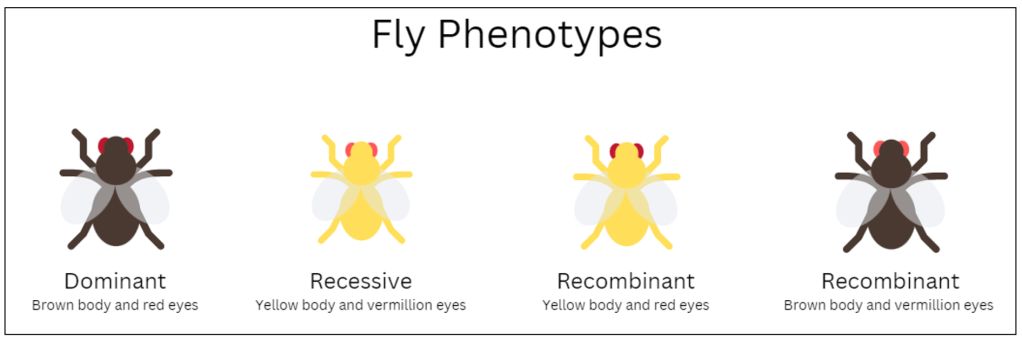
Highlights: One important part of this research was how the authors measured recombination. In genetics, a phenotype is a trait that is physically visible on an organism, such as hair color. Traits can either be dominant or recessive. A dominant gene will produce a trait that overrides the effect of another gene. For example, brown hair is dominant over red hair. So, if two parents have a child, where one parent has brown hair and the other has red hair, then their children will have brown hair. A recessive gene will only produce a trait when there is no dominant gene present. So, if two parents with red hair have children, then those children will have red hair. This is because there are no other dominant genes interfering with the gene that leads to red hair. In this paper, recombination was measured by looking at the color of the flies. The authors mated flies with dominant and recessive genes over three generations. Flies with the recessive phenotype had a yellow body color and vermillion eye color. Flies with the dominant phenotype had a brown body color and red eyes. The authors knew that a fly was recombinant when it showed a cross between the colors that came from dominant and the recessive genes. This could be either a yellow body with red eyes, or a brown body with vermillion eyes (Figure 1). 

A figure that shows four cartoon flies to depict the different phenotypes. The dominant phenotype leads to a fly with a brown body and red eyes. The recessive phenotype leads to a fly with a yellow body and brilliant red eyes. The recombinant phenotype leads to a fly with a yellow body and standard red eyes or a a brown body and brilliant red eyes.
Figure 1. Depiction of the fly phenotypes involved in this research. The recombinant phenotypes were created by mating flies with the dominant and recessive phenotypes together.

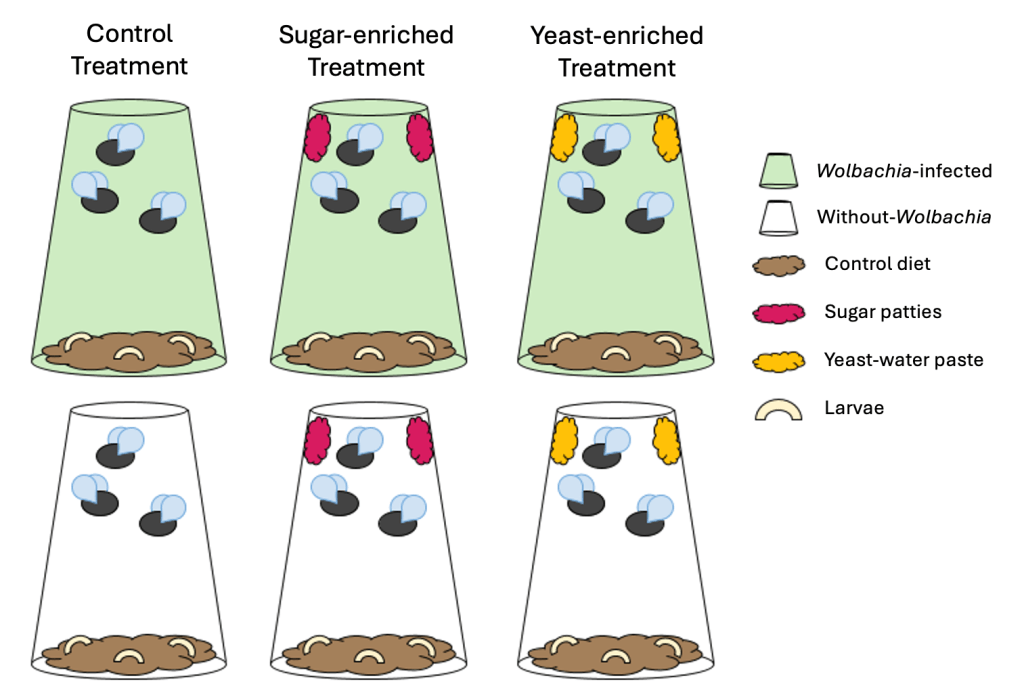
What My Science Looks Like: Another important part of this research were the diets that the authors fed the flies (Figure 2). The authors split the flies into three groups, each fed a different diet. These were a control diet, a sugar-enriched diet, and a yeast-enriched diet. The control diet consisted of cornmeal and molasses, which is common in research with flies. Flies eating the sugar-enriched diet still had access to the control food at the bottom of the vial but were also given 40% sugar patties at the top of the vial. The authors put the sugar patty on top so that the adult flies would eat the sugar-enriched diet while their larvae could only eat the control diet. This was important because the authors found that the sugar-enriched diet led to higher mortality and slower development in the larvae of both Wolbachia-infected and non-infected flies. Similarly, flies eating the yeast-enriched diet were given a paste mixed of yeast and water at the top of the vial, with the control food at the bottom. The authors chose this diet because previous research has shown that yeast will have an impact on the concentration of Wolbachia in the flies.

A graphic that depicts the experimental treatments. Each jar has a control diet on the bottom for larvae to feed on. Adult fruit flies can feed on the experimental diets at the top of the jar. The top row of jar shows the flies infected with Wolbachia, the bottom row contains flies that are not infected with Wolbachia. In each row, there are three jars, one with each treatment: control diet only, sugar patties, and a yeast-water paste.
Figure 2. A visual representation of the three diets that flies were allowed to eat.

When the experiment was complete, the authors used a logistic regression model to analyze the data. A logistic regression model is a statistical tool used to show how likely it is that an event will happen. The authors wanted to figure out if the diet, the infection with Wolbachia, or both, would lead to recombination in flies. The authors found that infection with Wolbachia increased recombination, but diet did not. Flies that ate food with Wolbachia had more offspring with the recombinant phenotype than those that did not (Figure 3).  

A box plot that shows the effect of Wolbachia infection on the proportion of recombinant flies. The graph shows that significantly more Wolbachia-infected flies had a recombinant phenotype, and this was true across the diets.
Figure 3. A boxplot that shows the relationship between Wolbachia infection, diet, and recombination in fruit flies. The y-axis shows the proportion of flies with the recombinant phenotype. The x-axis shows the different diets that the flies were fed. The colored boxes show whether the flies were infected with Wolbachia (purple) or were not infected with Wolbachia (black). The asterisk (*) is used to show significant statistical findings.

The Big Picture: Recombination is an important part of genetic diversity. When populations have more genetic diversity, they are better at responding to changing environments. This can help animals to survive changing conditions, like a warming climate. This paper shows how the DNA of the fruit fly is affected when they are infected with Wolbachia. Wolbachia is very common in fruit flies, infecting as many as 30% of the flies available for scientists. However, it is still not clear why Wolbachia affects recombination. Future advances in science could help to explain this. For example, if researchers could modify one trait of the Wolbachia at a time, this would allow them to figure out which part of the bacteria affects recombination in the flies. The fruit fly also shares many genes with people. This research is important because it could also help us understand recombination in humans.

Decoding the Language:

Boxplot: A boxplot is a figure that displays a summary of a set of data. The lowest place on the bottom line shows the lowest number, the bottom of the box shows the first quartile (25% of the data is under this line in the box), the central line in the box shows the median, the top of the box shows the third quartile (75% of the data is under this line in the box), and the highest place on the top line shows the highest number.

Chromosome: A chromosome is a structure found inside the nucleus of a cell, where all the DNA is stored. A chromosome is made up of DNA that is tightly wrapped around proteins. The DNA contains the information for all the genes in the body.  

Coding: Coding is the process of writing instructions that a computer can understand. The computer can then use these instructions to create applications, websites, algorithms, or other technologies. Many scientists within this field will use computing programs, such as RStudio or Python, to organize and analyze their data.  

Dominant: Dominant refers to a form of a gene that is more likely to be expressed than other versions of the gene. In the context of this study, the dominant gene was the one that led to flies with brown bodies.

Genes: Genes are like recipes that are made up of DNA. They contain instructions for making specific proteins. When these proteins are produced, they can take action within the body and affect things like physical traits.

Genetics: Genetics refers to the scientific study of genes and heredity—of how certain qualities or traits are passed from parents to offspring because of changes in the DNA sequence.

Genetic diversity: Genetic diversity refers to the many different types of genes that can exist within a species.

Larvae:  Larvae are the undeveloped form of insects, at the earliest stages of development. Larvae hatch from eggs and will feed until they grow and develop wings.

Logistic regression model: A logistic regression model is a statistical technique that can be used to estimate the likelihood that something will take place. In this context of this research, the authors used logistic regression to see how likely it was that recombination in flies was influenced by infection with Wolbachia and by the diet the flies were fed.

Peer-review process: The peer-review process is when a research article is reviewed by experts in the field before the research gets published in a scientific journal. Usually, 2-3 reviewers are invited to review the article. These reviewers will make a recommendation about whether the article should be accepted and published in the journal or if it should be rejected.  

Phenotype: Phenotype refers to an organism’s observable traits, such as its physical appearance or behavior. In the context of this research, the color of the fly was the phenotype that the authors were looking for to determine if recombination had taken place.

Recombination: Recombination is the process where genetic information is exchanged between two different DNA molecules. This results in new combinations of genes. Recombination rate can be defined as the average number of crosses among cells.

Recessive: Recessive is a term used to describe a gene or allele that is only expressed when paired with another recessive allele. In the context of this study, the recessive gene was the one that led to yellow or vermillion flies.

Vermillion: Vermillion refers to a brilliant red pigment. Wolbachia:Wolbachia is the name of a bacteria that infects insects. It is the world’s most common reproductive parasite.

Learn More:

A YouTube video produced by Biology by Sayan giving an overview of Back Crosses and Test Crosses, with examples of each. 

A YouTube video produced by GLA Mosquito that introduces flies and describes how Wolbachia is used in modern science.

A YouTube video produced by Science News that provides an easy-to-dissect visualization of DNA recombination, using Lego toys and simple vocabulary.

Synopsis edited by: Dr. Rosario Marroquin-Flores (She/her), Postdoctoral Scholar, Texas Tech University.

Download this article here

About the Authors

Isabel Billings (She/her, Senior, Psychological Sciences)

I’m a first-generation college student majoring in psychological sciences with an interest in cortisol stress levels and their relationship with self-injury. With a passion for science, I continue to conduct research that benefits the environment and the people/things in it!

Carissa Foreman (She/her, Senior, Biology)

I am a 4th year student at Texas Tech University majoring in biology with a minor in health professions. I am passionate about science as well as utilizing my knowledge in the topic to help others. My goal in the future is to become a field ecologist and study the relationship between the environment and our communities!

Ga Yeon “Karen” Kim (She/her, Senior, Biology & General Studies)

I’m a dual-degree, First-Generation, Honors student, majoring in Biology and General Studies, with concentrations in Chemistry, Psychology, and Spanish. I’m interested in becoming a Physician Assistant in the future and building meaningful connections with patients! 

Braden Kirk (He/him, Senior, Biology)

I am part of the Texas Tech College of Arts and Sciences department as a Biology major, with a Chemistry minor. I am an aspiring dental student, hoping to attend dental school in the 2024 academic year. I plan on using my gap year to further my exposure to the dental field, with full commitments to volunteering and collaborating with various organizations and dental offices in Lubbock, Texas. 

Desiree Lopez (she/her, Junior, Biology)

I am a First-Generation student at Texas Tech University majoring in Biology with a minor in Chemistry and Business. I am passionate about keeping our planet healthy as well as individuals I encounter. With this motivation I participate in polymer research working to better the end-of-life stage of plastics. I aspire to become a Dentist, providing patients with much needed care and confidence.

Anakin Niño (He/him, Junior, Biology)

I am a First-Generation second year biology student at Texas Tech. Currently, I work with the Texas Tech Health Science Rural & Community Health Institute in the marketing, social media, and website department. In the near future, I aspire to become a physician assistant in either dermatology or psychiatry.

Catherine Gooch (She/her, Senior, Kinesiology)

I’m a senior Kinesiology major at Texas Tech University, with minors in Cognitive Science and Philosophy. I currently do undergraduate research in the Perception, Cognition, and Action Lab here. After graduating, I hope to continue doing research in graduate school. In my free time, I enjoy reading, playing chess, and spending time in nature.

The discovery of a new harvest mouse

Featured Scientist: Robert D. Bradley PhD, Texas Tech University (TTU), Professor of Biological Sciences and Director of the Natural Science Research Laboratory, Museum of TTU.

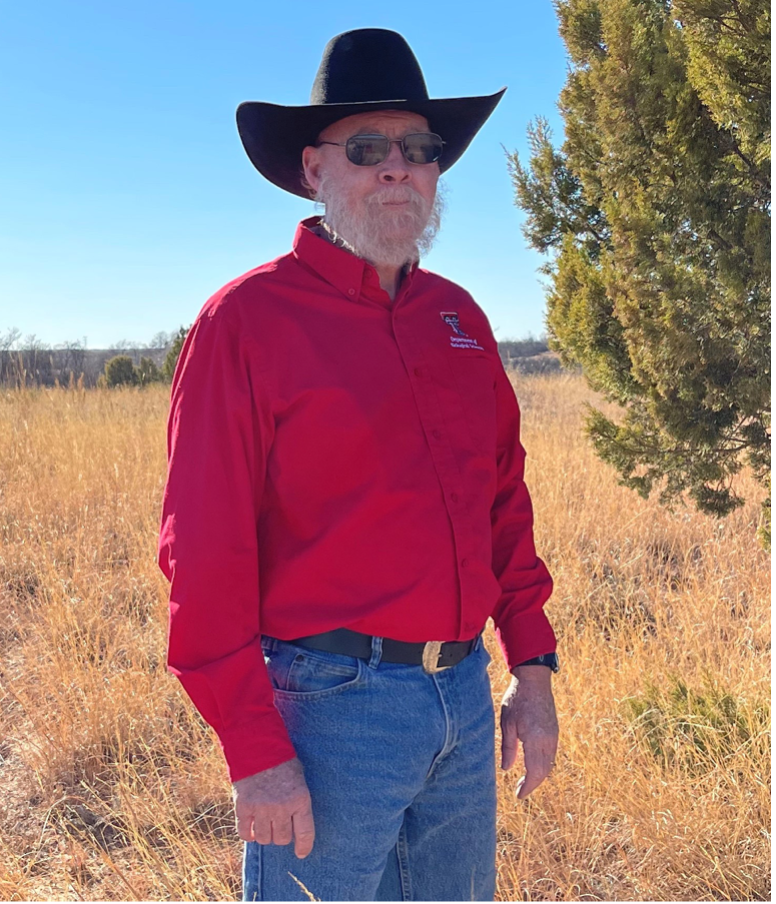
A picture of Dr. Robert Bradley. Dr. Bradley stands in a dry prairie. He wear a cowboy hat and sunglasses. He has a grey beard and mustache.

Hometown: Grew up (first 18 years) in Diamond, MO.  Lived various places as a student. Lived in Lubbock since 1994.

My Research: I study the relationships among mammals. I use genomic methods to answer conservation questions and taxonomic questions in mammals. I also work to improve genetic collections and natural history collections.

Research Goals: I would like to use genomics to develop “living” genetic databases that people can use for their research. These databases can be expanded every year. We can use them to provide real time information that can be used for conservation issues.

Career Goals: Develop the premier natural history collection at a university by enhancing the status of the TTU Natural Science Research Laboratory.

Hobbies: Ranching, hunting, and being a grandpa.

Favorite Thing About Science: Discovery of new information. Describing new species!

Scientist Upbringing: I knew nothing about being a scientist until I took a mammalogy class in 1982.  I was “recruited” into a master’s research program and that eye-opening experience led to a career in science. I remember telling my professor (back in 1982) – “I can’t believe they pay you to do this… I would do it for free!”

My Team: I have published over 200 papers and all but two (book reviews) have included multiple authors, so collaborations are important to me. I led the field trip that collected the samples for the research described here. My friend (Hamilton) generated the chromosome data, and my PhD student (Mendez-Harclerode) did the DNA sequencing. We all worked together to write the paper.

Organism of Study: Baker’s small toothed harvest mouse (Reithrodontomys bakeri)

A picture of Reithrodontomys bakeri. it is brown mouse with a white underbelly and a dark brown tail. It sits on a rock. The image was published with the original research article.
Photo credit: Bradley et al. 2004

Field of Study: My primary field of study includes systematics, molecular evolution, and phylogenetics. This means that I study how the DNA of certain species changes over time and try to figure out how those changes lead to the development of new species. I focus mostly on mammals, and especially rodents in the southwestern United States, Mexico, and Central America. I use many types of data to understand events that play a role in natural history. More recently, we have started working in the field of mammalian genomics. In this field, we look at specific genes and how they have changed over time to try to understand how new species develop, and how certain species are related to each other. 

Check Out My Original Paper: “A new species of Reithrodontomys from Guerrero, Mexico”

A QR code that links to the original publication.

Citation: Bradley R. D., Mendez- Harclerode F., Hamilton M.J., & Ceballos G. (2004). A new species of Reithrodontomys from Guerrero, Mexico. Occasional Papers. 231, p. 1-12.  

Article written by: Adriana Gonzalez (She/Her), B.S. in Biology, 2023, Payton Pargo (She/Her), B.S. in Biology, 2023, Priyanka Ghosh (She/Her), B.S. in Biology, 2023, Matthew C. Isaac (He/Him), B.S. in Natural Resources Management, Conservation Science, 2023, Troy Nations (He/Him), B.S., in Microbiology, 2023, Catherine Gooch (She/Her), B.S. in Kinesiology, 2025. Student authors were undergraduate students at TTU at the time the article was written. 

Research At A Glance:  This research focused on small rodents that belong to the harvest mouse genus called Reithrodontomys. The authors trapped three harvest mice from two regions of Guerrero, Mexico. Their goal was to identify what specific Reithrodontomys species the captured mice belonged to. The authors used both genetic information and physical traits to classify the harvest mice. The genetic information that the authors collected were pictures of the mouse chromosomes and DNA sequences for each mouse. DNA sequences contain the instructions that the body uses to make proteins, which carry out most of the functions that our bodies need for everyday life. The instructions come in the form of a series of nucleotides. Nucleotides are the building blocks of DNA, and the specific order that they are in will determine the type of protein that the body will make. The authors compared the genetic information of the captured mice to other closely related species to see if they could find differences. These tests showed enough differences to suggest that the mice collected in Guerro, Mexico were a separate species. Another important set of information was the physical differences observed between these species. The authors measured the physical traits of the mice using natural history collections. Natural history collections contain preserved tissues, skins, and full body specimens that can be used for research. The authors used the collections to compare the mice from Guerrero, Mexico to other closely related mouse species. They measured physical traits, like ear length, tail length, and skull size. The authors found that the mice from Guerrero, Mexico had different sized skulls and ears when compared to the other species. Together, the genetic information and physical traits provided enough evidence for the authors to conclude that the Guerrero mice were a new species. The new species of harvest mouse was named Reithrodontomys bakeri, in honor of Robert S. Baker, a TTU Horn Professor.

Highlights: The purpose of this study was to correctly identify a species of harvest mouse collected in Guerrero, Mexico. Based on their appearance, the mice were initially thought to be a part of the Reithrodontomys microdon species. However, the mice from Guerrero, Mexico were located roughly 240 km south of the nearest recorded collection of other relatives (Figure 1). Therefore, the distance indicates that it is unlikely that they were R. microdon

A black and white map of central America. It includes shapes to indicate the location of several species of mice. R. microdon wagneri were closest to the newly discovered mice (one state away), followed by R. microdon albilabris (one state away), with R. microdon microdon furthest away (two states away).
Figure 1. The locations from some closely related species of harvest mouse. The new species discovered in Guerrero, Mexico (red oval) was roughly 240 km south of the nearest other known relative species, R. microdon wagneri (green).

To properly classify the mice, researchers collected several types of data. First, the authors took pictures of the chromosomes of the three species collected in Guerrero, Mexico. They took five pictures for each mouse. The images showed that the mice from Guerrero, Mexico had identical chromosomes. This suggested that all three mice were the same species. Next, the authors collected DNA sequences. They isolated DNA from the mice collected from Guerrero, Mexico and mailed the DNA samples to a facility that could create DNA sequences. The authors also downloaded DNA sequences for 11 species of closely related mice from GenBank. GenBank is an online database where researchers can download and upload DNA sequences. The authors used the DNA sequences to create a phylogenetic tree. A phylogenetic tree shows the evolutionary relationships between species. The authors used several different statistical approaches to make the phylogenetic tree and each approach showed similar relationships between the species. The information from the phylogenetic trees suggested that the mice from Guerrero, Mexico were closely related to R. microdon (Figure 2). However, there were still enough genetic differences to suggest that they were a separate species.  

A phylogenetic tree for R. bakeri, R microdon, and R. mexicanus. R. bakeri and R. microdon are the closest together. They sit at the end of two lines that connect at a central "node" that represents a common ancestor. The next node connects these two species to R. mexicanus.
Figure 2. A phylogenetic tree of harvest mouse species that shows the evolutionary relationships between them. The tree shows that the newly discovered species, R. bakeri is most closely related to R. microdon and that they are both descendants of a common ancestor. R. bakeri and R. microdon also shared a common ancestor with another species, R. mexicanus.

The researchers also collected information on the physical traits of the mice. The authors measured the ears, tails, feet, and skulls of the same 11 species of closely related mice and compared them to the mice collected in Guerrero, Mexico. They then used a statistical test called an analysis of variance (ANOVA) to see if the physical traits of the mice from Guerrero, Mexico were different from the other mice. The authors found that the mice from Guerrero, Mexico had different ear and skull sizes than the other species. The location where the mice were captured, and the genetic and physical differences between the mice, led the authors to conclude that the mice from Guerrero, Mexico were a new species. This is how the species R. bakeri was discovered. 

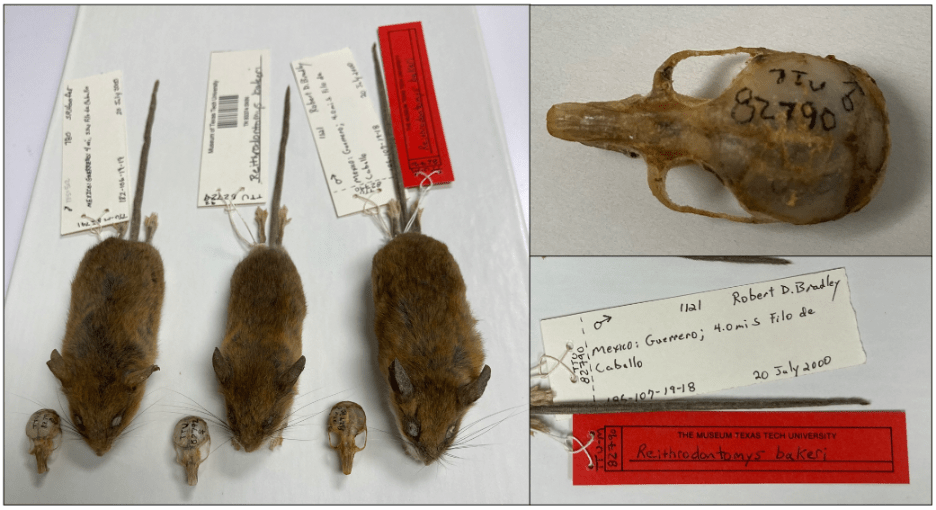
What My Science Looks Like: In this research, the authors used natural history collections to look at the physical traits of many mice. The information helped them determine that the mice they discovered in Mexico were their own species. Natural history collections are historical records of plants and animals (Figure 3). They often contain bones and tissues, but they can also include non-living samples, like rocks. These collections are important because they can help scientists understand what the world looked like in the past. Having a record from the past can also help scientists understand how species have changed over time. This information can be used for conservation and to understand the evolution of species over time.

A image with three panels. One panel shows three preserved mouse skins and three labeled skulls. Each mouse has a tag around its foot that includes information about the specimen. One panel include the image of a labeled skulls. The final panel includes a close-up image of the tag for the name-bearing specimen, R. bakeri.
Figure 3. An example of the contents of a Natural history collection. The picture shows the three harvest mice that were collected from Guerrero, Mexico (left). The harvest mouse with the red tag is the name-bearing specimen that represents the R. bakeri species. The skull is labeled with a unique ID that corresponds with the ID on the red tag (right). The tags also contain information about when the specimen was collected, where it was collected, and who collected it. Photo Credit: Rosario Marroquín-Flores, photo taken at the TTU Natural Science Research Laboratory.

The Big Picture: In this study, the authors identified and described a new species of harvest mouse. The research is important because the authors were able to identify a species that has been miscategorized in the past. The authors provide information on how the DNA and physical traits of these harvest mice differ from other species and this information can help scientists to correctly identify harvest mice in the future. The discovery of these mice also gives us insight into where the species originated and how they have evolved over time. One of the largest debates in taxonomy is what makes one species different from another? The authors used many techniques to distinguish between the species. These techniques can be adopted by others in the future. 

Decoding the Language:   

Analysis of variance (ANOVA): An ANOVA is a statistical tool designed to compare the average value of different groups to see if they are different from one another. In the context of this research, the author used an ANOVA to see if the average ear length for R. microdon was different from the average ear length of R. bakeri. 

Chromosomes: Chromosomes are tiny structures that carry genetic information about an organism. They store this information in the form of genes, which are made of very long sequences of DNA. The research in this paper involved comparing the chromosomes of mouse species to look at the similarities between them. 

Evolution: Evolution is a process in which heritable traits of a population change. It takes a long period of time for these changes to be noticeable, since they have to be passed down through many generations. But eventually, populations can look so different from their ancestors that they are considered a separate species from them. The discovery of the species R. bakeri is important because it provides insight to the evolution of harvest mice. 

GenBank: Genbank is a publicly available website that shows nucleotide sequences and the proteins they code for. It is meant to be a source of comprehensive DNA sequence information for scientists to use. The author of this paper used GenBank to find the DNA sequences of 11 species of mice. This allowed them to see how genetically similar or different the mouse species were. 

Genetic: Genetic means relating to heredity, which is the passing on of a trait or traits from parents to offspring. Different traits are caused by changes to sequences of DNA. In this research, the author looked at traits that were similar or different between the species of harvest mice and used them to determine how genetically similar the species were to each other. 

Genus: A genus is a way to classify living organisms. It is usually the first word in the scientific name of a species. For example, Reithrodontomys bakeri is the scientific name for the newly discovered species of harvest mouse, where “bakeri” refers to the specific species and “Reithrodontomys” refers to the genus. The genus Reithrodontomys has many species of closely related mice. 

Horn Professor: A Horn Professor is a title given to TTU faculty who have attained national and/or international recognition based on their scholarly achievements. Faculty are recognized as Horn Professors after an evaluation committee reviews letters of support from prominent scholars within their research field, reviews their record of scholarly publications, and evaluates their service to the university. It is considered the highest honor that a TTU Faculty member can receive. 

Mammalian genomics: Mammalian genomics is the study of the genome in mammals. The genome is the entire set of genes in an organism, so research in mammalian genomics looks at all the different genes in mammal species. This allows scientists to determine evolutionary relationships between mammals. 

Molecular evolution: Molecular evolution is the study of evolutionary changes in the DNA of a population. These changes happen over very long periods of time. The scientists in this study compared the DNA sequences of different harvest mice species. When they did this, they used a molecular evolution approach to understand the evolutionary relationships between the species. 

Natural history collections: Natural history collections are specimens (or organisms) that a museum keeps. They allow scientists to use these specimens in their research. This allows scientists to make comparisons between species without having to collect the specimens in nature. The author of this research used natural history collections to gather physical information about various species of harvest mice in Mexico. This information was part of what allowed him to determine that R.bakeri was a different species from the others. 

Nucleotides: Nucleotides are the building blocks of DNA. When the author of this paper compared the DNA sequences of mice species, the order of the nucleotides is what gave him the most information. This is because the specific order that nucleotides are in determines what information the DNA contains and what traits will be expressed. 

Phylogenetic tree: A phylogenetic tree is a diagram that shows the evolutionary relationships between different species. The author of this study used the information he gathered to make a phylogenetic tree. This tree shows the evolutionary relationships between R. bakeri and other harvest mice species. 

Sequencing: Sequencing is the process of determining the order of the nucleotides that make up DNA. Once this process has been done, the information is stored so that other scientists can use it in their research. The author of this paper used gene sequences to determine evolutionary relationships between R. bakeri and other harvest mice species. 

Systematics/Taxonomy: Systematics is a field that deals with classification of species and taxonomy. Taxonomy is the science of classifying species into distinct groups based on how similar they are to each other. The author of this paper used information about the physical and genetic characteristics of harvest mice to classify R. bakeri as a separate species from the others.  

Learn More:  

A DNA sequencing fact sheet from the National Human Genome Research Institute that provides additional information on DNA sequencing. 

An article from the Khan Academy that describes phylogenetic trees and explains how to read them. 

A link to Dr. Robert Bradley’s lab website to learn more about his research at TTU.  

An article to a more in-depth resource about ANOVA.

A link to the TTU Natural Science Laboratory, where the TTU specimen collections are located. 

Synopsis edited by Dr. Rosario Marroquín-Flores, Texas Tech University, Department Biological Sciences.

Download this article here

Please take a survey to share your thoughts about the article!

LGBTQ+ Community’s Perception of Family and Health

Featured Scientist: James Huỳnh, he/him, MA, MPH; PhD Student in Department of Community Health Sciences at UCLA Fielding School of Public Health

James is pictured against a solid baby blue background. He has short, combed black hair, wears glasses and is wearing a maroon blazer with a light-blue button up shirt underneath that features birds.

Hometown: Fontana, CA

My Research: My research is about inequality in society and how that impacts people’s health. I work with communities of color, immigrants, refugees, Indigenous people, and LGBTQ+ people. My work focuses on combining intersectionality theory and queer of color critique. I use mixed methods to apply these theories to public health. I focus on queer Asian/American communities, the social and political definition of family and kinship, and well-being.

Career Goals: I plan to be a professor who does community-engaged research. I wantto help queer communities of color address the public health issues that are important to them.

Hobbies: Reading fantasy novels and tending to my cranky but loveable Shiba.

Field of Study: Public Health, Gender Studies, Asian American Studies

What is Public Health and Gender Studies? Public health research focuses on ways to improve and protect the health of people and their communities. Gender studies research focuses on the relationship between gender, politics, culture, and power. It explores how gender affects people’s identities and behaviors.  This field includes understanding the relationship between gender and politics. These two fields share a focus: promoting the health of people from all genders, especially those who face discrimination.

Check Out My Original Paper: “Family Is the Beginning but Not the End”: Intergenerational LGBTQ Chosen Family, Social Support, and Health in a Vietnamese American Community Organization.

A QR code that links to the original publication.

Citation: Huynh, J. (2023). “Family Is the Beginning but Not the End”: Intergenerational LGBTQ Chosen Family, Social Support, and Health in a Vietnamese American Community Organization. Journal of Homosexuality, 1-23.

Article written by undergraduate students enrolled in the social work program at Utah State University.

Research At A Glance: Many members of the LGBTQ+ community experience discrimination. This study focuses on the experiences of the author and the community organization that he works with. The author talks about how being a member of the Viet Rainbow of Orange County (VROC) organization. The VROC community was started by five LGBTQ+ Vietnamese Americans who were not allowed to march in the Tết parade because they identified as LGBTQ+. Those five people went on to form VROC, hoping to make an unbiased, safe, and unified Vietnamese group that treats every member fairly. VROC provides a place where people feel a sense of belonging, have support from others, and have safety from the violence that LGBTQ+ people experience. In this study, the author used semi-structured interviews and participant observation to gather information about how the VROC organization has impacted its members. The author focused on two research questions: 1) How do VROC members create and think about family and kinship? 2) How does participation in VROC impact perceptions of sức khỏe (“health”)? The author found three main themes in the interviews: queering family and kinship, Vietnamese motherhood and the social reproduction of the family, and the social ties and community connectedness as relational dimension of health. Asking about sức khỏe is commonly used as a greeting. It normalizes the practice of checking in on the health and well-being of others. This can be a starting point for members and help them form social connections with each other. The findings of the study suggest that the VROC community offers a safe place for people to be vulnerable, allowing negative energy to be released. This provides a space to build strong relationships between members and their chosen family.

Highlights: In this study, the author used participant observation. The author participated in VROC organizational meetings over a six-month period and took notes about what happened. The author wanted to see how members navigated their personal identities, LGBTQ+ activism, and how this affected their views on health. Fifteen members of the organization were interviewed. The author wanted to gauge how people in the LGBTQ+ community were doing and how they felt within the VROC community. Purposive sampling was used to recruit people to the study. The goal was to recruit people who could provide different perspectives about being a part of VROC. The people participating included members of the LGBTQ+ community, women who provided motherly love to everyone, and people from the Vietnamese American Community. The interview questions were based on four different domains: Identity, Family, LGBTQ+ Activism, and Health (Figure 1).

Four themes found in the VROC community: 1) A chosen family, 2) health perception, 3) integrated practice, and 4) participation.
Figure 1. Themes found from interviews and observation of people in the VROC community.

What My Science Looks Like: As part of data collection, the author took field notes each day. The author then used a technique called narrative analysis to find themes in the data. Narrative analysis can be used to understand how people create a story based on their own experiences. The author found three themes: queering family and kinship, Vietnamese motherhood and the social reproduction of family social ties and community connectedness as relational dimensions of health (Figure 2).

Three themes found from semi-structured interviews: 1) Queering family and kinship, 2) Vietnamese motherhood and the social reproduction of the family, and 3) Social ties and community connectedness as relational dimensions of health.
Figure 2. Three themes found from semi-structured interviews.

This research draws upon feminist and queer of color theoretical frameworks. The feminist framework focuses on fighting oppression and inequality based on gender. The queer of color framework focuses on how power affects people. It focuses specifically on race, class, gender, and sexuality. An important finding in this study was that love and support in the LGBTQ+ community had a positive impact on physical health and wellbeing. The author also focused on how members of the VROC community often choose their families when their biological family was not supportive. Sometimes our biological family doesn’t give us the support and love we need, or sometimes they are not nearby. These VROC members took individuals that were not biologically related to them and viewed them as family. These people were able to fill the gaps that their biological family could not. The VROC community had strong community circles and showed each other support and appreciation. These healthy relationships were critical to being healthy overall.

The Big Picture: People in the LGBTQ+ community have experiences that can affect their perception of family and health. Chosen family is very important to many members of the LGBTQ+ community because they provide a source of social support. When people are rejected by their families, they can feel isolated. This is why chosen family is so important. In chosen families, people can pick like-minded people to spend time with. People might pick a chosen family when they have been alienated from their original community or want to find a more accepting environment. Chosen family can offer social resources, a sense of connection, and an opportunity to heal from trauma. Similar relationships are found among immigrant communities. VROC is an organization that works with LGBTQ+ Vietnamese Americans, helping them fight for their rights and giving them a safe space to be. This research is important because it can help us understand more about how non-traditional families work. If we know more about how sexuality and race affect people, their perceptions of family, and health, then we can find better resources to help them.

Decoding the Language:

Chosen Family: Chosen family refers to the people who have intentionally chosen to love and support each other, regardless of being blood relatives or related by marriage. The emphasis here is that people can choose anyone they want to be part of their family unit.

Community-Engaged Research: Community-engaged research is a type of research that involves working collaboratively with different groups of people in the community. Community can be determined by geographical location or common interests. In the context of this study, the VROC organization was engaged in the research process.

Discrimination: Discrimination refers to the unequal treatment of a group of people, especially related to their gender, race, sexuality, or age. People in these groups can be treated much worse than others. Discrimination can be verbal, physical, or legal.

Field notes: Field notes are a type of record taken by the researcher during the research process. These notes are based on events, conversations, and behaviors observed in the field.

Intersectionality theory: Intersectionality theory is the concept that different systems of oppression such as racism, homophobia, and sexism intersect. This creates unique dynamics or challenges in an individual’s life especially for those whose sexuality, gender, and race exist outside of society’s norms. In this study, the intersection of homophobia in Asian/American communities and racism in LGBTQ+ communities is examined.

LGBTQ+: The LGBTQ+ community is made up of various romantic and/or sexual orientations and gender identities. LGBTQ+ stands for lesbian, gay, bisexual, transgender, queer, and the + includes all other gender identities/sexualities within the community.

Mixed methods: Mixed methods refers to a type of research that involves the use of both qualitative (personal experience) and quantitative (statistical) data.

Narrative analysis: Narrative analysis is a form of qualitative research where the participants build a story based on their own experiences and the researcher interprets that story. To do this, the researcher will often collect stories from participants and then look for common themes that show up in these stories.

Participant observation: Participant observation is a data-collection method in research that involves the researcher actively participating in activities with the population they are conducting their research in so that they can better understand the internal structure of that population.

Purposive sampling: Purposeful sampling is a sampling technique used in this study that allows researchers to recruit people who hold certain qualities or statuses to gain in-depth and detailed information about the topic of interest.

Queer of Color Critique: The queer of color critique is an intersectional framework that examines how power dynamics caused by race, class, gender expression, and sexuality affect the experiences of individuals or groups that hold one or more of these identities.

Semi-Structured Interview: A semi-structured interview is a data collection method in research that uses open-ended questions to guide an interview and probe for responses that are useful to the study at hand.

 Sức khỏe: Sức khỏe is a Vietnamese word that combined Sức (force/ strength) and khỏe (strong/ healthy). It includes physical health, mental and emotional health, and spiritual health.

Tết parade: Tết parade is an event on lunar new year organized by the Vietnamese American Federation of Southern California.

Theoretical Frameworks: A theoretic framework is a way to outline concepts, definitions, and existing theories about the research under study.

Viet Rainbow of Orange County (VROC): VROC is a community-based organization in Orange County, California that values equity, healing, joy, and social justice. They build community and strive to create a world where everyone has the resources to thrive with dignity. They primarily work with LGBTQ+ Vietnamese Americans through education, research, and advocacy.

Learn More:

A link to the Viet Rainbow of Orange County (VROC) website.

An article from the New York Times about chosen family in LGBTQ+ communities.

An article from Voice of OC that describes the experiences of one Vietnamese American who came out to their family.

A research paper that examines lesbian parents’ unique perceptions on and experiences with raising children in non-traditional families. Specifically, the article discusses the most challenging and the best experiences of lesbian parents over a 25-year timespan:

Gartrell, N., Rothblum, E. D., Koh, A. S., van Beusekom, G., & Bos, H. (2019). “We Were Among the First Non-traditional Families”: Thematic Perceptions of Lesbian Parenting After 25 Years. Frontiers in Psychology10, 2414.

Synopsis edited by Dr. Rosario Marroquín-Flores, Texas Tech University, Department Biological Sciences and Dr. Jayme Walters, Utah State University, Department of Social Work.

Download this article here

Please take a survey to share your thoughts about the article!

A Social Scientist’s Thoughts On Using Medication To Treat Opioid Use Disorder

Featured Scientist: Aaron Brown (he/him/his), PhD and Licensed Clinical Social Worker (LCSW), Assistant Professor at University of Kentucky with the College of Social Work.

A picture of the author. He is wearing glasses and a blue jacket.

Birthplace: Cleveland, Tennessee

My Research: My research interests include rural social work, treatments for addiction, and harm reduction. A lot of my work has been focused on creating and using text messages as interventions. The goal of this approach is to reduce harm for people who are struggling with substance use disorders.

Research Goals: I want to find ways to improve treatment for people with opioid use disorder. This includes the use of medications. I am particularly interested in the use of extended-release naltrexone. I also want to increase access to harm reduction in Appalachian communities.

Career Goals: I hope to develop a research program that can make a positive impact on the field of social work.

Hobbies: I love spending time outdoors including kayaking and hiking. I also enjoy playing video games and watching TV.

Favorite Thing About Science: I love how science incorporates a lot of different tasks and requires many skills. It never gets boring.

Scientist Upbringing: I have always enjoyed reading and writing. And I have always loved science. It took me a long time to get to my current career as a social scientist and social work scholar. I am actually grateful for that. My past experiences as a social worker and clinician gave me a passion for the topics I research. I practiced as a social worker in rural Appalachian communities that were ravaged by the opioid crisis. I saw that those communities needed better access to evidence-based interventions. It motivated me to pursue a career in research. I also learned that I really enjoy statistics and intervention research.

My Team: I work on a few different teams. I work with two colleagues who I went to school with at the University of Tennessee: Aubrey Jones and Jayme Walters. I enjoy working with them so much. We take turns leading different projects and papers. We work really well together. I often contribute with methods and analysis, as well as helping to write and edit papers. I have also worked on a large team at the Center for Behavioral Health and Research at the University of Tennessee, where I have helped implement interventions for clinical trials. My role on that team has been as an implementation specialist. I have contributed to automation and the various technologies we use for our studies. I have also served as a clinical consultant on projects.

Organism of Study: I have several research areas. My primary interest is on treatments for opioid use disorder.

Field of Study: Social Work and Addictions

What is Social Work and Addictions? I study treatments for addiction. These treatments include those based on therapy and those based on medication. As a social worker, I’m interested in how we can create effective interventions that help address addiction.

Check Out My Original Paper: “Health professionals’ attitudes toward medications for opioid use disorder” published in Substance Abuse.

A QR code that links to the original publication

Citation: Brown, A. R. (2021). Health professionals’ attitudes toward medications for opioid use disorder. Substance Abuse, 43(1), 598–614.

Article written by undergraduate students enrolled in the social work program at Utah State University, with support from Dr. Mercedes Castro Cabado, a researcher working at AkzoNobel in North Rhine-Westphalia, Germany.

Research At A Glance: The opioid crisis is harming many people in the U.S. While Americans make up less than 5% of the world’s population, they consume over 99% of the world’s hydrocodone and 80% of the world’s oxycodone. Research shows that some medications can be used to help people impacted by opioid use disorder (OUD). OUD is a chronic brain disease caused by the continued use of opioids. An opioid is a chemical substance often prescribed by doctors to help to reduce pain. A person impacted by OUD often feels the need to keep using opioids on a regular basis, even if the pain goes away. They can become very sick and struggle with day-to-day activities. Medications for opioid use disorder (MOUDs) can reduce death rates and prevent relapse. Some common MOUDs include buprenorphine, methadone, and naltrexone. These medications can help to reduce cravings and prevent withdrawal symptoms. The authors of this article present a review to summarize our understanding of the attitudes that health professionals have about MOUDs. The authors found that the attitudes that health professionals have about MOUDs affect their decisions to prescribe them. As a result, these attitudes also affect access for patients. When a health professional believes that abstinence is the best way to treat OUD, they are less likely to prescribe MOUDs. When health professionals argue for abstinence, they expect people to avoid the use of all drugs, including MOUDs. The authors found three factors associated with more positive attitudes toward MOUDS and the increased use of MOUDs: exposure, training, and knowledge. When prescribing professionals work with pharmacists, MOUDs become more accessible. This creates an open dialogue between different types of health professionals working with people struggling with OUD.

Highlights: The authors found that health professionals tend to have two main approaches to treating people with OUD: abstinence or harm reduction (Figure 1). Harm reduction focuses on empowering people affected by OUD to make a positive change in their lives. This happens by providing them with life-saving tools and information to make their own choices. MOUDs are some of the tools offered to treat OUD for those who take a harm reduction approach. The authors found that medical professionals are more likely to support the use of MOUDs than other health professionals. Training, knowledge, education, tenure, and exposure are all important factors that lead to the increased use of MOUDs. For example, the authors found that physicians tend to take an abstinence approach if they lack the support of addiction specialists. They are more likely to take an abstinence approach because they have limited experience with MOUDs. However, they are more willing to follow the harm reduction approach when they are trained in the use of MOUDs and have interactions with patients who are receiving MOUD treatment.

A Venn diagram showing the two approaches that health professionals have about patients with OUD. The left side says, "Abstinence from MOUD". The right side says, "Harm reduction approach". The center, where the two circles overlap, "Desire for a client's life to improve".
Figure 1. The two approaches that health professionals tend to have towards treating patients with OUD.

What My Science Looks Like: In this review, the authors found previously published research articles about attitudes and beliefs toward MOUDs. The authors carefully chose articles that would be included in the study. They used specific criteria to select articles that were the most relevant to their research question. The peer-reviewed articles were found in educational databases and were conducted between 1997-2021. The articles had to be original research that looked at health professionals in the U.S. or second-hand studies that also included U.S. health professionals. The articles also had to focus on attitudes that health professions have about MOUDs. Using this process, the authors found that when providers know more about MOUDs, have more acceptance towards MOUDs, and more awareness about addiction, they are also more willing to prescribe them (Figure 2).

A cartoon of two showing positive and negative attitudes toward MOUD. 

The top panel shows a doctor saying, "I can tell you are struggling with this. I would love to give you resources to help you through this." The patient says, "I don't know what to do. Please help me."

The bottom panel shows a doctor saying, "I suggest absolute abstinence from these drugs because they are very bad for you." The patient says, "I don't know what to do. Please help me."
Figure 2. A cartoon that shows the negative and positive attitudes that health professionals have about MOUDs and how it can influence patient care.

The Big Picture: Opioid misuse and the OUD crisis in the U.S. is costly to families and communities. According to the Centers for Disease Control (CDC), 44 people die every day from overdoses involving prescription opioids. However, solving the OUD crisis is complex. Medications could be a driving force in decreasing opioid misuse in the U.S. MOUDs can reduce the loss of life and prevent relapse for those with OUD. Attitudes about the effectiveness of MOUDs are associated with their use and accessibility. Exposure to MOUDs through practice and training can allow health professionals to learn more and can lead to more positive attitudes about MOUDs use.

Decoding The Language:

Abstinence: Abstinence is the practice of restraining oneself from using drugs or drinking alcohol.

Extended-release naltrexone: Extended-release naltrexone isa way to administer naltrexone to patients. The naltrexone is injected by a health professional with a syringe once a month. Naltrexone is one of the common medications used to treat OUD.

Harm reduction: Harm reduction refers to treatments that are designed to reduce the negative consequences associated with drug use. Harm reduction can be considered an alternative to abstinence.

Medications for Opioid Use Disorder (MOUD): MOUDs are drugs that bind to the parts of the brain that give people pleasurable feelings. These are the same parts of the brain that opioids bind to. The difference is that MOUDs do not produce the same “high” as opioids and they are used as a treatment for addiction. Common MOUDS Include Methadone, Naltrexone, and Buprenorphine.

Opioid: An opioid isa drug that causes the brain to release large amounts of dopamine, which causes pleasurable feelings that can be described as a “high”.  Opioids can also have many negative side effects such as confusion, nausea, and brain damage. Examples of common opioids include heroin, synthetic opioids such as fentanyl, and pain relievers available legally by prescription, such as oxycodone, hydrocodone, codeine, morphine.

Opioid crisis: The opioid crisis refers to the ongoing misuse of opiate drugs in the U.S., which has led to a declining health and death.

Opioid Use Disorder (OUD): OUD is an illness that a person can develop when misusing opioids such as morphine, fentanyl, and codeine. Consistent misuse of opioids can lead to an overpowering desire to use opioids and to increase the amount of opioids that are used. People who struggle with OUD often experience withdrawal symptoms when they stop. These can include general pain, diarrhea, fever, dilated pupils, agitation, anxiety, nausea and vomiting, intense cravings, elevated heart rate and blood pressure, sweating and insomnia.

Relapse: Relapse takes place when someone who has struggled with addiction has stopped using drugs or alcohol but begins to use them again.

Substance use disorder:  Substance use disorder is a treatable mental condition that affects a person’s brain and behavior. It is characterized by the inability to control the use of legal or illegal drugs, alcohol, or medications.

Learn More:

A Daily Podcast episode from the New York Time on the way OUD is being treated at a harm reduction clinic in Vancouver, Canada.

A YouTube video about the epidemic and how opioids work and become addictive.

A research article on the decrease in opioid-therapy prescribing rates in a family medicine practice, which offer chiropractic services:

Rosa, J., & Burke, J. R. (2021). Changes in opioid therapy use by an interprofessional primary care team: A descriptive study of opioid prescription data. Journal of Manipulative and Physiological Therapeutics, 44(3), 186-195.

A research article on the relation between the driving time to the therapy center and the completion rate of the treatment with methadone:

Alibrahim, A., Marsh, J. C., Amaro, H., Kong, Y., Khachikian, T., & Guerrero, E. (2022). Disparities in expected driving time to opioid treatment and treatment completion: Findings from an exploratory study. BMC Health Services Research, 22(1).

A research article on availability of facilities across United States, offering both, services focusing on LGBTQ+ population and OUD treatment: Paschen-Wolff, M. M., Velasquez, R., Aydinoglo, N., & Campbell, A. N. C. (2022). Simulating the experience of searching for LGBTQ-specific opioid use disorder treatment in the united states. Journal of Substance Abuse Treatment, 140.

Synopsis edited by Dr. Rosario Marroquín-Flores, Texas Tech University, Department Biological Sciences and Dr. Jayme Walters, Utah State University, Department of Social Work.

Download this article here

Please take a survey to share your thoughts about the article!

Supporting the Mental Health Needs of Communities

Featured Scientist:  Alejandra Torres Sanchez, she/her/ella, B.A.

 Affiliations: University of Oregon and Children’s Hospital Los Angeles

A picture of Alejandra presenting a poster at a conference. She points at the poster while someone stands to listen in front of the poster.
Presenting at the UCLA Psychology Undergraduate Research Conference (circa 2018) In the picture I am presenting the finding of my senior thesis at my very first conference. Since this picture was taken, I’ve presented at more conferences than I could have ever imagined, but this conference was special.

Birthplace: My current home is California.

My Research: Right now, my research topics are constantly changing. Currently, I work on projects related to mental health and adapting clinical care models in type 1 diabetes.

Research Goals: In the future, I want to do research in the community. I want to continue telling stories using qualitative research methods to create change at the community and state level. I truly want to help to improve the lives of historically underserved communities.

Career Goals: In the future, I want to use my research skills and ability to connect with people of all backgrounds to establish a youth empowerment center. The mission of the center would be to provide resources, support, and opportunities for young people.

Hobbies: I love spending time outdoors (hiking) and visiting different tea/boba shops.

Favorite Thing About Science: The process. In exploring there are so many other questions that arise that lead to the evolution of ideas, methodologies, and goals of the project. This happened as this manuscript was written.

Scientist Upbringing: I have always been inquisitive, but I did not know I wanted to be a scientist until I began working with my mentor, Dr. Park. I sought out the opportunity to learn more about research and Dr. Park offered me the support and guidance to explore my questions. Suddenly, I found myself fascinated with qualitative research, and here I am, a scientist with a focus on qualitative methods.

My Team: I led the project, oversaw the development, designed the coding manual, and brought this project to fruition. I was able to do this with the support of my mentor and in collaboration with my colleagues.

Field(s) of Study: Community psychology and public health.

What are community psychology and public health? Community psychology is a branch of psychology that focuses on the relationships that exist between social institutions, social issues, and people in the community. People working in this field focus on the community as a whole. They work to find ways to improve people’s lives. Public health is a branch of medicine that focuses on the health of the community.

Check Out My Original Paper: “Supporting the mental health needs of underserved communities: A qualitative study of barriers to accessing community resources”

Citation: Torres Sanchez, A., Park, A. L., Chu, W., Letamendi, A., Stanick, C., Regan, J., Perez, G., Manners, D., Oh, G., & Chorpita, B. F. (2022). Supporting the mental health needs of underserved communities: A qualitative study of barriers to accessing community resources. J Community Psychol, 50, 541–552.

Article Written by Kelsey Felkins (she/her), a senior at Utah State University, Carlie Dobson (she/her), junior at Utah State University, Ragen Dotson (she/her), Senior at Utah State University, Jennings (she/her), Junior at Utah State University, and Kendra O’Connell (she/her) a Continuing Medical Education Transcriptionist who got her B.S. at the University of Guelph.

Research At a Glance: In the U.S., a lot of money is spent to create programs that help people with their well-being. Many of those programs are focused on helping those who are in poverty. People in poverty are more likely to experience stressful events that may affect their emotional and mental health. This can include exposure to violence, financial struggles, unsafe living situations, and family conflict. Community resources can help youth and families who experience these difficulties. Resources can offer services to help people meet basic living needs and can help reduce the stress they are experiencing. Sadly, many people who live in underrepresented communities run into barriers. Those barriers prevent them from using community resources.In this study, the authors explored the access that people have to mental health resources. The authors also interviewed mental health professionals to understand barriers that stop people from accessing resources. Many professionals agreed that barriers stop people from using resources in their communities. One major barrier is that there aren’t enough resources in the community. The authors also identified service areas that did not have specific resources. For example, some areas did not have enough youth services, while other areas did not have enough mental health services. This research is important because the authors found barriers that stop people from accessing resources. They also identified areas in the community that needed more resources and which type of resource they needed.

Highlights: An important part of this research was how the data was collected. In this study, the authors interviewed 52 mental health professionals from different backgrounds. For example, some of the professionals were clinicians, case managers, and caregivers. These professionals work with over 15,000 young people and families each year. The authors asked if there were enough resources in the community and asked follow-up questions to get more information. To analyze the data, the authors looked through the transcripts of each interview and tried to find themes that came up repeatedly. The authors found many barriers that stop people from accessing resources. These included availability, logistics, attitudes, and knowledge (Figure 1).

A bar chart that shows the barriers described by the mental health professionals that were interviewed. The y-axis shows the percentage of mental health professionals who identified each type of barrier. The x-axis shows the barrier. Approximately 70% of professionals described availability as a barrier, ~40% described logistics, ~30% described attitudes, and ~25% described knowledge.
Figure 1. The responses of mental health professionals when they were asked about types of barriers that stop people from accessing resources in the areas where they work.

In many instances, mental health professionals said that the resources simply were not available. Other professionals said that it was sometimes difficult for people to reach the resources. For example, if someone does not have a car, it’s hard to get across town to see a therapist. Other professionals said that sometimes it was based on attitude, where there was stigma associated with pursuing mental health services. Finally, some professionals said that people just don’t know that the resources are there. These findings were important because they helped the authors find out what was stopping people from getting the care that they need.

What My Science Looks Like: In this study, 69% of the people interviewed said that resources were not available in their community. They specifically described outpatient mental health services, specialty health services, welfare services, and youth services. However, this information was based on the opinions of mental health professionals. To make sure that these opinions were accurate, the authors also collected data on what resources were available in the area. The Los Angeles Department of Public Health breaks the county into 7 service areas. The authors looked to see what resources were available in each service area. Overall, the authors found that the opinions of professionals were accurate. Importantly, the authors were able to figure out which areas had fewer resources. They were also able to determine the specific type of resources that were missing. For example, service area 1 had very few youth services, but service area 6 had very few specialty health services (Figure 2).

A bar chart that shows available resources by service area. The y-axis shows the number of services. The x-axis shows the service areas. The legend lists outpatient mental health resources, specialty health resources, welfare resources, and youth resources. Service area 2 had the highest number of outpatient mental health resources (~70) and service area 1 had the fewest (~10). Service area 3 had the highest numbers of specialty health resources (~70) and service area 1 had the fewest (~10). Service area 4 had the highest numbers of welfare resources (~225) and service area 1 had the fewest (~40). Service area 4 had the highest number of youth resources (~80) and service area 1 had the fewest (~5).
Figure 2. The number and type of resources available in each service area in Los Angeles, CA.

The Big Picture: When looking into providing resources to a community, it is important to consider the barriers that might stop people from accessing them. This study investigated barriers that stop people in California from accessing the resources they need. The authors found that there was a lack of knowledge as well as a limited availability of resources. Without the right resources, people in the community cannot always receive the help they need. It is important to understand barriers to community resources because they may not be the same in every area. Once we know more about them, we can work to find solutions. The research is important because the authors were able to find out which areas need more resources, and what type of resources they need. This information can help policy makers decide where to allocate funding. Research like this can help us provide better resources to those living in the community.

Decoding the Language

Coding: Coding refers to a technique that is commonly used in qualitative research. It involved looking for themes that come up repeatedly in the data. For example, when the authors found that many of the interviewees said that availability was an issue, they might have highlighted the text every time the word “availability” came up. This would be one type of coding.

Poverty: Poverty refers to someone who does have enough money to meet every day needs, such as food, clothing, and shelter.

Qualitative research: Qualitative research is a type of data collection that relies on interviews, observations, and focus groups and is typically non-numerical. In this study, the authors did interviews and looked for themes in the data.

Service area: A service area is a geographical area within a city, county, or state. Government agencies will break up the city, county, or state into different “areas” so that it is easier to keep track of what is happening in each place. These areas are usually organized so that each area has people from similar cultural or socioeconomic backgrounds.

Stigma: Stigma refers to the act of treating someone or something unfairly by publicly disapproving of them.

Transcripts: In the context of this research, a transcript refers to a typed record of the interview.

Type 1 diabetes: Type 1 diabetes is a chronic condition in which the pancreas produces little or no insulin. People with type 1 diabetes are born with this condition.

Underrepresented Communities: Underrepresented communities refers to areas that contain minority populations. Examples include low-income areas and communities of color.

Underserved: Underserved refers to areas or to people that have historically received fewer resources. This can also include areas that the government has not invested a lot of money into.

Learn More:

An article from TechTarget Xtelligent Healthcare Media about barriers that limit access to mental healthcare.

An article from the National Council for Mental Wellbeing about the mental health crisis in the U.S. and its link to accessible care.  An article from Scribbr describing types of qualitative research.

Synopsis edited by Dr. Rosario Marroquín-Flores, Texas Tech University, Department Biological Sciences and Dr. Jayme Walters, Utah State University, Department of Social Work.

Download this article here
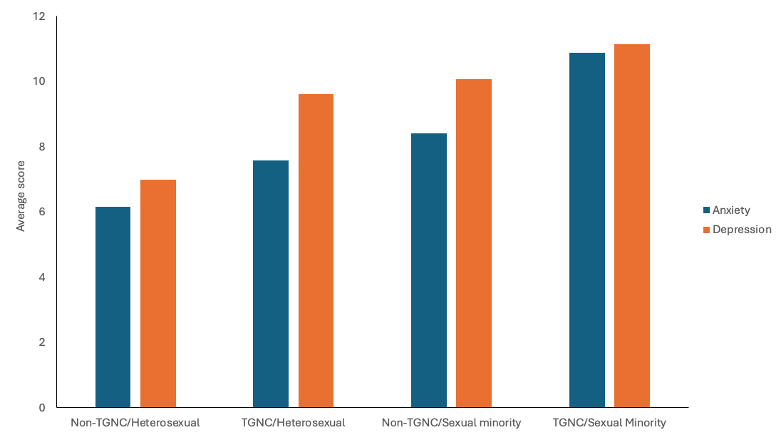
Please take a survey to share your thoughts about the article!

Meet the Authors

Kelsey Felkins (she/her), senior at Utah State University
A picture of Kelsey Felkins. She has light brown hair and smiles at the camera.

Kelsey grew up in Vernal, Utah, and now lives in Logan, Utah for school. She is studying in the Social Work program and hopes to become a school social worker. She enjoys playing pickleball and volleyball in her free time.

Carlie Dobson (she/her), junior at Utah State University
A picture of Carlie Dobson. She has blonde hair and is wearing glasses. She stands in a grassy field.

Carlie grew up in Utah and is currently attending school in Logan Utah. She is studying social work with the hopes to become a therapist and work with refugees. She enjoys being outdoors and in the gym and meeting new people.

Ragen Dotson (she/her), Senior at Utah State University
A picture of Ragen Dotson. She is posing with a man (likely her romantic partner) and two labradors. Ragen has long blond hair.

Ragen grew up in a small town just outside of Logan, Utah. Now she attends school at Utah State and is in the Social Work program. She loves learning about how to help people in stages in life in which they need the help. She loves exploring the outdoors and being outside with her husband and two lab puppies.

Jennings (she/her), Junior at Utah State University
A picture of Jennings. She has light brown hair and is standing in front of a snowy mountain.

Jennings grew up in Virginia and is currently attending school at Utah State University. She is studying social work and hopes to become a therapist and work with human trafficking survivors. She enjoys being outdoors and hiking in her free time.

Anxiety and Depression: Making Treatment for Opioid Use Disorder Harder than it Needs to Be

Featured Scientist: Andrew S. Huhn, Ph.D., MBA; Johns Hopkins University School of Medicine, Department of Psychiatry and Behavioral Sciences

A headshot of Dr. Huhn. He has dark brown hair and is wearing a grey suit and smiling at the camera.
Dr. Andrew S. Huhn, John Hopkins University School of Medicine

Birthplace: Grand Ledge, Michigan

My Research: My research looks at different ways to improve treatment results for opioid use disorder. We are especially interested in finding ways to reduce sleep problems and stress with the goal of reducing unlawful drug use.

Research Goals: One goal is to evaluate the use of drugs as treatment for opioid use disorder. A second goal is to find a way to predict the risk of relapse for people who are in recovery for opioid use disorder.

Career Goals: My main goals are to grow my research portfolio and continue to train young scientists.

Hobbies: I like to read, play chess, and play sports with my kids.

Favorite Thing About Science: The results speak for themselves.

Scientist Upbringing: I didn’t want to become a scientist until I was in my mid-twenties. At that time, I was interested in helping patients with mental health. Only later I realized that there was a great need to improve treatment (broadly) and I saw science as an opportunity to study topics that I found interesting while working towards a larger goal of improving treatment for everyone.

My Team: As an Associate Professor, I have a team who implements my studies. I also work with a group of 5 professors who are all focused on opioids. We work with a group of 20 professors who are broadly interested in substance use disorders. There are also collaborations with professors outside of my department/school. While specific teams are formed for specific projects, we all work towards a common goal.

Organism of Study: Humans with opioid use and substance use disorders.

Field of Study: Behavioral Pharmacology

What is Behavioral Pharmacology? Behavioral Pharmacology is field research that focuses on how drugs affect the people who use them.

Check Out My Original Paper: “Latent trajectories of anxiety and depressive symptoms among adults in early treatment for nonmedical opioid use”

Citation: Ellis, J. D., Rabinowitz, J. A., Wells, J., Liu, F., Finan, P. H., Stein, M. D., II, D. G. A., Hobelmann, G. J., & Huhn, A. S. (2022). Latent trajectories of anxiety and depressive symptoms among adults in early treatment for nonmedical opioid use. Journal of Affective Disorders, 299: 223-232. https://doi.org/10.1016/j.jad.2021.12.004.

Research At A Glance: Opioids are drugs that can be used to treat pain. Unfortunately, many people in the United States misuse opioids for the “high” and to deal with mental health issues, like depression and anxiety. Unfortunately, over time, higher amounts of the drug are needed to achieve the same effects. As a result, people take higher doses. This increases the risk of overdose and death. These dangerous behaviors have resulted in a large increase in opioid dependence, loss of productivity, and death. In 2000, the opioid overdose death rate was 3 out of every 100,000 people. By 2020, the opioid overdose death rate was 21.4 out of every 100,000 people–an increase of 7.13 times!

In this research, the authors tried to find links between treatment for the misuse of opioids and symptoms of depression and anxiety. The authors also looked at people who were misusing opioids while also taking benzodiazepines. Benzodiazepines are a drug that causes deep relaxation and is sometimes prescribed by doctors to help with stress and anxiety, or to help people sleep. The authors wanted to see if the use of both opioids and benzodiazepines was related to symptoms of depression and anxiety. They also wanted to see if the use of both opioids and benzodiazepines was related to whether a person finished treatment. The authors found that many people who were in treatment for the misuse of opioids were also experiencing symptoms of depression and anxiety in the first four weeks of treatment. Some patients had severe symptoms, while others had milder symptoms. The authors found that patients who were experiencing persistent symptoms of depression were also more likely to leave treatment early, against the advice of their doctors. The authors did not find a relationship between symptoms of anxiety and the likelihood of leaving treatment early. The authors also found that symptoms of depression and anxiety were linked to the use of benzodiazepines with opioids. The findings of this research could lead to more helpful treatments for people struggling with opioid use disorder.

Highlights: To understand the relationship between treatment for the misuse of opioids and symptoms of depression and anxiety, the authors tracked symptoms of anxiety and depression in patients for the first 4 weeks of treatment. To measure this, the authors gave their patients surveys that asked questions about anxiety and depression.They then used a Growth Mixture Model (GMM) to analyze the data. GMM is a tool that allows researchers to track changes in data over time and identify groups based on the data. The authors used this method to track symptoms of anxiety and depression in the patients and to determine how symptoms changed over the course of 4 weeks. They then grouped participants based on the types of experiences they had.

The authors found that patients fell into three groups based on their symptoms:  14% of the patients had average or intense symptoms of anxiety that didn’t go away during the first 4 weeks of treatment, 14% of the patients had intense symptoms that gradually started to go away, and 72% of the patients had mild symptoms that didn’t go away (Figure 1).

A bar chart showing the percentage of patients experiencing symptoms of anxiety.
Figure 1. The symptoms of anxiety that patients were experiencing during the first four weeks of treatment. The y-axis shows the percent of patients who described experiences of anxiety in the survey. The x-axis shows each group that patients fell into based on their symptoms. Group 1 = Average of intense symptoms that didn’t go away, Group 2 = Intense symptoms that gradually started to go away, Group 3 = Mild symptoms that didn’t go away.

The authors found similar results for the patients with symptoms of depression: approximately 5% of the patients had intense symptoms that wouldn’t go away, approximately 16% had average symptoms that wouldn’t go away, and approximately 78% had mild symptoms that gradually started to go away (Figure 2).

A bar chart showing the percentage of patients experiencing symptoms of depression.
Figure 2. The symptoms of depression that patients were experiencing during the first four weeks of treatment. The y-axis shows the percent of patients who described experiences of depression in the survey. The x-axis in each group that patients fell into based on their symptoms. Group 1 = Average of intense symptoms that didn’t go away, Group 2 = Intense symptoms that gradually started to go away, Group 3 = Mild symptoms that didn’t go away.

While most of the patients had mild symptoms of anxiety and depression, there were some patients who experienced intense symptoms that didn’t go away with time. The authors found that female patients and patients who also used benzodiazepine may be more likely to have these intense symptoms. The same patients were also more likely to leave treatment early, against the advice of their doctors. The hope is that professionals can use these findings to create different types of treatment for patients with these symptoms to help them deal with their anxiety and depression.

What My Science Looks Like: The participants for this research were originally recruited for a larger study monitoring the mental health and substance use behaviors of people in treatment centers. The larger study included over 39,000 people in inpatient and outpatient treatment centers. An important part of this study was identifying people who could help to inform the research. Figure 3 shows how the authors selected participants for this study. 

A diagram that shows how many patients were admitted into the study and why they were excluded. Over 39,000 patients were admitted into the treatment facility, but only 6,500 were included in the original study. Only those who also experienced anxiety (~2,700) or depression (~3,000) were included in this research.
Figure 3. The reasons why people were included or excluded from participating in the study. The numbers represent the people who are included in each scenario.

The Big Picture: The misuse of drugs, such as opioids, is a problem that much of the U.S. is facing. Depression and anxiety, which are very common mental health challenges, have been linked to opioid use disorder. Learning about the populations most at risk for depression, anxiety, and drug misuse can help us create policies and programs that help change people’s lives. The findings of this research could lead to more helpful treatments for people struggling with opioid use disorder.

Decoding The Language:

Anxiety:  Anxiety refers a feeling of fear, dread, and uneasiness. It could lead to sweat, feeling restless and tense, and a rapid heartbeat.

Benzodiazepine: Benzodiazepine is a type of drug used to relieve anxiety and insomnia (trouble sleeping). Benzodiazepines are also used to relax muscles and prevent seizures.

Dependence: Dependence refers to a physical reliance on a substance. In the context of this research, opioid dependence refers to a physical reliance on opioids. When someone is dependent on a drug it means that the body has begun to rely on the substance to maintain normal function. When it happens, people can begin to feel cold, and can experience shakes and tremors when they don’t have access to the drug.

Depression: Depression can be described as feeling sad, blue, unhappy, miserable, or down in the dumps. Most of us feel this way at one time or another for short periods, but some people can experience it persistently for long periods of time.

Growth Mixture Model (GMM): A growth mixture model is a statistical tool used to create groups based on collected data and to track changes in these groups over time. In the context of this research, GMMs were used to place participants into groups based on their symptoms of depression and anxiety. They were also used to see if patients experiencing these symptoms had reduced symptoms over time. 

Opioids: Opioids are substances that are used to lessen pain and calm the nervous system. Examples of common opioids include oxycodone, codeine, and morphine.

Opioid use disorder: Opioid use disorder refers to a problematic pattern of opioid use that causes significant impairment or distress.

Relapse: A relapse occurs when an individual who is in recovery from drug or alcohol abuse returns to substance use.

Substance use disorder: Someone has a substance use disorder when their use of a drug negatively affects major aspects of their life.

Unlawful drug use: Unlawful drug use refers to the use of any controlled substance or dangerous drug that has not been legally prescribed and/or dispensed, or the use of a prescription drug which is not in accordance with the way it was prescribed.

Learn More:

A brief article from John Hopkins on the link between Opioid Abuse and Mood and Anxiety Disorders.

A YouTube video produced by the Centers for Disease Control (CDC) describing the Challenges of Opioid Use Disorder in Women.

An article from the CDC data on Death Rates Involving Opioids over time.

Synopsis edited by Dr. Rosario Marroquín-Flores, Texas Tech University, Department Biological Sciences and Dr. Jayme Walters, Utah State University, Department of Social Work.

Download this article here

Please take a survey to share your thoughts about the article!

Meet the Authors

Cassie Rees, junior at Utah State University

Cassie was born in Riverton, Utah, but currently resides in Logan, Utah while attending school. She is working towards obtaining a bachelors in social work with a psychology minor. Cassie enjoys music, traveling, hiking, and reading. She loves to work with people in any way possible! She has enjoyed working with special needs adults since graduating high school and worked as a camp counselor in Summer of 2022.

Amanda Meek, junior at Utah State University

Amanda is from Grantsville, Utah, but currently lives in Logan, Utah. She is currently working towards getting a bachelor’s degree in social work with a minor in American Sign Language (ASL). She loves to play the piano, solve rubik’s cubes, and paint. Amanda has loved working with children. After graduating, she wants to work in child welfare.

Simon Pitcher, junior at Utah State University

Simon is from Saratoga Springs, Utah. He’s working towards becoming a licensed clinical social worker and currently works, teaching skills to youth in the community. He loves playing pickleball and gets competitive with board/card games. He’s excited to become a dad soon, so that he can cover up his obsession with watching Pixar movies.

Zachary Swensen, junior at Utah State University

Zachary is from Wellsville, Utah. He is working towards a bachelor’s degree in social work with a minor in Spanish. Zachary loves to spend time outdoors, traveling, being with friends/family, and playing sports. After graduation, Zachary plans on obtaining a masters degree in social work and working in the mental health field.

Finding Home and Finding Self: Experiences of Homeless LGBTQ+ Individuals

Featured Scientist: Dr. Peter Matthews (he/him/his), Professor of Social Policy and LGBTQ+ Studies, University of Stirling, UK

A headshot of Dr. Matthews. He is wearing glasses and has light brown hair. He wears a blue striped shirt.

My Research: I research socio-economic inequality in society. I also study how the government responds. My most recent research focuses on the experiences of LGBTQ+ people in the United Kingdom.

Research Goals: I would like to expand my current research to compare the UK with other countries around the world, particularly Europe and North America.

Favorite Thing About Science: Discovering new things!

My Team: I was the Principal Investigator of this research project (project manager). I worked with a Research Assistant and an undergraduate student to complete the project.

Field of Study: Social Policy

What is Social Policy? Social policy is a field of study that tries to understand the best ways that the government can provide services to people in need.

Check Out My Original Paper: “Lesbian, gay, bisexual, transgender and queer experiences of homelessness and identity: insecurity and home(o)normativity”

Citation: Matthews, P., Poyner, C., & Kjellgren, R. (2019). Lesbian, gay, bisexual, transgender and queer experiences of homelessness and identity: insecurity and home (o) normativity. International Journal of Housing Policy19(2), 232-253.

Research At A Glance: Twenty-five to forty percent of young people who experience homelessness are also part of the LGBTQ+ community. Many people who study homelessness in the LGBTQ+ community focus on familial rejection, where young people are pushed out of their homes because they identify as LGBTQ+. However, many people don’t think about the agency that homeless people can have. In this research, the authors interviewed young people within the LGBTQ+ community in Scotland to better understand their experiences with homelessness. The authors asked them to tell a story about how they came to be living where they are now. Many participants in the study spoke about how their own choices were a part of them becoming homeless. For many, their queer identity led to conflict and discomfort in their homes. This conflict often presented them with a choice: being who they are or remaining at home. Without the ability to fully express their identity, participants often chose to leave. Several participants also said that when they were able to explore their queer identities outside the home, they were also able to build a new sense of home and find more secure housing. The authors concluded that better welfare and homelessness services designed specifically for LGBTQ+ people could help address the growing issue homelessness in the LGBTQ+ community.

Highlights: Finding people to participate in research like this can be difficult. This is because people experiencing homelessness and those who identify as LGBTQ+ often experience discrimination. The authors had to be careful and creative when they invited people to participate in the study. The authors used three ways to recruit people for the study. Participants were recruited through organizations that served people experiencing homelessness and those that served people within the LGBTQ+ community (Figure 1). Other participants were recruited for the study through posts on social media, such as Twitter and Facebook. Participants were also recruited using the dating app, Grindr. To recruit using the app, one of the authors made a profile saying he was only looking to interview people for a study on the experience of being homeless and LGBTQ+. The authors were able to recruit 20 people to the study.

A cartoon that shows a hostel building, with people working on many different activities. One person is playing guitar, one is on a laptop, and another is cooking barefoot.
Figure 1. Many of the people in this study had different experiences with hostels, where some experienced discomfort because the employees were not accepting of their identities and others chose not to disclose their identities for similar reasons. Therefore, there were very few places where they felt they could be accepted as themselves.

What My Science Looks Like: The authors used a critical realist perspective and queer theory to complete this research. The critical realist perspective states that people who are not accepted by society rarely have the security of a home and the ability to enjoy it as their own private space. Queer theory is a way of looking at the world that challenges the idea that being straight is the correct or only way to live in society. This approach was used to understand the experiences of homelessness in LGBTQ+ community. These perspectives helped the authors see how identifying as LGBTQ+ and experiencing homelessness were related to and influenced by each other. As a part of the interview process, the authors asked the participants tell the story of how they got to their current living situation. This helped give them the opportunity to tell as much or little about their homeless experience as they would like. Interviews with participants were recorded and then written down. The researchers read through each interview and tried to find themes from the interviews. The authors found three key themes: 1) finding spaces to become self and homelessness, 2) lack of security and identity, and 3) home, family, and routes out of homelessness (Figure 2).

An image that conveys the findings of the study. 1) Finding space to become self and homeless - some people found homelessness to be a worthwhile experience because they were able to be themselves. 2) Lack of security and identity - it was sometimes hard for people to find housing because they were not accepted for their identity. 3) Home, family, and routes out of homelessness - some people found support from friends who would house them for long periods of time.
Figure 2. Themes and related ideas that emerged from the interviews asking LGBTQ+ individuals about their experiences with homelessness.

The Big Picture: Recently there have been more public policy conversations about youth homelessness in the LGBTQ+ community. This group of people may be at a higher risk of homelessness because of the unique issues they face. In the past, many social scientists thought that LGBTQ+ homelessness was mostly caused by familial rejection. Instead of looking at homeless LGBTQ+ youth as purely victims of their circumstances, this study looks at the choices that many have had to make between their identity and their home. Although many areas are becoming more accepting of LGBTQ+ identities, there are still many people who do not support people in the LQBTQ+ community. Also, welfare programs for people who are experiencing homelessness do not always exist. It can be very difficult for LGBTQ+ youth who are homeless to receive support during an already vulnerable time – let alone become more confident in their identity. Studies like this one are important for us to understand and try to solve homelessness in the LGBTQ+ community. Many options exist to address this issue. One option recommended by the authors is to expand welfare programs for the homeless. This could include guaranteed housing programs. However, for welfare programs to be effective, it is important to consider and meet the needs of people within the LGBTQ+ community.

Decoding The Language:

Agency: Agency refers to having control over your own actions and decision-making.

Critical realist: Critical realism is a branch of philosophy that distinguishes between the ‘real’ world and the ‘observable’ world. People who hold a critical realist perspective might argue that there are real things going on in society, but that they are very difficult to measure in an objective way. There are many things in society that can affect why a person becomes homeless and it can be difficult to narrow down exactly what those things are because everyone has different experiences and there are different circumstances that can affect their decisions. In research, a critical realist perspective can be used to better understand the topic under study by focusing on certain things. For example, it is important to understand the experiences that people have, to understand what has happened to them, and to understand what caused those things to happen.

Familial rejection: Familial rejection refers to the situation in which a young person’s family does not accept their LGBTQ+ identity, causing conflict and sometimes leading to homelessness.

Housing security: Housing security refers to being able to obtain and maintain safe, adequate, and affordable housing without the fear of displacement or homelessness.

LGBTQ+: LGBTQ+ is an acronym that stands for Lesbian, Gay, Bisexual, Transgender, and Queer/questioning.

Queer identity: Queer identity refers to someone who identifies as a member of the LGBTQ+ community.

Queer theory: Queer theory is a field of study that examines the nature of sexuality and gender norms, and how society defines the concepts of heterosexuality, homosexuality, and gender and sexual identities.

Social scientists: Social scientists as scholars who study society and social relationships using scientific methods and theories.

Welfare programs: Welfare programs are state or federal programs financial assistance to people or other types of assistance such as help with housing and healthcare. 

Learn More:

A YouTube video produced by Tyler Oakley that explores the reality of LGBTQ+ Homeless Youth.

A brief article from the National Network for Youth that lays out the current state of this issue, including the prevalence of youth homelessness and LGBTQ+ homelessness.

A complete copy of The Runaway and Homeless Youth Act from the National Archives.

A short guide describing critical realism produced by Tom Fryer.

Synopsis edited by Dr. Rosario Marroquín-Flores, Texas Tech University, Department Biological Sciences and Dr. Jayme Walters, Utah State University, Department of Social Work.

Download this article here
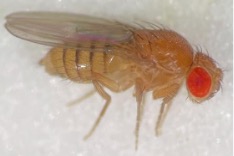
Please take a survey to share your thoughts about the article!
Meet the Authors

Aspen Boyer
A picture of Aspen in the woods.She has light blonde hair and is wearing a while sweater. She stands with her hands in her pockets, smiling at the camera

Hi, my name is Aspen Boyer, I am currently a Junior at Utah State University, studying Social Work. I am passionate about helping people and trying to find spaces for everyone to be themselves. I have lived all over the country from the east coast to the west and I love to travel. I spend most of my spare time hanging out with the people I love and watching movies.

Nathan Bohman
A picture of Nathan outside. He has light blonde hair, glasses, and is wearing a blue button-up shirt. He is smiling at the camera.

Hello! I’m Nathan (or Nate) Bohman! I am currently enrolled at Utah State University as a Junior studying social work, and plan on returning to USU after receiving my BSW so I can get an MSW and LCSW. I plan on becoming a therapist to help those with emotional or mental health concerns. When I’m not working or studying social work, I enjoy getting involved in local community theater productions, singing, spending time with friends and family, and spending way too much time on nerdy stuff like Dungeons & Dragons or video games.

DJ Hillier
A picture of D.J. crouching on beach sand. He has dark brown hair and a mustache. He is wearing a blue shirt with stripes on the the bottom.

Hey, my name is DJ Hillier. I am a junior at Utah State University working on my bachelors of social work. I am super passionate about helping people, and social justice. Outside of school I work a full-time job and hang out with my friends and roommates. You can usually catch me watching football, listening to records, or in the gym.

Brayden Rigby
A picture of Brayden outside. He has brown hair and is wearing a checkered blue shirt.

Hello, my name is Brayden Rigby. I am a junior at Utah State University studying social work. I love learning about new concepts and ideas, and exploring what can be changed to make a positive shift in my community. Outside of school and work I am an avid swimmer and runner.