Featured Scientist: Alejandra Torres Sanchez, she/her/ella, B.A.
Affiliations: University of Oregon and Children’s Hospital Los Angeles
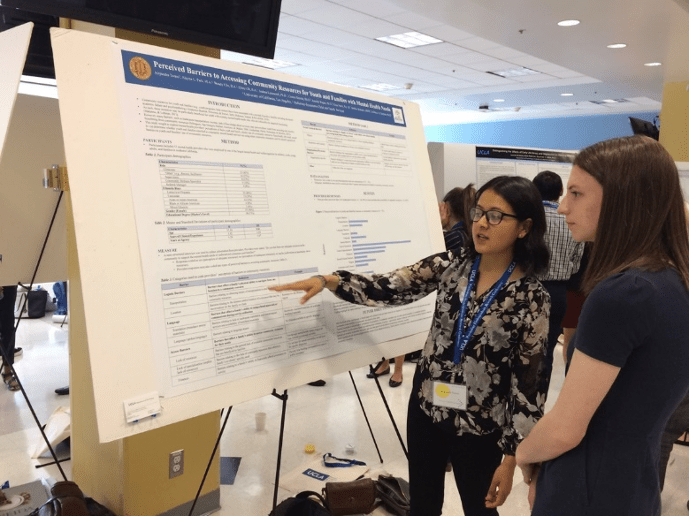
Birthplace: My current home is California.
My Research: Right now, my research topics are constantly changing. Currently, I work on projects related to mental health and adapting clinical care models in type 1 diabetes.
Research Goals: In the future, I want to do research in the community. I want to continue telling stories using qualitative research methods to create change at the community and state level. I truly want to help to improve the lives of historically underserved communities.
Career Goals: In the future, I want to use my research skills and ability to connect with people of all backgrounds to establish a youth empowerment center. The mission of the center would be to provide resources, support, and opportunities for young people.
Hobbies: I love spending time outdoors (hiking) and visiting different tea/boba shops.
Favorite Thing About Science: The process. In exploring there are so many other questions that arise that lead to the evolution of ideas, methodologies, and goals of the project. This happened as this manuscript was written.
Scientist Upbringing: I have always been inquisitive, but I did not know I wanted to be a scientist until I began working with my mentor, Dr. Park. I sought out the opportunity to learn more about research and Dr. Park offered me the support and guidance to explore my questions. Suddenly, I found myself fascinated with qualitative research, and here I am, a scientist with a focus on qualitative methods.
My Team: I led the project, oversaw the development, designed the coding manual, and brought this project to fruition. I was able to do this with the support of my mentor and in collaboration with my colleagues.
Field(s) of Study: Community psychology and public health.
What are community psychology and public health? Community psychology is a branch of psychology that focuses on the relationships that exist between social institutions, social issues, and people in the community. People working in this field focus on the community as a whole. They work to find ways to improve people’s lives. Public health is a branch of medicine that focuses on the health of the community.
Check Out My Original Paper: “Supporting the mental health needs of underserved communities: A qualitative study of barriers to accessing community resources”
Citation: Torres Sanchez, A., Park, A. L., Chu, W., Letamendi, A., Stanick, C., Regan, J., Perez, G., Manners, D., Oh, G., & Chorpita, B. F. (2022). Supporting the mental health needs of underserved communities: A qualitative study of barriers to accessing community resources. J Community Psychol, 50, 541–552.
Article Written by Kelsey Felkins (she/her), a senior at Utah State University, Carlie Dobson (she/her), junior at Utah State University, Ragen Dotson (she/her), Senior at Utah State University, Jennings (she/her), Junior at Utah State University, and Kendra O’Connell (she/her) a Continuing Medical Education Transcriptionist who got her B.S. at the University of Guelph.
Research At a Glance: In the U.S., a lot of money is spent to create programs that help people with their well-being. Many of those programs are focused on helping those who are in poverty. People in poverty are more likely to experience stressful events that may affect their emotional and mental health. This can include exposure to violence, financial struggles, unsafe living situations, and family conflict. Community resources can help youth and families who experience these difficulties. Resources can offer services to help people meet basic living needs and can help reduce the stress they are experiencing. Sadly, many people who live in underrepresented communities run into barriers. Those barriers prevent them from using community resources.In this study, the authors explored the access that people have to mental health resources. The authors also interviewed mental health professionals to understand barriers that stop people from accessing resources. Many professionals agreed that barriers stop people from using resources in their communities. One major barrier is that there aren’t enough resources in the community. The authors also identified service areas that did not have specific resources. For example, some areas did not have enough youth services, while other areas did not have enough mental health services. This research is important because the authors found barriers that stop people from accessing resources. They also identified areas in the community that needed more resources and which type of resource they needed.
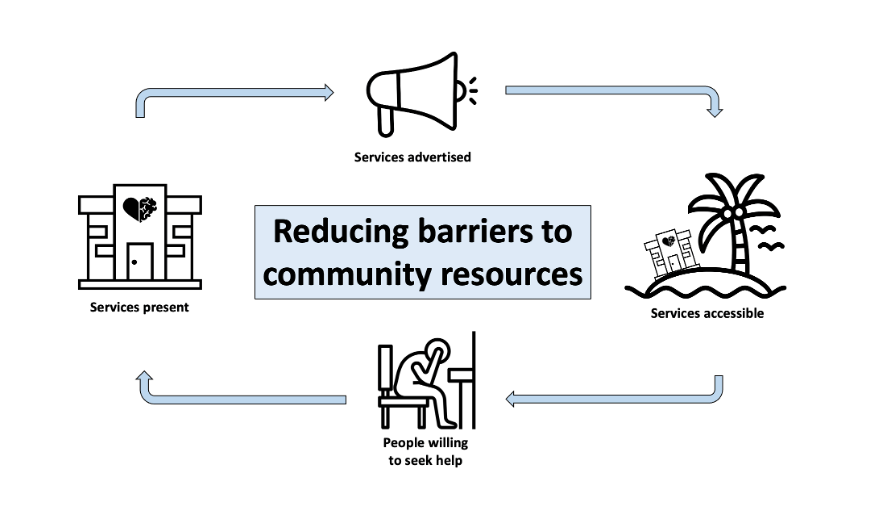
Highlights: An important part of this research was how the data was collected. In this study, the authors interviewed 52 mental health professionals from different backgrounds. For example, some of the professionals were clinicians, case managers, and caregivers. These professionals work with over 15,000 young people and families each year. The authors asked if there were enough resources in the community and asked follow-up questions to get more information. To analyze the data, the authors looked through the transcripts of each interview and tried to find themes that came up repeatedly. The authors found many barriers that stop people from accessing resources. These included availability, logistics, attitudes, and knowledge (Figure 1).

In many instances, mental health professionals said that the resources simply were not available. Other professionals said that it was sometimes difficult for people to reach the resources. For example, if someone does not have a car, it’s hard to get across town to see a therapist. Other professionals said that sometimes it was based on attitude, where there was stigma associated with pursuing mental health services. Finally, some professionals said that people just don’t know that the resources are there. These findings were important because they helped the authors find out what was stopping people from getting the care that they need.
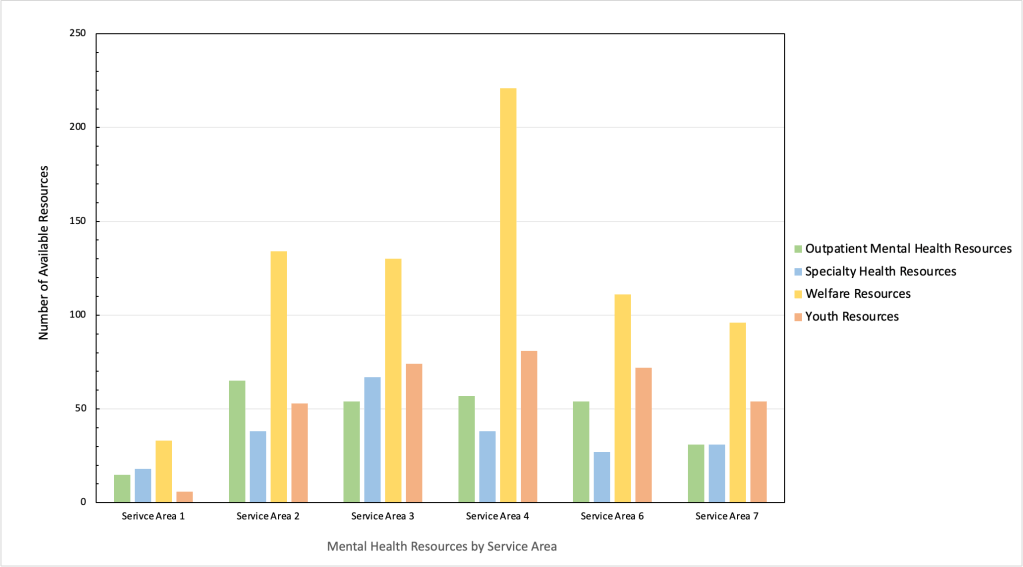
What My Science Looks Like: In this study, 69% of the people interviewed said that resources were not available in their community. They specifically described outpatient mental health services, specialty health services, welfare services, and youth services. However, this information was based on the opinions of mental health professionals. To make sure that these opinions were accurate, the authors also collected data on what resources were available in the area. The Los Angeles Department of Public Health breaks the county into 7 service areas. The authors looked to see what resources were available in each service area. Overall, the authors found that the opinions of professionals were accurate. Importantly, the authors were able to figure out which areas had fewer resources. They were also able to determine the specific type of resources that were missing. For example, service area 1 had very few youth services, but service area 6 had very few specialty health services (Figure 2).
The Big Picture: When looking into providing resources to a community, it is important to consider the barriers that might stop people from accessing them. This study investigated barriers that stop people in California from accessing the resources they need. The authors found that there was a lack of knowledge as well as a limited availability of resources. Without the right resources, people in the community cannot always receive the help they need. It is important to understand barriers to community resources because they may not be the same in every area. Once we know more about them, we can work to find solutions. The research is important because the authors were able to find out which areas need more resources, and what type of resources they need. This information can help policy makers decide where to allocate funding. Research like this can help us provide better resources to those living in the community.
Decoding the Language
Coding: Coding refers to a technique that is commonly used in qualitative research. It involved looking for themes that come up repeatedly in the data. For example, when the authors found that many of the interviewees said that availability was an issue, they might have highlighted the text every time the word “availability” came up. This would be one type of coding.
Poverty: Poverty refers to someone who does have enough money to meet every day needs, such as food, clothing, and shelter.
Qualitative research: Qualitative research is a type of data collection that relies on interviews, observations, and focus groups and is typically non-numerical. In this study, the authors did interviews and looked for themes in the data.
Service area: A service area is a geographical area within a city, county, or state. Government agencies will break up the city, county, or state into different “areas” so that it is easier to keep track of what is happening in each place. These areas are usually organized so that each area has people from similar cultural or socioeconomic backgrounds.
Stigma: Stigma refers to the act of treating someone or something unfairly by publicly disapproving of them.
Transcripts: In the context of this research, a transcript refers to a typed record of the interview.
Type 1 diabetes: Type 1 diabetes is a chronic condition in which the pancreas produces little or no insulin. People with type 1 diabetes are born with this condition.
Underrepresented Communities: Underrepresented communities refers to areas that contain minority populations. Examples include low-income areas and communities of color.
Underserved: Underserved refers to areas or to people that have historically received fewer resources. This can also include areas that the government has not invested a lot of money into.
Learn More:
An article from TechTarget Xtelligent Healthcare Media about barriers that limit access to mental healthcare.
An article from the National Council for Mental Wellbeing about the mental health crisis in the U.S. and its link to accessible care. An article from Scribbr describing types of qualitative research.
Synopsis edited by Dr. Rosario Marroquín-Flores, Texas Tech University, Department Biological Sciences and Dr. Jayme Walters, Utah State University, Department of Social Work.
Download this article here
Please take a survey to share your thoughts about the article!
Meet the Authors
Kelsey Felkins (she/her), senior at Utah State University
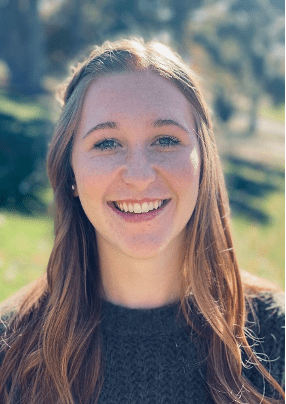
Kelsey grew up in Vernal, Utah, and now lives in Logan, Utah for school. She is studying in the Social Work program and hopes to become a school social worker. She enjoys playing pickleball and volleyball in her free time.
Carlie Dobson (she/her), junior at Utah State University

Carlie grew up in Utah and is currently attending school in Logan Utah. She is studying social work with the hopes to become a therapist and work with refugees. She enjoys being outdoors and in the gym and meeting new people.
Ragen Dotson (she/her), Senior at Utah State University

Ragen grew up in a small town just outside of Logan, Utah. Now she attends school at Utah State and is in the Social Work program. She loves learning about how to help people in stages in life in which they need the help. She loves exploring the outdoors and being outside with her husband and two lab puppies.
Jennings (she/her), Junior at Utah State University

Jennings grew up in Virginia and is currently attending school at Utah State University. She is studying social work and hopes to become a therapist and work with human trafficking survivors. She enjoys being outdoors and hiking in her free time.
 PubNavigator